This document describes the North Star Electronic Demand Automatic Water Conditioner, models NSC 11/14/17 ED. It covers installation, operation, maintenance, and repair parts.
The primary function of this device is to soften water by removing hardness minerals like calcium and magnesium, and to control certain levels of clear water iron. It operates on an ion-exchange principle, where hard water passes through a bed of resin beads that attract and hold these minerals. Once the resin beads are saturated, the system undergoes a regeneration process to clean them and restore their softening capacity.
Usage Features:
The water conditioner is designed for automatic operation, using an electronic demand timer to determine when regeneration is needed based on water usage. This ensures that the system only regenerates when necessary, optimizing salt and water efficiency.
- Automatic Operation: The demand timer monitors water usage and initiates regeneration cycles automatically.
- Electronic Demand Timer: The timer is a key feature, allowing for precise control and monitoring of the softening process. It displays the present time, water hardness number, and regeneration start time.
- Programmable Regeneration Time: Users can set the desired time for regeneration to begin, typically during periods of low water usage (e.g., 2:00 AM) to minimize inconvenience.
- Water Hardness Setting: The timer allows users to input their specific water hardness number (in grains per gallon, gpg), which is crucial for the system to calculate when regeneration is required. If water contains iron, it should be added to the water hardness calculation at a ratio of 5 grains for each 1 ppm of iron.
- Manual Regeneration (Recharge) Controls:
- Recharge Now: This feature allows users to initiate an immediate regeneration cycle. This is useful if there has been unusually high water usage (e.g., house guests, extra washing) and there's a risk of running out of soft water, or if the salt tank was not refilled in time. Once started, an immediate regeneration cannot be canceled.
- Recharge Tonight: This option schedules a regeneration to occur at the next preset regeneration start time. This is useful for similar situations as "Recharge Now" but allows the regeneration to happen during off-peak hours. This can be canceled if needed.
- Automatic Hard Water Bypass: During regeneration cycles, hard water is automatically bypassed to the household faucets. This ensures that water is always available, even when the softener is regenerating. However, it is recommended to avoid using hot water during regeneration, as the water heater would refill with hard water.
- Vacation Note: The system is designed not to regenerate when water is not being used for extended periods, making it efficient for homes that are often vacant.
- Program Memory: The timer retains its settings for approximately 6 hours during a power outage. If power is restored within this timeframe, only the present time may need to be reset if it's flashing. All other settings, such as water hardness and regeneration time, are maintained. If the power outage is longer, the time will flash, and the user should reset the present time to ensure regenerations occur at the correct time of day.
- 12-24 Hour Clock: The timer can be set to display time in either 12-hour (AM/PM) or 24-hour format.
- Adjustable Backwash and Fast Rinse Times: The duration of the backwash and fast rinse cycles can be adjusted, allowing for fine-tuning of the regeneration process.
- Maximum Days Between Recharge: Users can set a maximum number of days (1 to 7) after which the unit will recharge, even if the demand algorithm hasn't triggered one. This provides a safeguard for consistent soft water.
Maintenance Features:
Regular maintenance is essential for the optimal performance and longevity of the water softener.
- Salt Storage Level Check and Refilling: Users are advised to regularly check the salt level in the brine tank (weekly after initial installation) and refill it when it is 1/3 to 1/2 full. Only nugget, pellet, or coarse solar water softener salt should be used. The use of incorrect salt types (rock, block, granulated, or ice cream making salts) can lead to problems.
- Breaking a Salt Bridge: A common issue, especially in humid areas or with incorrect salt, is the formation of a "salt bridge" – a hard crust that prevents salt from dissolving. The manual provides instructions on how to check for and break a salt bridge using a broom handle or similar tool.
- Cleaning Iron Out of the Water Softener: While the softener can handle some clear water iron, periodic resin bed cleaning is recommended, especially if iron appears in the soft water between treatments. This should be done at least every six months or more frequently as needed, using a resin bed cleaner. The softener is not designed to remove "red water iron" (visible rusty particles), which typically requires an iron filter or other specialized equipment.
- Cleaning the Nozzle and Venturi Assembly: This small unit is critical for creating the suction needed to draw brine into the resin tank during regeneration. If it becomes plugged with sand, silt, or dirt, the softener will not work correctly, leading to hard water. The manual provides detailed instructions for removing, cleaning, and reassembling the nozzle and venturi parts, including screens and flow plugs.
- Electronic Diagnostic Function: The timer computer includes a self-diagnostic feature that monitors the electrical components and circuits. If a malfunction occurs, an error code (Err 01 to Err 05) will be displayed, indicating a possible defect such as wiring harness issues, switch problems, motor malfunction, or a timer (PWA) defect. This helps in troubleshooting and repair.
- Manual Initiated Electronics Diagnostic: This advanced diagnostic mode allows service personnel to further isolate defects and check the water meter's operation. It displays turbine switch status (water meter operation) and position switch status (valve cycle status), and provides information on days with electrical power and number of regenerations. It also allows for setting the Service Rating code (SR code) to match the specific softener model.
- Manual Advance Regeneration Check: This procedure allows users to manually advance the softener through its regeneration cycles (fill, brining, backwash, fast rinse) to verify the proper operation of the valve motor, brine tank fill, brine draw, and regeneration flow rates. This helps in identifying issues like obstructed nozzles, venturis, or drain hoses.
- Service Checklist: The manual provides a checklist for troubleshooting common issues like "No Soft Water" or "Water Intermittently Hard," guiding users through checks for salt levels, power connections, bypass valve positions, drain hose obstructions, and timer programming.
- Sanitizing Procedures: Upon installation, and periodically as recommended by water quality associations, the softener should be sanitized using a small amount of household bleach poured into the brinewell, followed by initiating an immediate regeneration. This disinfects the system.

 Need help?
 General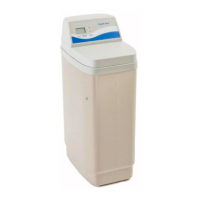

 To Next Page
