climates vary and winter maintenance needs may be
affected.
Be sure to read the literature supplied with
plumbing components, such as the water pump, for
troubleshooting tips. Also, remember that it is
possible for an electrical problem to cause water
system problems. Lack of power to the pump can be
caused by a variety of reasons.
If you are unsure of how to locate and/or repair a
plumbing problem, it is best to have your dealer or a
qualified plumber who is familiar with the camper
water system to inspect the system and perform any
repairs needed
L P Gas (LPG)
Fill Valve
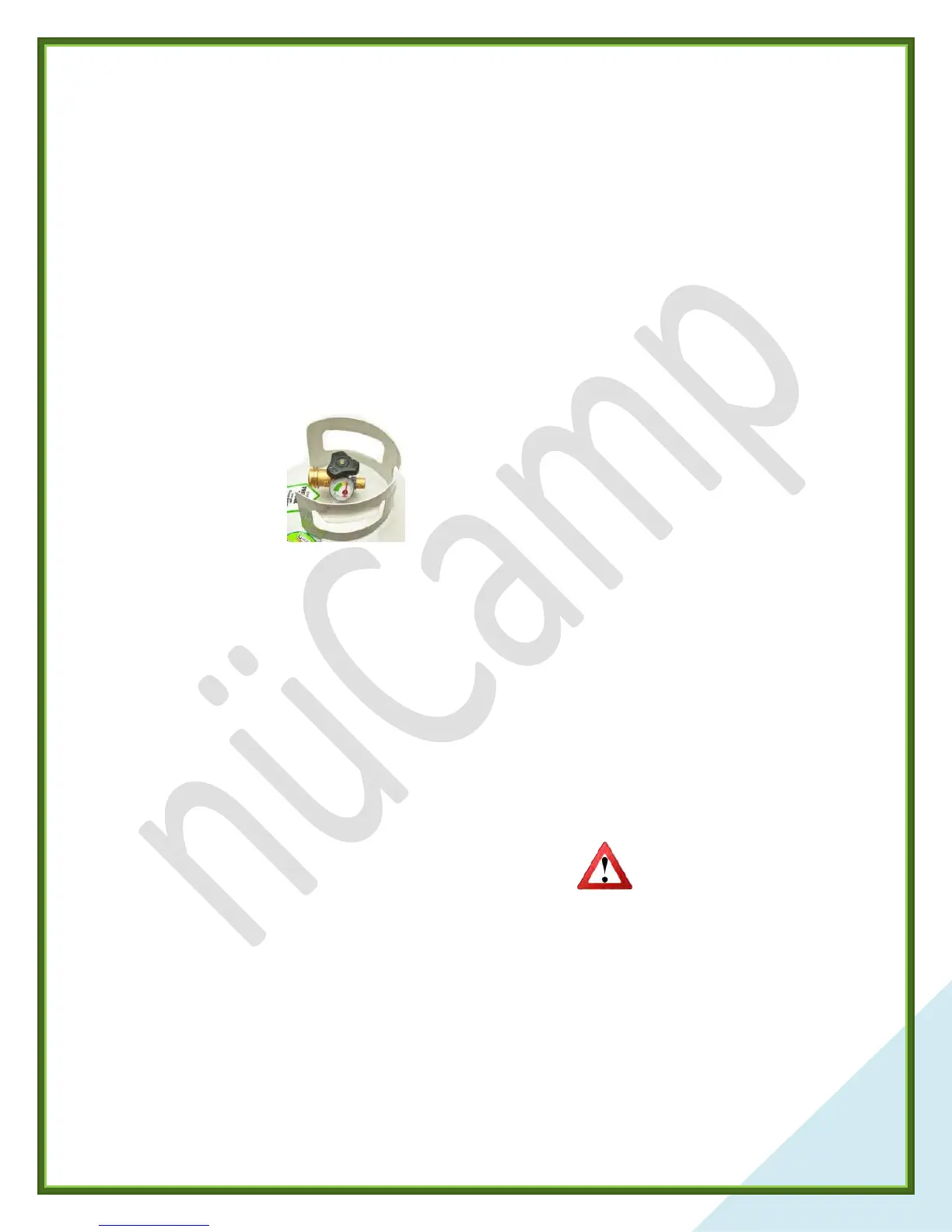
The LPG tanks are equipped
with fill valve connections
RV Type I Acme. The large,
green, nylon swivel nut is a
right-hand thread and is designed for hand operation
only.
The valve features an internal spring-loaded module
that will not allow gas to flow from the cylinder
until a positive seal has been made at the
connection. The valve outlet has 1-5/16 in. Acme
threads on the outlet exterior, and female POL, left-
handed threads on its interior. This feature allows
for connection of the new wrench less, right-
handed, Acme RV connection while still
accommodating the standard left-handed POL
fittings used for filling propane cylinders.
The mating, green swivel nut and brass nipple also
incorporate new features: the green nylon nut
swivels on a black bushing that is heat-sensitive.
Between 240 and 300°F, the bushing will yield
(melt) allowing the spring-loaded module in the
valve to push the brass nipple back (approximately
1/4 in.), closing the module and stopping the flow
of gas from the cylinder. Inside the brass nipple is a
flow-limiting device designed to sense excessive
gas flow. If an excessive flow is sensed, the flow-
limiting device shuts the flow down to a maximum
of 10 SCFH (Standard Cubic Feet per Hour) or less.
This is also referred to as the bypass flow.
Bypass flow is extremely important in the proper
operation of this connection. The flow-limiting
device may activate if the cylinder valve is opened
quickly. When all appliances are off, the bypass
flow allows the pressure downstream from the flow-
limiting device to equalize. When pressure is
equalized, the flow limiting device will supply
normal flow to the system. Equalization occurs in
approximately 5 seconds and, in most cases, goes
completely unnoticed. If, however, an appliance is
left on or there is a leak or open flow in the system,
the bypass pressure will not be able to equalize and
allow the flow-limiting device to reopen. Symptoms
of this condition would be appliances that light but
have lower than normal flame or starve out from
lack of gas, a substantial reduction in the flame
when another appliance is operating, or pilots that
are difficult to light. If this should happen, the
following steps should eliminate the condition:
1. Close LPG cylinder valve.
2. Extinguish all flames and smoking materials.
3. Be sure all gas appliances, including their pilot
lights, are off.
4. Open LPG cylinder valve slowly. Do not snap
open.
5. Wait at least 15 seconds before lighting
appliances.
6. If operational difficulties continue, there may be
a leak in the system. Immediately close the LPG
cylinder valve and have the system inspected by a
qualified RV service technician
WARNING
Leaking LPG may ignite, causing a fire or
explosion, which could result in serious bodily
injury, property damage, and/or death.
Propane Regulator
Propane is under high pressure in the tank. The
purpose of the regulator is to reduce the pressure
inside the tank to allow for safe use.
• To avoid potential problems, have your
propane system checked at least once a year


 To Next Page