EasyManua.ls Logo

OEM 27167 - User Manual

OEM 27167
7 pages
Print Icon
To Next Page IconTo Next Page
Loading...
UNPACKING
After unpacking the unit, inspect carefully
for any damage that may have occurred
during transit. Check for loose, missing, or
damaged parts. If any damage is observed, a
shipping damage claim must be filed with the
carrier. DO NOT use the OEM
®
27167 Fuel
Pressure Test Kit if broken, bent, cracked or
damaged parts (including labels) are noted.
Any Test Kit that appears damaged in any
way, operates abnormally or is missing parts
should be removed from service immediately.
If you suspect that the Test Kit was subjected
to shock load (a load that was dropped
suddenly, unexpectedly, etc.), immediately
discontinue use until it has been checked by
a factory authorized service center.
Please read and save these instructions. Read through this owner’s manual carefully before using product. Protect yourself and
others by observing all safety information, warnings, and cautions. Failure to comply with instructions could result in personal
injury and/or damage to product or property. Please retain instructions for future reference.
Operating Instructions and Parts Manual 27167
FUEL PRESSURE
TEST KIT
1
10/18
2018 OEM
®
NOTE: Before you begin, you will need fuel system specifications for your specific vehicle. Vehicle specific shop
manuals are the most reliable source for the information.
SAFETY
CAUTION: Before using this tool or any of its
accessories, read this manual and follow all Safety Rules
and Operating Instructions.
To prevent accidents that could result in serious injury
and/or damage to vehicle or test equipment, carefully
follow safety rules and test procedures at all times when
working on vehicles.
• Always wear approved eye protection.
• NEVER use Fuel Pressure Tester Kit on Diesel or Flex
Fuel engines!
• Always operate vehicle in a well-ventilated area.
• DO NOT inhale exhaust gases or fuel vapors.
• Only use Fuel Pressure Tester Kit for measuring fuel
pressure.
• NEVER attach or remove Fuel Pressure Tester Kit from
fuel rail test port with ignition key on.
• Always place end of 6 Ft. bleed-off hose in an approved
container for fuel during testing and when bleeding off
fuel pressure.
• NEVER smoke or have open flames near vehicle. Vapors
from fuel and charging battery are highly flammable and
explosive.
• NEVER permit fuel to spill on hot engine parts. If a spill or
leak occurs, immediately turn ignition key off and clean
up fuel.
• NEVER leave vehicle unattended while running tests.
• Always keep yourself, tools and test equipment away
from all moving or hot engine parts.
• Always make sure vehicle is in PARK (Automatic
transmission) or NEUTRAL (manual transmission) and
parking brake is set. Block drive wheels.
• NEVER lay tools on vehicle battery. Terminals may short
together causing harm to yourself, tools or battery.
• Always keep a fire extinguisher suitable for fuel/electrical/
chemical fires handy.
• Always use extreme caution when working around
ignition coil, distributor cap, ignition wires and spark
plugs. These components contain High Voltage when
engine is running.
• Complete all Pre-Testing Checks before beginning fuel
pressure testing.
• Always follow vehicle manufacturer’s warnings, cautions
and service procedures.
WARNING: Cancer and Reproductive Harm. For more
information, go to www.P65Warnings.ca.gov.
Question and Answer IconNeed help?

Do you have a question about the OEM 27167 and is the answer not in the manual?

Summary

Unpacking and Safety Precautions

Unpacking Instructions

Inspect the unit for damage after unpacking. File shipping damage claims if necessary.

Safety Rules for Operation

Follow safety rules to prevent injury and damage. Always wear eye protection.

Fuel Pressure Test Kit Components and Theory

Fuel Pressure Tester Components

Details and purpose of each component of the fuel pressure test kit, including gauge and adapters.

Fuel Injection System Theory

Explains the two basic types of fuel injection systems: port and throttle body injection.

Fuel System Components Overview

Fuel System Component Descriptions

Describes key fuel system parts like fuel tank, pump, filter, regulator, rail, and injectors.

Pre-Test Checks and General Procedures

Pre-Test Checks

Essential checks before testing, including visual inspection, fuel supply, and system fuses.

Fuel Pressure Testing Procedures

Instructions for connecting and disconnecting the fuel pressure tester for measurements.

Specific Vehicle Connection Procedures

Chrysler;GM Vehicles with Test Port

Steps for connecting the tester to Chrysler/GM vehicles with a Schrader valve test port.

Ford;Lincoln;Mercury Vehicles with Test Port

Steps for connecting the tester to Ford vehicles with a Schrader valve test port.

GM TBI Vehicles Without a Test Port

Procedure for connecting the tester to GM TBI vehicles without a dedicated test port.

Import;Domestic Vehicles with Rubber Hose Connections

Procedure for connecting the tester to vehicles with rubber hose fuel line connections.

Import;Domestic Vehicles with Banjo Bolt Connection

Procedure for connecting the tester to vehicles with banjo bolt fuel line connections.

Diagnostic Procedures and Maintenance

General Fuel Pressure Diagnostics

Explains how fuel pressure affects engine performance and how to interpret readings.

Causes of High Fuel Pressure Readings

Lists potential issues leading to excessively high fuel pressure readings.

Causes of Low Fuel Pressure Readings

Lists potential issues leading to excessively low fuel pressure readings.

Care and Maintenance

Instructions for applying oil to rubber '0' rings on adapters before each use.

Summary

Unpacking and Safety Precautions

Unpacking Instructions

Inspect the unit for damage after unpacking. File shipping damage claims if necessary.

Safety Rules for Operation

Follow safety rules to prevent injury and damage. Always wear eye protection.

Fuel Pressure Test Kit Components and Theory

Fuel Pressure Tester Components

Details and purpose of each component of the fuel pressure test kit, including gauge and adapters.

Fuel Injection System Theory

Explains the two basic types of fuel injection systems: port and throttle body injection.

Fuel System Components Overview

Fuel System Component Descriptions

Describes key fuel system parts like fuel tank, pump, filter, regulator, rail, and injectors.

Pre-Test Checks and General Procedures

Pre-Test Checks

Essential checks before testing, including visual inspection, fuel supply, and system fuses.

Fuel Pressure Testing Procedures

Instructions for connecting and disconnecting the fuel pressure tester for measurements.

Specific Vehicle Connection Procedures

Chrysler;GM Vehicles with Test Port

Steps for connecting the tester to Chrysler/GM vehicles with a Schrader valve test port.

Ford;Lincoln;Mercury Vehicles with Test Port

Steps for connecting the tester to Ford vehicles with a Schrader valve test port.

GM TBI Vehicles Without a Test Port

Procedure for connecting the tester to GM TBI vehicles without a dedicated test port.

Import;Domestic Vehicles with Rubber Hose Connections

Procedure for connecting the tester to vehicles with rubber hose fuel line connections.

Import;Domestic Vehicles with Banjo Bolt Connection

Procedure for connecting the tester to vehicles with banjo bolt fuel line connections.

Diagnostic Procedures and Maintenance

General Fuel Pressure Diagnostics

Explains how fuel pressure affects engine performance and how to interpret readings.

Causes of High Fuel Pressure Readings

Lists potential issues leading to excessively high fuel pressure readings.

Causes of Low Fuel Pressure Readings

Lists potential issues leading to excessively low fuel pressure readings.

Care and Maintenance

Instructions for applying oil to rubber '0' rings on adapters before each use.

Overview

The OEM® 27167 Fuel Pressure Test Kit is a specialized tool designed for measuring fuel pressure in various fuel injection systems, aiding in the diagnosis of fuel system problems. It is intended for professional use and requires adherence to strict safety precautions and vehicle-specific service procedures.

Function Description:

The primary function of the Fuel Pressure Test Kit is to measure the fuel pressure within a vehicle's fuel system. This measurement is crucial for troubleshooting fuel injection system issues, as both high and low fuel pressure readings can indicate underlying problems. High fuel pressure can cause an engine to run rich, while low fuel pressure can lead to a lean condition or prevent the engine from starting. The kit allows technicians to monitor fuel pressure when the ignition key is on (engine off) and while the engine is idling, providing critical data for diagnosing faulty components such as fuel pumps, fuel pressure regulators, fuel filters, and fuel injectors.

Important Technical Specifications:

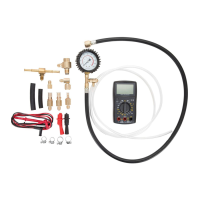
The kit includes a gauge with a rubber boot for protection and appearance, displaying measurement scales for fuel pressure. A pressure relief button is integrated to safely relieve fuel pressure from the gauge hose before disconnection. A 6-foot bleed-off hose is provided for safely bleeding off fuel pressure into an approved container. The kit comes with several adapters to ensure compatibility with a wide range of vehicles:

  • Chrysler/GM Test Port Adapter: For GM, Chrysler, and other vehicles with a Schrader valve test port on the fuel rail.
  • Ford Test Port Adapter: For Ford vehicles with a Schrader valve test port on the fuel rail.
  • GM TBI Test Adapter: For GM TBI vehicles not equipped with a Schrader valve test port.
  • M12 X 1.25 Banjo Bolt Adapter: For Asian, European, and select domestic vehicles with fuel Banjo Bolt Connections (specifically, a 12 mm x 1.25 thread banjo bolt is included).
  • Dual Manifold Test Adapter: For vehicles with rubber hose connections on the fuel rail, fuel line, or fuel filter.

Usage Features:

The Fuel Pressure Test Kit is designed for comprehensive fuel pressure testing across different fuel injection system types, including "port" or "multi-port" fuel injection and Throttle Body Injection (TBI) or Central Fuel Injection (CFI) systems.

Pre-Testing Checks: Before any testing, users must perform a series of pre-checks, including reading safety precautions, visually inspecting the engine and fuel system for damage, verifying adequate fuel supply and battery charge, checking the inertia switch (for certain Ford/Lincoln/Mercury vehicles), ensuring all fuel system fuses are good, verifying the fuel vapor recovery system and gas cap condition, checking manifold vacuum, looking for fuel leaks, checking the ignition system for spark (if the engine won't start), inspecting wire harnesses and electrical connectors, and checking other electrical systems.

Installation Procedures: The manual provides detailed, vehicle-specific installation instructions:

  • For Chrysler/GM Vehicles with Test Port: Involves removing the test cap and screwing the Chrysler/GM test port adapter to the fuel rail test port until finger tight, with a shop rag to catch any fuel leaks.
  • For Ford/Lincoln/Mercury Vehicles with Test Port: Requires removing the test cap, screwing the Ford test port adapter to the fuel rail test port, and then attaching the Chrysler/GM test port adapter to the Ford adapter, all finger tight and with a shop rag.
  • For GM TBI Vehicles Without a Test Port: This procedure is more involved, requiring disabling fuel pump(s) and relieving fuel system pressure, disconnecting the fuel line, attaching the GM TBI test adapter, and then reattaching the fuel line, tightening fittings finger tight and then an additional 1/2 turn with wrenches.
  • For Import and Some Domestic Vehicles with a Banjo Bolt Connection: Involves relieving fuel system pressure, removing the vehicle's fuel bolt, installing the banjo bolt test adapter with new gaskets, and then connecting the hose and pressure gauge assembly.
  • For Import and Domestic Vehicles with Rubber Hose Connections: Requires relieving fuel system pressure, disconnecting the vehicle's rubber fuel line, installing a matching size adapter hose and hose clamps on the dual manifold test adapter, connecting the test adapter hose to the vehicle's fuel line, and then connecting the hose and pressure gauge assembly.

Testing Procedures: After installation, the user places the bleed-off hose in an approved container, turns off all accessories, reactivates the fuel pump, and turns the ignition key ON. The pump should run for approximately 2 seconds. The fuel system is then pressurized by cycling the ignition ON and OFF until manufacturer's specifications are met. Users must check for leaks, read the fuel pressure from the dial face, and cycle the ignition key if pressure is not within specifications. If the engine is started, and the vehicle uses a vacuum-actuated fuel pressure regulator, the fuel pressure should drop 3-10 psi. If the regulator does not have a vacuum port, pressure should remain constant.

Disconnection Procedures: The manual outlines safe disconnection steps, including turning the ignition key OFF, verifying the bleed-off hose is in the container, fully depressing and holding the pressure relief button until the pointer rests on the stop pin, shaking the bleed-off hose to ensure all fuel is in the container, and then removing the gauge hose. Specific instructions are provided for each vehicle type, emphasizing the use of shop rags to catch fuel drips and proper reinstallation of vehicle components.

General Fuel Pressure Diagnostics: The manual explains that fuel pressure readings outside manufacturer specifications indicate problems. High pressure usually points to issues in the fuel return line, while low pressure suggests problems in the fuel pressure line components. Possible causes for high fuel pressure include faulty fuel line couplings, a faulty fuel pressure regulator, sticking fuel injectors, or a restriction in the return line. Possible causes for low fuel pressure include a restriction in the pressure line, a clogged fuel filter, a faulty fuel pressure regulator, a faulty fuel pump, a faulty fuel pump relay, a blown fuel pump fuse, faulty fuel pump wiring, faulty fuel line couplings, or leaking fuel injectors.

Maintenance Features:

The primary maintenance recommendation is to apply a lightweight household oil to the rubber "O" rings inside the adapters before each use. This helps ensure a proper seal and prolongs the life of the components.

Safety Warnings:

The manual includes critical safety warnings:

  • Always wear approved eye protection.
  • NEVER use the kit on Diesel or Flex Fuel engines.
  • Operate the vehicle in a well-ventilated area and DO NOT inhale exhaust gases or fuel vapors.
  • Only use the kit for measuring fuel pressure.
  • NEVER attach or remove the kit from the fuel rail test port with the ignition key on.
  • Always place the bleed-off hose in an approved container for fuel.
  • NEVER smoke or have open flames near the vehicle.
  • NEVER permit fuel to spill on hot engine parts; if a spill occurs, turn the ignition key off and clean up fuel.
  • NEVER leave the vehicle unattended while running tests.
  • Keep yourself, tools, and test equipment away from moving or hot engine parts.
  • Ensure the vehicle is in PARK (automatic) or NEUTRAL (manual) with the parking brake set and drive wheels blocked.
  • NEVER lay tools on the vehicle battery.
  • Keep a fire extinguisher suitable for fuel/electrical/chemical fires handy.
  • Use extreme caution around high-voltage ignition components.
  • Complete all Pre-Testing Checks.
  • Always follow vehicle manufacturer's warnings, cautions, and service procedures.
  • A WARNING regarding Cancer and Reproductive Harm (www.P65Warnings.ca.gov) is also included.
  • For GM TBI vehicles, a warning emphasizes disabling all fuel pumps to prevent spilled fuel, fire, or other hazardous conditions.

The OEM® 27167 Fuel Pressure Test Kit is a robust diagnostic tool, emphasizing safety and precision for effective fuel system troubleshooting.

OEM 27167 Specifications

General IconGeneral
BrandOEM
Model27167
CategoryTest Equipment
LanguageEnglish