1/General Information
1-2 1-26600 0341 000 04/25/00
A light filter, positioned in front of the lamp, rejects light outside the 400 to 550 nanom-
eter range. This filter blocks nearly all ultra-violet and infrared light; only the blue light is
allowed to pass. This filtered light is focused on the inlet of the fiber optic cable.
Light intensity may be selected by the front panel brightness rotary control. Control
range is from 19± 4.75 µW/cm
2
/nm at full counter clockwise to 45± 11.25 µW/cm
2
/nm
at full clockwise with a medium detent at 32± 8 µW/cm
2
/nm. See Light Output Measure-
ment Procedures in Section 4 for precise light output measurement.
Mode select
Selects the operating mode ; phototherapy or transillumination. Using the Ohmeda
transilluminator light pipe, the BiliBlanket Plus High Output System can be used as a
transilluminator.
Supply power
Power for the light source unit can be supplied by any standard AC mains power
source at either 50 or 60 Hz that have voltages in the range: 90 - 132 or 180 - 264.
Power enters the light source through a receptacle that has an integral power switch.
Cooling
A fan cools the light source unit. A thermal cutout switch located next to the light-filter
protects the light source unit and fiber optic cable or transilluminator from overheating.
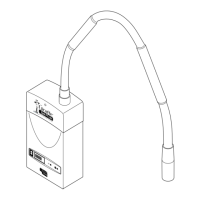
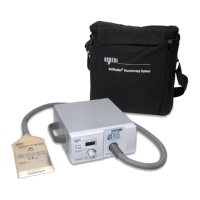
Fiber optic cable
The fiber optic cable contains 2400 individual plastic fibers which transmit the light from
the light source to the light pad. The light pad is constructed by weaving these fibers
into a mat. This patented process produces a pad with light over the entire surface.
These fibers are randomized in the cable to eliminate any local intensity gradients due
to bulb hot spots, dust on the filter, dust on the cable end, etc. This allows the nearly
uniform, continuous blanket of light. A disposable protective pad cover is provided to
reduce the risk of cross-contamination and make the patient more comfortable.
Disposable cover
The disposable cover is designed for use with both premature and full-term infants. The
infant lies directly on the disposable-covered pad without any method of attachment
between the pad and the infant.


 To Next Page