29
MATERIALS TO BE AVOIDED IN MICROWAVE OVEN
* Combination: applicable for both “microwave+grill”, and “microwave+connection” cooking.
12
UTENSILS
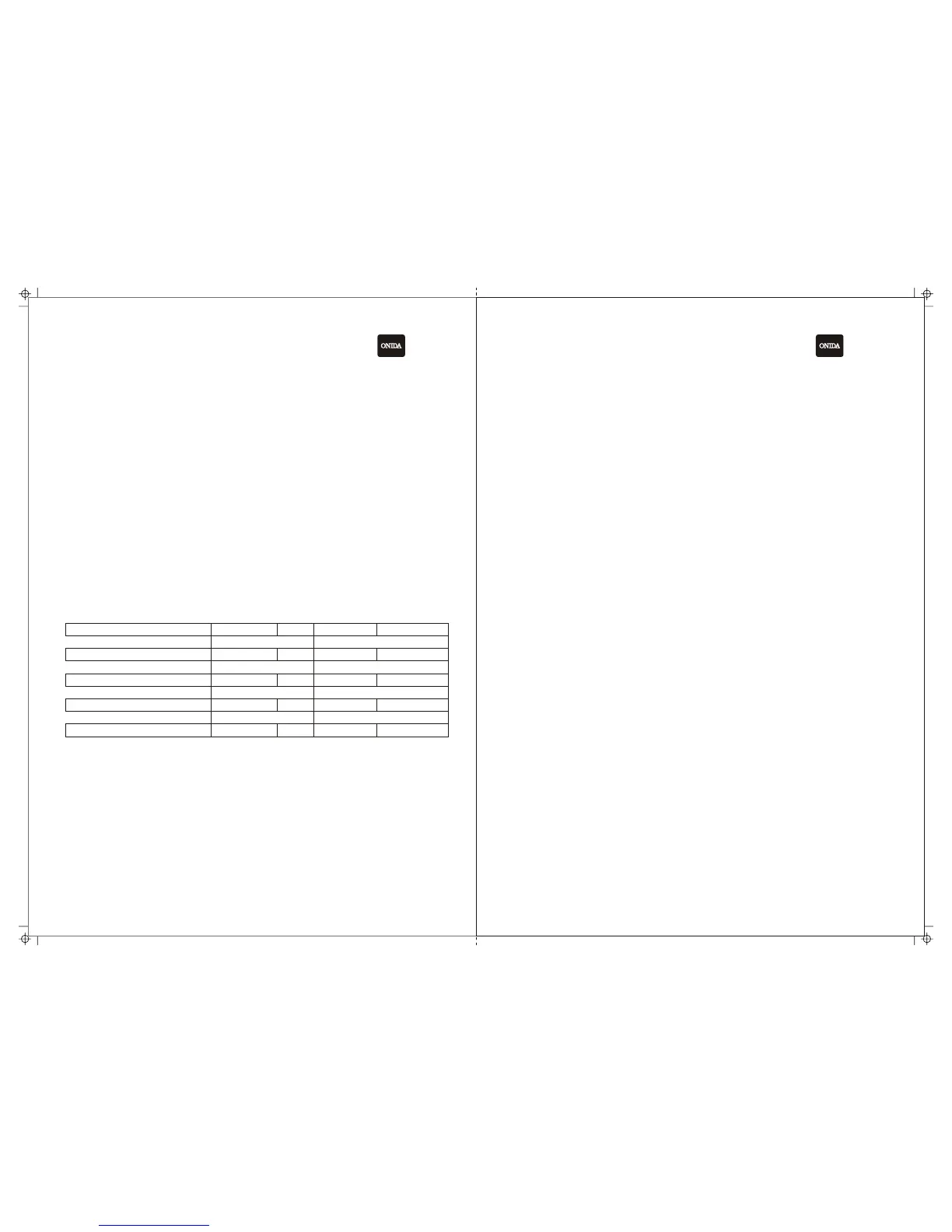
Cookware Microwave Grill Convection Combination*
Heat Resistant Glass Yes Yes Yes Yes
Non Heat Resistant Glass No No No No
Heat Resistant Ceramics Yes Yes Yes Yes
Microwave Safe Plastic Dish Yes No No No
Kitchen Paper Yes No No No
Metal Tray No Yes Yes No
Metal Rack No Yes Yes No
Aluminum Foil & Foil Container No Yes Yes No
Utensil Test:
You can test the utensil in question following the procedure below:
1. Fill a microwave-safe container with 1 cup of cold water (250ml) along with the utensil in
question.
2. Cook on maximum power for 1 minute.
3. Carefully feel the utensil. If the empty utensil is warm, do not use it for microwave cooking.
4. Do not exceed 1 minute cooking time.
CAUTION
Personal Injury Hazard: Tightly-closed utensils could explode. Closed containers are opened
and plastic pouches pierced before cooking.
Utensils Remarks
Aluminum tray May cause arcing. Transfer food into microwave-safe dish.
Food carton with May cause arcing. Transfer food into microwave-safe dish.
metal handle
Metal or metal- Metal shields the food from microwave energy. Metal trim may
trimmed Utensils cause arcing.
Metal twist ties May cause arcing and could cause a fire in the oven.
Paper bags May cause a fire in the oven.
Plastic Foam Plastic foam may melt or contaminate the liquid inside when
exposed to high temperature.
Wood Wood will dry out when used in the microwave oven and may spilt or crack.
MICROWAVE OVEN MICROWAVE OVEN
CLEANING AND CARE
1. Turn off the oven and remove the power plug from the wall socket before cleaning.
2. Keep the inside of the oven clean. When food splatters or spilled liquids adhere to oven
walls, wipe with a damp cloth. Mild detergent may be used if the oven gets very dirty.
Avoid the use of spray and other harsh cleaners as they may stain,
streak or dull the door surface.
3. The outside surfaces should be cleaned with a damp cloth.
To prevent damage to the operating parts inside the oven, water should not be allowed
to seep into the ventilation openings.
4. Wipe the door and window on both sides, the door seals and adjacent parts frequently
with a damp cloth to remove any spills or spatters. Do not use abrasive cleaner.
5. Do not allow the control panel to become wet. Clean with a soft, damp cloth. When
cleaning the control panel, leave oven door open to prevent oven from accidentally
turning on.
6. If steam accumulates inside or around the outside of the oven door, wipe with a soft
cloth. This may occur when the microwave oven is operated under high humidity
conditions, this is normal.
7. It is occasionally necessary to remove the glass tray for cleaning. Wash the tray in
warm sudsy water or in a dishwasher.
8. The roller ring and oven floor should be cleaned regularly to avoid excessive noise.
Simply wipe the bottom surface of the oven with mild detergent. The roller ring may be
washed in mild sudsy water or dishwasher. When removing the roller ring from cavity
floor for cleaning, be sure to replace in the proper position.
9. Remove odors from your oven by combining a cup of water with the juice and skin of
one lemon in a deep microwaveable bowl, microwave for 5 minutes.
Wipe thoroughly and dry with a soft cloth.
10. When it becomes necessary to replace the oven light, please consult a dealer to have
it replaced.


 To Next Page