ON
OFF
Once the preheating flames are almost out, open the control valve
again by about a quarter turn. If the burner is hot enough, the fuel
will vaporize and be ignited by the preheating flame. The flame
should then turn bluish and hiss gently after a short time. If the
vaporized fuel does not ignite, light it carefully with a match.
A yellow, flaring flame means that the burner is not hot enough or that you have opened the control
valve too far. Start off by closing the control a little. If the flame does not turn blue after 10-15 sec-
onds, the burner is not hot enough and you have to preheat the stove for a little longer. In this case,
close the control valve one more time, wait until the flames are almost out and then open the control
valve again.
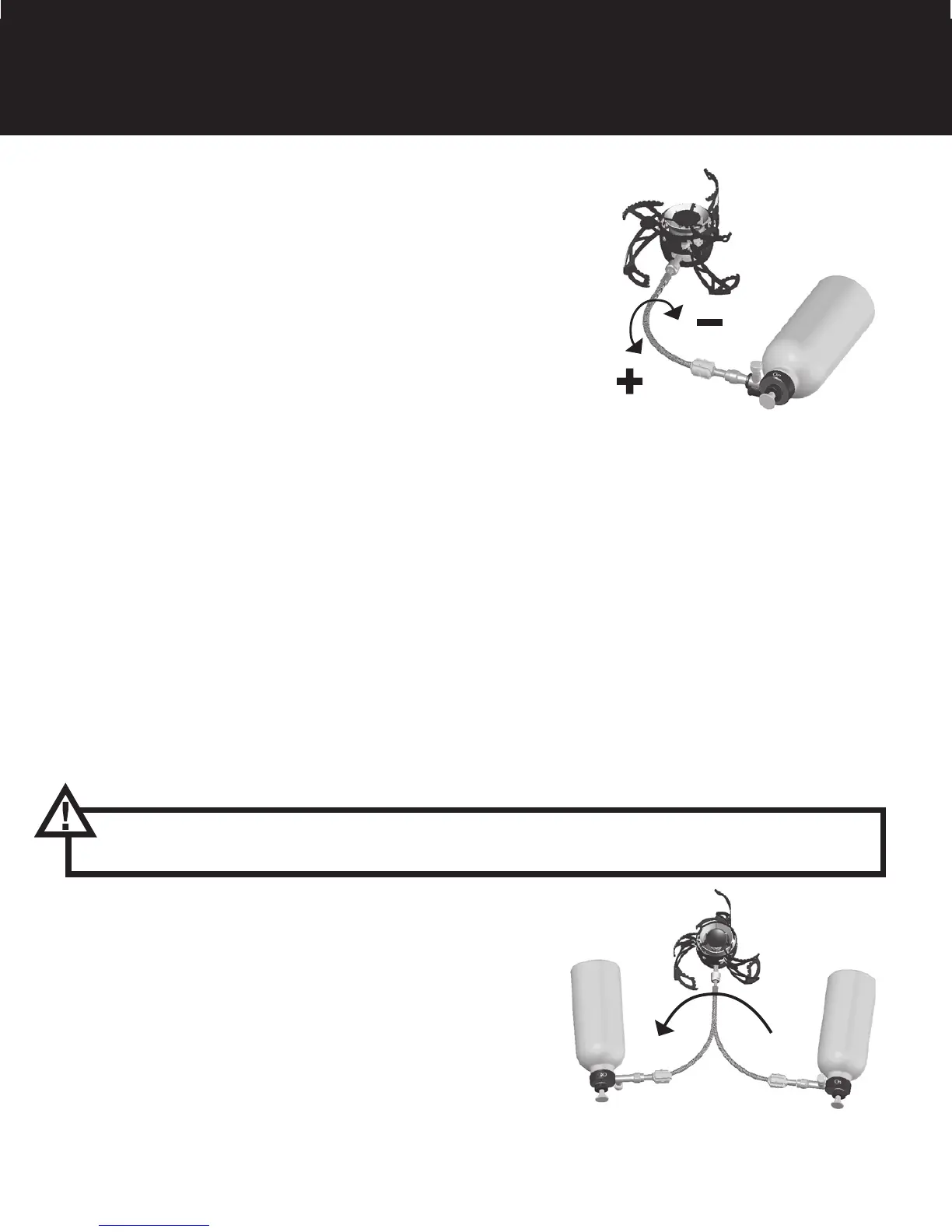
When the stove is burning as it should, you can gradually open the control valve and make it hotter.
Maximum heat is attained when the control valve has been opened by about two turns. If you open
it by more than two turns, you will use up more fuel without making the stove any hotter. If the flame
flares up and turns yellow, turn down the control slightly and wait until the flame has turned blue
again.
The burner is designed to burn best and give maximum heat with a pan in place.
Once the stove has been burning for a while, it may be a good idea to pump a couple of times in order
to maintain pressure in the bottle. Too little pressure in the bottle will result in poor performance. Too
much pressure will also lead to poor performance and a yellow, flaring flame. With a little practice,
you will learn how often and how much to pump in order to maintain an effective flame.
8
Open the control valve again and adjust
the flame until it turns blue and there is
a hissing sound.
WARNING! Never move a hot stove or a stove that is in use.
9
Shut off the stove by turning the
bottle to OFF position.
If you want to avoid annoying fuel spills when you dis-
mantle and transport the stove, shut it off by turning the
fuel bottle to OFF position. OFF will then be visible from
above on the pump. The fuel in the hose will now burn up
and the remaining pressure in the bottle will seep out. The
EN - HOW YOUR STOVE WORKS


 To Next Page