Polling Base Mode
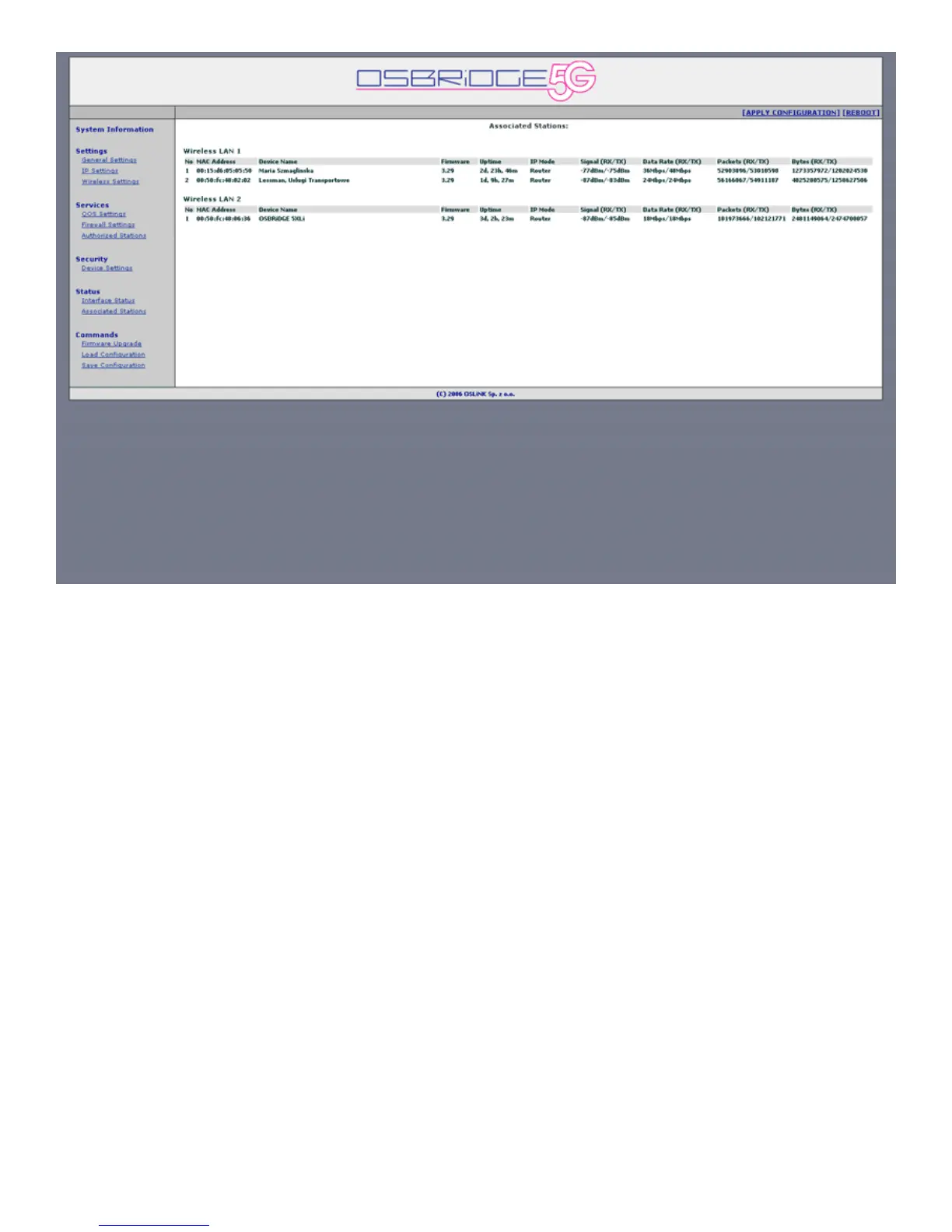
No – Number of the associated entry.
MAC Address – MAC address of the associated device.
Device Name – Device Name that has been configured on the client device, ie. if the client
device is OSBRiDGE 5GXi operating in polling client mode and you configure device name "Uncle
Sam" on it then that name will show up here in the associated stations list.
Firmware – Firmware version the client device operates.
Uptime – Uptime of the client device. This is the actual uptime of the client device since last
reboot, not the time the device has been connected to the OSBRiDGE 5G.
IP Mode – mode the client device operates - ie. Bridge, Router or NAT Router.
Signal (RX/TX) – Signal strength in dBm for associated device. The RX Signal strength is the
signal level the OSBRiDGE 5G device sees the client with, the TX Signal stregnth is the signal
level the client device sees the OSBRiDGE 5G base station device with.
Data Rate (RX/TX) – Over Air Data Rate for associated device. RX Data Rate is the speed at
which OSBRiDGE 5G device receives packets from the client, TX Data Rate is the speed at which
OSBRiDGE 5G device sends packets to the client.
Packets (RX/TX) – Number of data packets that have been received (RX Packets) and
transmited (TX Packets) to/from the station since it associated itself to the OSBRiDGE 5G device.
Bytes (RX/TX) – Number of bytes that have been received (RX Bytes) and transmited (TX
Bytes) to/from the station since it associated itself to the OSBRiDGE 5G device.


 To Next Page
 Loading...