Regarding the application of the CUFF and its pressurization on any limb where
vascular access or therapy, or an arteriole-venous (A-V) shunt, is present
because of temporary interference to blood ow and could result in injury to the
PATIENT;
Regarding the application of the CUFF and its pressurization on the arm on the
side of Brachial Artery;
Pressurization of the CUFF can temporarily cause loss of function simultaneously
used monitoring ME EQUIPMENT on the same limb;
Regarding the need to check (for example, by observation of the limb
concerned) that operation of the AUTOMATED Blood Pressure Monitor does not
result in prolonged impairment of the circulation of the blood of the PATIENT.
When the arm is oppressed by air pressure, please loosen CUFF or remove
batteries.
Please do not touch the patient and battery output simultaneously when
measuring.
Warning: Do not allow to use the lure connectors. If lure lock connectors be
used in the construction of tubing, there is a risk that they might be
inadvertently connected to vascular fluid systems and allowing air to be
pumped into a blood vessel.
Warning: Portable RF communications equipment (including peripherals such
as antenna cables and external antennas) should be used no closer than 30 cm
(12 inches) to any part of the Blood Pressure Monitor, including cables specified
by the manufacturer. Otherwise, weakening of the performance of this
equipment could cause.
Warning: Keep BPM out of reach of children and animals.
Warning: A child or animal is strangled due to the too long air hose.
Warning: The risk of accidental ingestion due to the small parts that can be
disassembled (such as batteries, etc.) after being touched by a child; Place the
product out of the reach of children, etc.; use it under the supervision of an
adult, etc.
1.3 Warning and safety notices
2. Operating Procedure
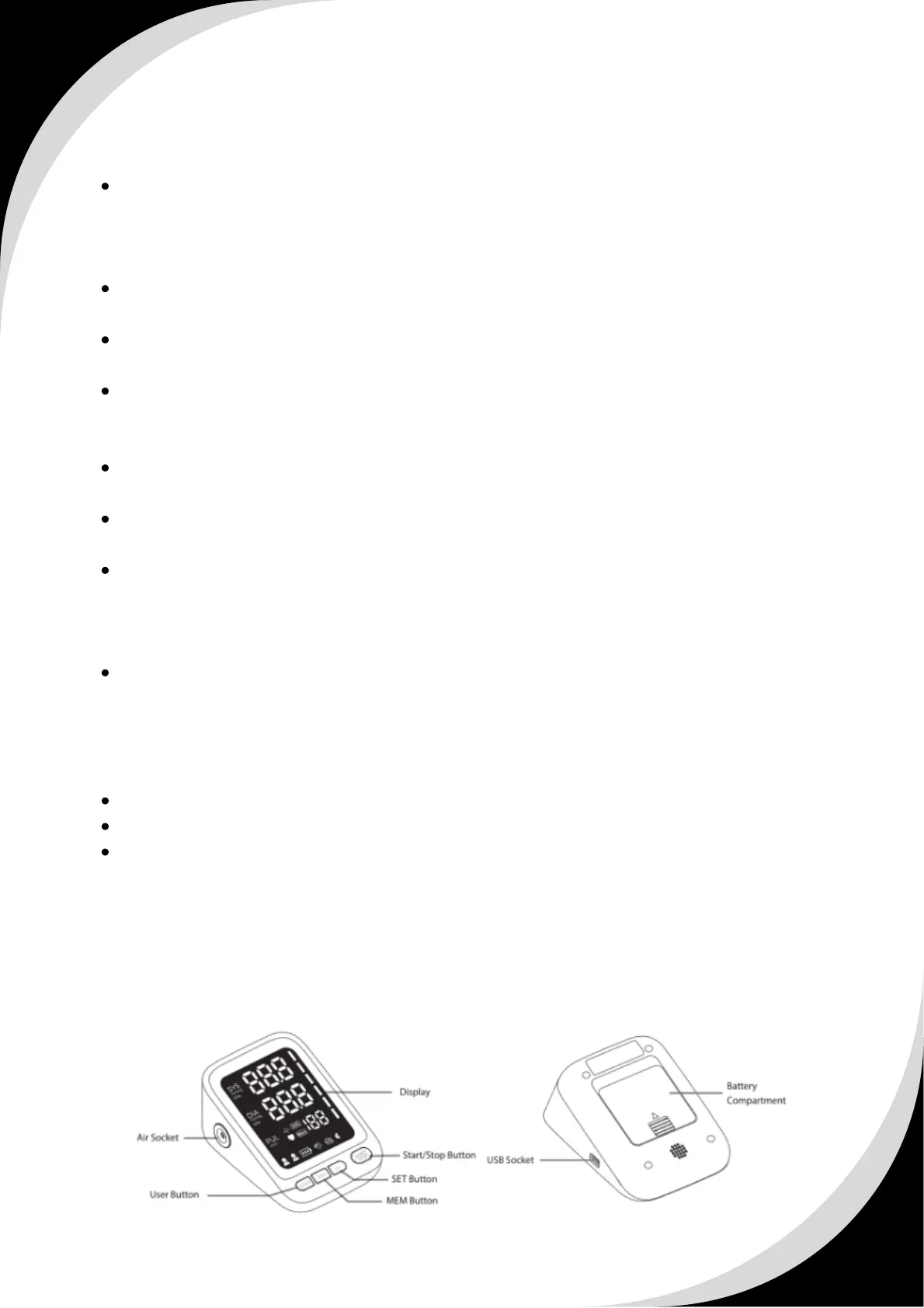
2.1 Introduction of machine body


 To Next Page
 Loading...