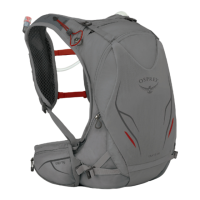
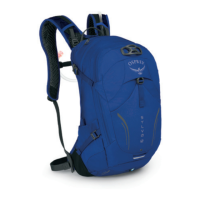
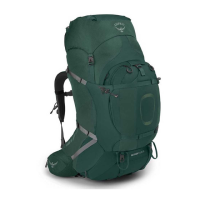
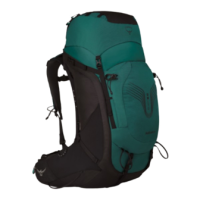
OSPREY UNLTD AIRSCAPE
®
68
5
SIZING / FIT
HOW TO MEASURE FOR TORSO SIZE
PACK FIT INSTRUCTIONS
1 PREPARE THE PACK
Release the Torso Length Adjuster CamLock buckle by lifting up on the tab and sliding the shoulder strap yoke up to its upper
position. This will require alternately releasing one side and sliding the yoke upward as far as it goes and then repeating on the
other side until the yoke reaches the top of its adjustment range.
Loosen the pack’s hipbelt and harness webbing to make it easy to put the pack on.
Without weight in the pack, it is difficult to properly adjust for fit, so load the pack with 10-20 lbs./4-9 kg. of gear.
2 POSITION THE PACK
Put the pack on and position the hipbelt so the iliac crest (upper edge of hipbone) is about 1.5” (4 cm.) below the upper edge
of the belt. While hipbelt position is a matter of personal preference and specific body geometry, this recommendation is a
solid starting point that delivers an excellent balance of load transfer and freedom of motion.
3 BUCKLE HIPBELT
Buckle and tighten the hipbelt evenly using Osprey’s cross-body ErgoPull. The padding on the hipbelt is adjustable for length,
but that step will come later. For now, it is OK to leave it in the original position.
The Osprey UNLTD AirScape is designed to deliver outstanding comfort on the trail through the use of technologically advanced materials and versatile
fit adjustments. The packs are available in men’s and women’s fit, in two sizes each. Sizing is based on torso length, as measured from the top of the
hipbones to the C7 vertebra. Choosing the correct size is the critical first step.
Fitting involves adjusting the pack to optimize comfort. Fitting begins with setting the torso length of the pack and then fine tuning the harness and
hipbelt lengths to user preference. After initial adjustments are made, it is good practice to take the pack on a test hike with a moderate load to
further evaluate the comfort. All settings can be quickly readjusted in the field. It should be expected that tweaking the fit under load and in use is
key to getting the most out of the pack design.


 To Next Page
 Loading...