
 Need help?
Do you have a question about the OVERBECK MACHINE LT-1BR and is the answer not in the manual?
Avoid wet operation, use of liquids, improper setup, and unauthorized modifications.
Mandates safety glasses, hearing protection, dust mask, and qualified personnel checks.
Specifies rules for spindle lock, collet insertion, and preventing rotation during adjustments.
Details 'DO NOT' actions such as protruding parts, wearing jewelry, or leaving unattended.
Procedure for cleaning the machine, spindle taper, and reporting issues.
Highlights risks of user modifications, non-factory parts, and improper use leading to injury.
Defines the intended applications for the Twister Speed Lathe: sanding, polishing, deburring, etc.
States operational noise level (68 db(A)) and mentions dust/fumes from materials.
Warns about unguarded spinning parts like collets, closer assembly, and knurled rings causing injury.
Recommends bolting the machine down or placing it carefully on the work surface.
Details methods for stopping the spindle and machine, including emergency shutdown.
Stipulates that only qualified and authorized personnel should operate or set up the machine.
Specifies mandatory PPE: safety glasses, hearing protection (NRR 32db), and dust respirator (N95).
Emphasizes understanding safety sections before installation; notes foot switch operation.
Instructions for removing from base, placement on a level surface, and securing with fasteners.
Guidance on placement, securing with holes, and using rubber pads/bushings for lightweight casting.
Details 5C collet specifications (1.2500" diameter, thread relief) and manufacturer recommendations.
Step-by-step guide for inserting, adjusting, and securing the collet and workpiece.
Procedure for turning the machine on, setting rotation, and stopping the spindle using the switch.
Instructions on using the foot switch for spindle start and stop operations.
How to select the desired spindle rotation direction (Normal or Reverse).
Guidance on speed selection for different operations and troubleshooting common collet issues.
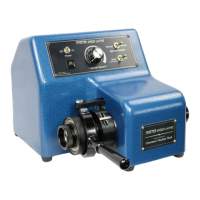
The Overbeck Machine Twister Speed Lathe is a specialized tool designed for precise sanding, polishing, deburring, filing, scraping, gauging, and assembly operations. It is available in two models, the LT-1BR and LT-2AR, both engineered for efficient and safe material processing.
The Twister Speed Lathe's primary function is to rotate a workpiece at controlled speeds, allowing for various finishing and shaping tasks. It utilizes 5C collets to securely hold workpieces, ensuring stability during operation. The machine is equipped with a spindle that can rotate in both forward (normal) and reverse directions, offering versatility for different applications. Speed adjustments are made via a dedicated knob, allowing operators to fine-tune the rotation speed to suit the material and task at hand. For quick stopping, the machine features a brake function, which can be activated either by a BRAKE-RUN switch or a foot switch. This dual control mechanism enhances operational flexibility and safety. The collet closer assembly, including a knurled knob and handle, facilitates easy and secure clamping and release of workpieces. A spindle lock plunger is also incorporated to prevent rotation when adjusting the collet or performing maintenance.
Operating the Twister Speed Lathe requires adherence to specific procedures to ensure safety and optimal performance. Before any operation, the main power switch must be in the OFF position. Workpieces are secured using 5C collets, which must conform to specific dimensions, particularly regarding the 1.2500-inch diameter and thread relief width, to prevent issues like collet rotation or spindle key entanglement. The collet tension is adjustable via a knurled knob and adjusting finger, allowing operators to achieve the desired gripping firmness for various workpiece diameters. It is crucial to ensure the collet and spindle bore are clean before insertion.
To start the spindle, the main power switch is turned ON, the SPINDLE ROTATION switch is set to NORMAL or REVERSE, and the BRAKE-RUN switch is moved to RUN. Alternatively, if using the foot switch, the BRAKE-RUN switch should remain in the BRAKE position, and the foot switch is pressed for rotation and released to stop. The spindle speed is then adjusted using the SPINDLE SPEED knob. For stopping, the BRAKE-RUN switch is moved to BRAKE. It is imperative that the collet closer is not opened or closed while the spindle is rotating, and the spindle lock plunger should not be pressed when the spindle is in motion.
The machine is designed for use with workpieces that do not protrude more than three inches from the spindle end. Polishing is generally performed at high speeds, while deburring and filing are done at lower speeds, especially for larger diameter parts. If chatter occurs, operators are advised to ensure their scraper is sharp and to reduce spindle speed. The machine's smooth and easy function is a hallmark, and any issues with collet fit or gripping should prompt a check for dirt or damage to the collet or draw tube threads.
Regular maintenance is essential for the longevity and safe operation of the Twister Speed Lathe. At the end of each day or shift, the machine should be wiped down to remove dust and debris, and the collet should be removed, and the spindle taper cleaned. Any functional or safety issues observed during this routine cleanup should be reported to the shift manager.
For installation, the LT-1BR model must be removed from its shipping base and placed on a clean, dry, and level surface, at least three inches from the edge of the mounting surface. It can be fastened using a 5/16-18 fastener screwed into a tapped hole on the bottom, ensuring the fastener is not overtightened to prevent drive belt slippage or motor damage. The LT-2AR model also requires placement on a clean, dry, and level surface, at least three inches from the edge. It has three 0.50-inch diameter holes for fastening. When bolting down the LT-2AR, especially to a workbench, rubber pads and bushings are recommended to prevent distortion of the lightweight aluminum alloy casting. Fasteners should be tightened just enough to slightly compress the rubber pads, ensuring no lateral movement. For flat machined surfaces, rubber pads are not needed, and 3/8-inch diameter fasteners should be torqued to a maximum of 10 Ft-Lb.
It is crucial to disconnect the machine from the power source before performing any service or maintenance. Modifications to the Twister Speed Lathe or the use of non-factory replacement parts will void the warranty and can lead to degraded or unsafe mechanical or electrical function, potentially causing injury or death. The machine is not designed for use with chucks or fixtures in the spindle.
 General
| Swing Over Bed | Unknown |
|---|---|
| Distance Between Centers | Unknown |
| Spindle Bore | Unknown |
| Spindle Speed | 70-3000 rpm |
| Spindle speed range | 70-3000 rpm |

 To Next Page