HSS-5000
4.
SANDING
5. TIPS
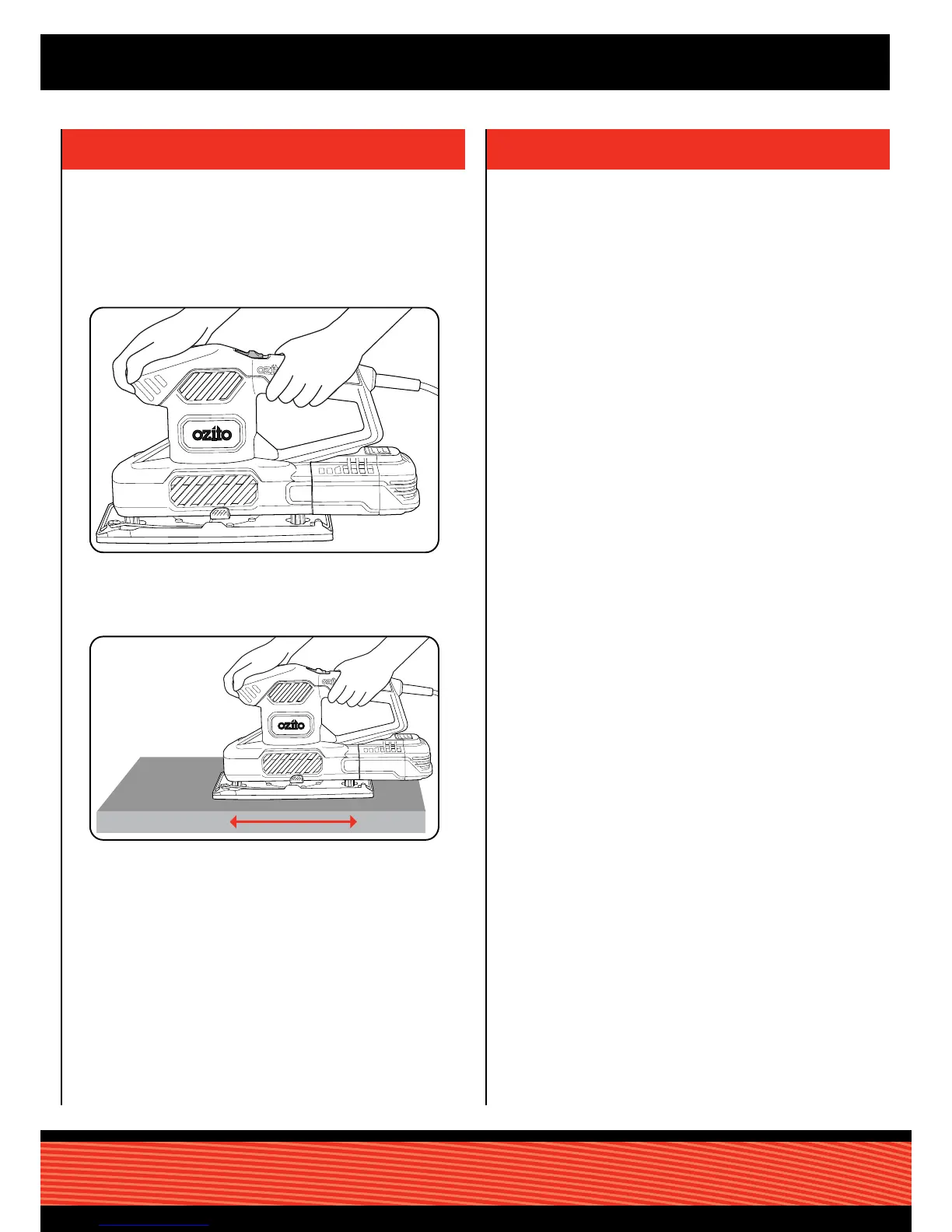
1. Secure the material to be sanded.
2. Firmly grasp the sander. Turn it on and let the motor build up to
maximum speed. Gradually lower it onto the workpiece using a
forward movement.
3. For optimum results, use backward and forward strokes.
Note: Keep the entire sanding pad in contact with the workpiece at
all times during sanding.
• Never force the sander. The weight of the sander supplies
adequate pressure, allowing the sandpaper to do the work.
Applying additional pressure will slow the motor, rapidly wear
the sandpaper, and greatly reduce the sander speed. This will
slow the removal rate and produce an inferior quality surface.
CAUTION: Excessive pressure will overload the motor, causing
possible damage to the sander by overheating the motor; or
damage to the workpiece.
• Check your workpiece often. The sander is capable of
removing material rapidly, especially with coarse paper.
• The orbital action of your sander allows you to sand with the
grain, or at any angle across it for most sanding jobs. In the
nal stages a better nish will be achieved by sanding with
the grain.
• Do not sand on one spot for too long. The sader’s rapid
action may remove too much material, creating an uneven
surface.



 To Next Page