EasyManua.ls Logo

Ozito PXC PXMBC-004 - User Manual

Ozito PXC PXMBC-004
2 pages
Print Icon
To Next Page IconTo Next Page
Loading...
PORT 1
PLACE BATTERIES INTO PORTS IN SEQUENCE 1 TO 4
PORT 3
3
1
CARING FOR THE ENVIRONMENT
Power tools that are no longer usable should not be disposed of with household
waste but in an environmentally friendly way. Please recycle where facilities exist.
Check with your local council authority for recycling advice.
Recycling packaging reduces the need for landll and raw materials. Reuse of
recycled material decreases pollution in the environment. Please recycle packaging
where facilities exist. Check with your local council authority for recycling advice.
DESCRIPTION OF SYMBOLS
3
1. Carry Handle
2. Charging Unit LEDs
3. Charging Ports
ozito.com.au
2
1
4A FOUR PORT
FAST CHARGER
INSTRUCTION MANUAL
PXMBC-004
SPECIFICATIONS
Input: 220-240V ~AC 50-60Hz, 195W
Output: 18V DC, 4A
Charge Time: 24Min - PXBP-150 (18V 1.5Ah)
30Min - PXBP-200 (18V 2.0Ah)
37Min - PXBP-250 (18V 2.5Ah)
45Min - PXBP-300 (18V 3.0Ah)
60Min - PXBP-400 (18V 4.0Ah)
80Min - PXUBP-520 (18V 5.2Ah Ultra)
90Min - PXUBP-460 (18V 6.0Ah Max.)
120Min - PXUBP-580 (18V 8.0Ah Max.)
Indoor use only Do not dispose of in rubbish
Do not charge battery in
temperatures exceeding 40°C
3.15A Slow blow fuse
Warning
Regulatory Compliance Mark
(RCM)
Double insulated
V
Volts
Hz
Hertz
~
AhA
Alternating current Direct current
Amp hoursAmperes
Read Instruction Manual
>40°C
T3.15A
Before using the charger or battery read all instructions and cautionary markings on the charger, battery pack and the
product using the battery pack. Do not lose these safety instructions.
Battery Warnings
1. The battery pack is not fully charged out of the carton. First read the safety instructions and then follow the charging
notes and procedures.
2. For optimum battery performance avoid low discharge cycles. Charge the battery pack frequently.
3. Use and store the battery pack in dry conditions with low humidity between 0-50°C, ideally at 15°C. Avoid exposing
battery pack and charger to direct sunlight.
4. Do not keep battery pack in places where temperatures are liable to reach over 50°C, such as in a car, metal shed or
similar that is in direct sunlight.
5. Do not ignite the battery pack or expose it to re. There is a risk of explosion!
6. Do not exhaustively discharge batteries. Exhaustive discharge will damage the battery cells. The most common cause
of exhaustive discharge is long-term storage and continued use of low-charge batteries. Always store the battery with
some charge. Charge the batteries every 2-3 months to restore charge. Stop working as soon as the performance of the
battery falls noticeably or the electronic protection system triggers.
7. Protect batteries and the tool from overloads. Overloads will quickly result in overheating and cell damage inside the
battery housing without this overheating being apparent externally.
8. Avoid damage and shocks. Do not use batteries which have been dropped from a height of more than one meter or
strong external impact, even if the housing of the battery pack appears to be undamaged. The battery cells inside the
battery may have suffered serious damage. 
9. If the battery pack suffers overloading and overheating, the integrated protective cut-off will switch off the equipment.
Do not press the ON/OFF switch on the tool if the protective cut-off has actuated. This may damage the battery pack.
Allow the battery to cool to room temperature before use.
10. Use only original battery packs. The use of other batteries may result in injuries, explosion and a re risk.
11. Protect your rechargeable battery against moisture, rain and high humidity. Moisture, rain and high humidity can cause
dangerous cell damage. Never charge or use batteries which have been exposed to moisture, rain or high humidity.
12. Never attempt to open the battery pack for any reason. If the plastic housing of the battery pack is damaged, do not
use the battery.
13. When battery pack is not in use, keep it away from other metal objects, like paper clips, coins, keys, nails, screws or
other small metal objects, that can make a connection from one terminal to another. Shorting the battery terminals
together may cause burns or a re.
14. Under abusive conditions, liquid may be ejected from the battery; avoid contact. If accidental contact occurs, ush with
water and seek medical help immediately. Liquid ejected from the battery may cause irritation or burns.
15. Do not use a battery pack or tool that is damaged or modied. Damaged or modied batteries may exhibit unpredictable
behaviour resulting in re, explosion or risk of injury.
16. Do not expose a battery pack or tool to re or excessive temperature. Exposure to re or temperature above 130°C may
cause explosion.
17. Never service damaged battery packs. Service of battery packs should only be performed by the manufacturer.
18. Do not disassemble Battery. This may result in a risk of electric shock, electrocution or re.
Charger Warnings
19. Please check the data marked on the rating plate of the battery charger. Ensure to only connect the battery charger to a
power supply with the voltage marked on the rating plate.
20. Protect the battery charger and its cable from damage and sharp edges. Have damaged cables repaired by an
authorised service agent before use.
21. Keep the battery charger, batteries and the cordless tool out of children’s reach.
22. Do not use damaged battery chargers.
23. Do not use the supplied battery charger to charge other cordless tools. Only charge Ozito Power X Change rechargeable
batteries with an Ozito Power X Change Charger.
24. The battery pack may become warm during use. Allow the battery pack to cool to room temperature before commencing
with the charging.
25. Do not over-charge batteries. Do not exceed the maximum charging times. These charging times only apply to
discharged batteries. Frequent insertion of a charged or partly charged battery pack will result in over-charging and cell
damage. Do not leave fully charged batteries in the charger.
26. Charge the battery pack in dry conditions with low humidity between 10-40°C. Avoid exposing battery pack and charger
to direct sunlight.
27. Do not use batteries which have suffered deformation during the charging process or shows any other signs of
abnormalities including, excessive curvature of the housing, gassing, hissing or cracking.
28. Never fully discharge the battery pack. A complete discharge of the battery pack will lead to premature ageing of the
battery cells.
29. Never charge the batteries unsupervised.
30. Do not cover or place any object on top of the charger, place the charger away from heat sources.
31. To reduce risk of damage to the electric plug and cord, pull by the plug rather than the cord when disconnecting the
charger.
32. Make sure the cord is located so that it will not be stepped on, tripped over, or otherwise subjected to damage or
stress.
33. An extension cord should not be used unless necessary. Use of an improper extension cord could result in the risk of
re, electric shock or electrocution.
34. Do not disassemble charger. This may result in a risk of electric shock, electrocution or re.
35. To reduce risk of electric shock, unplug the charger from the outlet before attempting any cleaning. Removing the
battery pack will not reduce this risk.
36. Do not use the cordless tool or the battery charger near vapours and inammable liquids.
BATTERY & CHARGER SAFETY WARNINGS
ELECTRICAL SAFETY
WARNING! When using electric tools basic safety precautions should always be followed to reduce
the risk of fire, electric shock and personal injury.
Read the whole manual carefully and make sure you know how to switch the tool off in an emergency, before
operating the tool. Save these instructions and other documents supplied with this tool for future reference.
This appliance is not intended for use by persons (including children) with reduced physical, sensory or
mental capabilities, or lack of experience and knowledge, unless they have been given supervision or
instruction concerning use of the appliance by a person responsible for their safety. Children should be
supervised to ensure that they do not play with the appliance.
Always check that the power supply corresponds to the voltage on the rating plate.
The power supply for this product should be protected by a residual current device (rated at 30mA or less). A
residual current device reduces the risk of electric shock.
Inspect tool cords periodically and if damaged have them replaced by a certified electrician.
Always use an approved extension lead suitable for the power input of this tool. Before use, inspect the
extension lead for signs of damage, wear and ageing. Replace the extension lead if damaged or defective.
When using an extension lead on a reel, always unwind the lead completely. Do not use a damaged
extension lead, or an extension lead that is not suitable for the power input of the tool. Failure to do so may
result in a risk of fire and electric shock and will void the warranty.
If the supply cord is damaged, it must be replaced by a qualified electrician in order to avoid a hazard.

Question and Answer IconNeed help?

Do you have a question about the Ozito PXC PXMBC-004 and is the answer not in the manual?

Summary

Battery & Charger Safety Warnings

Battery Warnings

Safety guidelines for handling, storage, and use of battery packs to prevent hazards.

Charger Warnings

Safety instructions and precautions for operating the battery charger safely.

Electrical Safety

Essential electrical safety measures to reduce risks of shock, fire, and injury.

Product Specifications & Symbols

Specifications

Technical details including input, output, and charging times for various batteries.

Description of Symbols

Explanation of symbols used on the charger and in the manual.

Charging a Battery

Charger LED Indicator Lights

Details the meaning of LED indicators for battery charging status.

Maintenance and Warranty

Maintenance

Instructions for cleaning and maintaining the charger.

36 Month Replacement Warranty

Information on the product's warranty period and replacement terms.

Warranty Void Conditions

Actions that will result in the warranty being voided.

Summary

Battery & Charger Safety Warnings

Battery Warnings

Safety guidelines for handling, storage, and use of battery packs to prevent hazards.

Charger Warnings

Safety instructions and precautions for operating the battery charger safely.

Electrical Safety

Essential electrical safety measures to reduce risks of shock, fire, and injury.

Product Specifications & Symbols

Specifications

Technical details including input, output, and charging times for various batteries.

Description of Symbols

Explanation of symbols used on the charger and in the manual.

Charging a Battery

Charger LED Indicator Lights

Details the meaning of LED indicators for battery charging status.

Maintenance and Warranty

Maintenance

Instructions for cleaning and maintaining the charger.

36 Month Replacement Warranty

Information on the product's warranty period and replacement terms.

Warranty Void Conditions

Actions that will result in the warranty being voided.

Overview

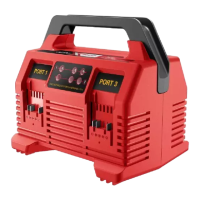
This document describes the Ozito PXMBC-004 18V Lithium Ion 4A Four Port Fast Charger, a device designed for charging Ozito 18V Lithium Ion batteries.

Function Description:

The Ozito PXMBC-004 is a multi-port fast charger capable of simultaneously charging up to four Ozito 18V Lithium Ion batteries. It is designed to provide efficient and rapid charging, indicated by various LED light statuses for each port. The charger ensures batteries are charged safely and effectively, with built-in protections and indicators for different charging stages and potential issues.

Important Technical Specifications:

  • Input: 220-240V ~ AC 50-60Hz, 195W
  • Output: 18V DC, 4A
  • Charge Time (Approximate):
    • 24Min - PXBP-150 (18V 1.5Ah)
    • 30Min - PXBP-200 (18V 2.0Ah)
    • 36Min - PXBP-250 (18V 2.5Ah)
    • 45Min - PXBP-300 (18V 3.0Ah)
    • 60Min - PXBP-400 (18V 4.0Ah)
    • 80Min - PXUBP-520 (18V 5.2Ah Ultra)
    • 90Min - PXBP-600 (18V 6.0Ah X-L)
    • 120Min - PXUBP-580 (18V 8.0Ah Max.)
  • Warranty: 3 Year Replacement Warranty for DIY use.
  • Safety Features: Requires protection by a Residual Current Device (RCD) rated at 30mA or less. Includes warnings against covering the charger, placing objects on it, and placing it near heat sources.

Usage Features:

  • Multi-Port Charging: The charger features four ports, allowing for sequential charging of up to four batteries. When four batteries are plugged in, the first pair will charge, followed automatically by the next two once the first pair is complete.
  • LED Indicator Lights:
    • GREEN (Flashing): Stand By (no battery pack inserted).
    • YELLOW (Flashing): Battery is in charging queue, waiting for other batteries to finish.
    • YELLOW (Illuminated) & RED (Flashing): Battery is trickle charging.
    • YELLOW & RED (Illuminated): Battery is charging.
    • GREEN (Illuminated): Battery is 85% - 100% charged and ready for use.
    • RED & GREEN (Illuminated): Battery pack is too hot or too cold; charging will begin automatically when the correct temperature is reached.
    • RED & GREEN (Flashing): Battery is defective, charging is no longer possible. Contact Ozito Customer Service.
  • Connection: Connect the charger to a power supply, and the LED will flash green. Batteries are inserted by aligning ribs into the charger's recess.
  • Environmental Responsibility: The manual encourages responsible disposal of packaging and the device itself. Packaging is recyclable, and the device should be recycled at end-of-life through local council authority or recycling advice.
  • Online Manual: A QR code is provided for quick access to the online manual via a mobile device.

Maintenance Features:

  • Cleaning: Disconnect the charger from the power source before cleaning. Use a dry, soft cloth to wipe down the surface. Do not use solvents. Do not let any liquid get inside the charger or immerse any part of it.
  • Storage: Keep the charger in a dry place, out of reach of children.
  • No User-Serviceable Parts: The charger contains no user-serviceable parts. Do not take the charger apart. If damaged, contact your supplier or the manufacturer.
  • Warranty Void Conditions: The warranty will be void if the tool is operated on an incorrect supply voltage, shows signs of damage from abuse, accidents, or alterations, fails to receive maintenance as per the manual, or is disassembled or tampered with.

Safety Precautions:

The manual emphasizes several safety warnings, including:

  • Always use a Residual Current Device (RCD) rated at 30mA or less.
  • Do not cover the charger or place objects on it.
  • Place the charger away from heat sources.
  • Avoid exposing the charger to rain or wet conditions.
  • Do not use the charger if the cord or plug is damaged.
  • Do not use the charger if it has received a sharp blow, been dropped, or damaged in any way.
  • Avoid using the charger in explosive atmospheres.
  • Do not use the charger for purposes other than charging Ozito 18V Lithium Ion batteries.
  • Ensure proper ventilation during charging.
  • Do not short-circuit the battery terminals.
  • Do not store batteries in direct sunlight or where temperatures may exceed 50°C.
  • Do not attempt to open the battery pack or charger.
  • Always disconnect the charger from the power supply when not in use or before cleaning.
  • Keep the charger and batteries out of reach of children.
  • Do not use the charger if it is defective or shows signs of damage.
  • Do not immerse the charger in water.
  • Do not use the charger if the battery is too hot or too cold.
  • Do not charge non-rechargeable batteries.
  • Do not use the charger if the battery is leaking.
  • Do not use the charger if the battery is damaged.
  • Do not use the charger if the battery is swollen.
  • Do not use the charger if the battery is discolored.
  • Do not use the charger if the battery is deformed.
  • Do not use the charger if the battery is emitting an odor.
  • Do not use the charger if the battery is emitting smoke.
  • Do not use the charger if the battery is emitting fire.
  • Do not use the charger if the battery is emitting sparks.
  • Do not use the charger if the battery is emitting heat.
  • Do not use the charger if the battery is emitting a strange noise.
  • Do not use the charger if the battery is emitting a strange smell.
  • Do not use the charger if the battery is emitting a strange light.
  • Do not use the charger if the battery is emitting a strange color.
  • Do not use the charger if the battery is emitting a strange shape.
  • Do not use the charger if the battery is emitting a strange texture.
  • Do not use the charger if the battery is emitting a strange feeling.
  • Do not use the charger if the battery is emitting a strange taste.
  • Do not use the charger if the battery is emitting a strange sound.
  • Do not use the charger if the battery is emitting a strange vibration.
  • Do not use the charger if the battery is emitting a strange movement.
  • Do not use the charger if the battery is emitting a strange pressure.
  • Do not use the charger if the battery is emitting a strange force.
  • Do not use the charger if the battery is emitting a strange energy.
  • Do not use the charger if the battery is emitting a strange power.
  • Do not use the charger if the battery is emitting a strange current.
  • Do not use the charger if the battery is emitting a strange voltage.
  • Do not use the charger if the battery is emitting a strange resistance.
  • Do not use the charger if the battery is emitting a strange impedance.
  • Do not use the charger if the battery is emitting a strange capacitance.
  • Do not use the charger if the battery is emitting a strange inductance.
  • Do not use the charger if the battery is emitting a strange frequency.
  • Do not use the charger if the battery is emitting a strange wavelength.
  • Do not use the charger if the battery is emitting a strange amplitude.
  • Do not use the charger if the battery is emitting a strange phase.
  • Do not use the charger if the battery is emitting a strange angle.
  • Do not use the charger if the battery is emitting a strange direction.
  • Do not use the charger if the battery is emitting a strange position.
  • Do not use the charger if the battery is emitting a strange velocity.
  • Do not use the charger if the battery is emitting a strange acceleration.
  • Do not use the charger if the battery is emitting a strange momentum.
  • Do not use the charger if the battery is emitting a strange impulse.
  • Do not use the charger if the battery is emitting a strange torque.
  • Do not use the charger if the battery is emitting a strange work.
  • Do not use the charger if the battery is emitting a strange power.
  • Do not use the charger if the battery is emitting a strange energy.
  • Do not use the charger if the battery is emitting a strange heat.
  • Do not use the charger if the battery is emitting a strange temperature.
  • Do not use the charger if the battery is emitting a strange entropy.
  • Do not use the charger if the battery is emitting a strange pressure.
  • Do not use the charger if the battery is emitting a strange volume.
  • Do not use the charger if the battery is emitting a strange density.
  • Do not use the charger if the battery is emitting a strange mass.
  • Do not use the charger if the battery is emitting a strange weight.
  • Do not use the charger if the battery is emitting a strange force.
  • Do not use the charger if the battery is emitting a strange stress.
  • Do not use the charger if the battery is emitting a strange strain.
  • Do not use the charger if the battery is emitting a strange modulus.
  • Do not use the charger if the battery is emitting a strange viscosity.
  • Do not use the charger if the battery is emitting a strange surface tension.
  • Do not use the charger if the battery is emitting a strange elasticity.
  • Do not use the charger if the battery is emitting a strange plasticity.
  • Do not use the charger if the battery is emitting a strange ductility.
  • Do not use the charger if the battery is emitting a strange brittleness.
  • Do not use the charger if the battery is emitting a strange hardness.
  • Do not use the charger if the battery is emitting a strange toughness.
  • Do not use the charger if the battery is emitting a strange strength.
  • Do not use the charger if the battery is emitting a strange fatigue.
  • Do not use the charger if the battery is emitting a strange creep.
  • Do not use the charger if the battery is emitting a strange fracture.
  • Do not use the charger if the battery is emitting a strange corrosion.
  • Do not use the charger if the battery is emitting a strange wear.
  • Do not use the charger if the battery is emitting a strange friction.
  • Do not use the charger if the battery is emitting a strange lubrication.
  • Do not use the charger if the battery is emitting a strange adhesion.
  • Do not use the charger if the battery is emitting a strange cohesion.
  • Do not use the charger if the battery is emitting a strange surface energy.
  • Do not use the charger if the battery is emitting a strange contact angle.
  • Do not use the charger if the battery is emitting a strange wetting.
  • Do not use the charger if the battery is emitting a strange spreading.
  • Do not use the charger if the battery is emitting a strange capillary action.
  • Do not use the charger if the battery is emitting a strange osmosis.
  • Do not use the charger if the battery is emitting a strange diffusion.
  • Do not use the charger if the battery is emitting a strange convection.
  • Do not use the charger if the battery is emitting a strange conduction.
  • Do not use the charger if the battery is emitting a strange radiation.
  • Do not use the charger if the battery is emitting a strange absorption.
  • Do not use the charger if the battery is emitting a strange reflection.
  • Do not use the charger if the battery is emitting a strange transmission.
  • Do not use the charger if the battery is emitting a strange refraction.
  • Do not use the charger if the battery is emitting a strange diffraction.
  • Do not use the charger if the battery is emitting a strange interference.
  • Do not use the charger if the battery is emitting a strange polarization.
  • Do not use the charger if the battery is emitting a strange scattering.
  • Do not use the charger if the battery is emitting a strange dispersion.
  • Do not use the charger if the battery is emitting a strange luminescence.
  • Do not use the charger if the battery is emitting a strange fluorescence.
  • Do not use the charger if the battery is emitting a strange phosphorescence.
  • Do not use the charger if the battery is emitting a strange bioluminescence.
  • Do not use the charger if the battery is emitting a strange chemiluminescence.
  • Do not use the charger if the battery is emitting a strange electroluminescence.
  • Do not use the charger if the battery is emitting a strange sonoluminescence.
  • Do not use the charger if the battery is emitting a strange triboluminescence.
  • Do not use the charger if the battery is emitting a strange thermoluminescence.
  • Do not use the charger if the battery is emitting a strange photoluminescence.
  • Do not use the charger if the battery is emitting a strange radioluminescence.

This comprehensive description covers the key aspects of the Ozito PXMBC-004 charger, from its technical capabilities and operational procedures to essential safety guidelines and maintenance advice.

Ozito PXC PXMBC-004 Specifications

General IconGeneral
BrandOzito
ModelPXC PXMBC-004
CategoryBattery Charger
LanguageEnglish

Related product manuals