EasyManua.ls Logo

paasche LMG-10 - User Manual

paasche LMG-10
4 pages
Print Icon
To Next Page IconTo Next Page
Loading...
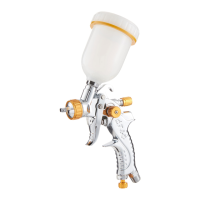
LMG HVLP SPRAY GUN
INSTRUCTION MANUAL
INSTRUCTION MANUAL LMG-10 8-30-2017
Description:
LMG- Manual Spray Guns are for use
from Low to Medium Pressure with
Light to Heavy Fluids. They will cover
a range of materials to include Enam-
els, Latex, and Lacquers etc. These
Models require 2-5 C.F.M. at 20 to 43
lbs. Air Pressure depending on Spray
Head selected and Material being
sprayed. Tip and needle are made of
Stainless Steel and can
handle water or solvent based
materials.
Specication:
Part Number: LMG-10
Type: HVLP Gravity Feed
Head Size: 1.0mm (Optional size 0.8mm )
Air Volume: 2-5 CFM
Air Pressure: 20-43 PSI ( Depending on nozzle size)
Air Inlet: ¼” NPT thread
Cup size: 4 Ounce (100ml)
Spray Pattern: 1” to 9”
Weight: 1.15 Lbs
Finish: Bright Chrome with Gold Anodized trim
Setup:
1. Blow out all airline hoses before connecting to the spray gun
to remove foreign particles.
2. Connect air hose to air inlet tting.
3. Connect uid cup or uid hose to uid inlet.
4. Tighten all hose connections securely.
5. Adjust air pressure to required amount at the regulator.
6. Adjust uid volume by turning the uid control knob.
7. The Fan pattern is controlled by turning the fan control Knob
8. Test spray on some cardboard or news paper for nal
adjustment before spraying your project.
Question and Answer IconNeed help?

Do you have a question about the paasche LMG-10 and is the answer not in the manual?

Summary

Product Description and Specifications

Description

Details the LMG Manual Spray Guns' intended use, material compatibility, air pressure, and construction materials.

Specifications

Lists key technical details including part number, type, head size, air volume, pressure, inlet, cup size, pattern, weight, and finish.

Setup and Maintenance

Setup Instructions

Provides an 8-step guide for connecting and preparing the spray gun for use, including testing.

Cleaning Procedures

Outlines post-use cleaning steps for the spray gun and its components, emphasizing solvent use and safety.

Diagram and Spare Parts

Illustrates the spray gun components and lists associated spare parts with identifiers.

Safety Precautions

General Safety Information

Explains safety symbols (WARNING, CAUTION, NOTE) and provides general guidance for safe equipment operation.

Hazard Identification and Safeguards

Details hazards like fire, solvent spray, toxic substances, and explosion risks, with corresponding safety measures.

Troubleshooting Guide

Spray Pattern Issues

Addresses common spray pattern problems like heavy patterns, split spray, and jerky spray, with causes and corrections.

Material Flow and Finish Problems

Covers issues such as starved spray, excessive overspray, dry spray, runs, sags, and orange peel finish.

Leaks and Fluid Dripping

Diagnoses and provides solutions for fluid leaking from the cup lid, seal cartridge, or front of the gun.

Summary

Product Description and Specifications

Description

Details the LMG Manual Spray Guns' intended use, material compatibility, air pressure, and construction materials.

Specifications

Lists key technical details including part number, type, head size, air volume, pressure, inlet, cup size, pattern, weight, and finish.

Setup and Maintenance

Setup Instructions

Provides an 8-step guide for connecting and preparing the spray gun for use, including testing.

Cleaning Procedures

Outlines post-use cleaning steps for the spray gun and its components, emphasizing solvent use and safety.

Diagram and Spare Parts

Illustrates the spray gun components and lists associated spare parts with identifiers.

Safety Precautions

General Safety Information

Explains safety symbols (WARNING, CAUTION, NOTE) and provides general guidance for safe equipment operation.

Hazard Identification and Safeguards

Details hazards like fire, solvent spray, toxic substances, and explosion risks, with corresponding safety measures.

Troubleshooting Guide

Spray Pattern Issues

Addresses common spray pattern problems like heavy patterns, split spray, and jerky spray, with causes and corrections.

Material Flow and Finish Problems

Covers issues such as starved spray, excessive overspray, dry spray, runs, sags, and orange peel finish.

Leaks and Fluid Dripping

Diagnoses and provides solutions for fluid leaking from the cup lid, seal cartridge, or front of the gun.

Overview

This document provides an instruction manual for the LMG HVLP Spray Gun, model LMG-10, designed for manual spray applications.

Function Description

The LMG-10 is a manual spray gun intended for use with low to medium pressure and a range of fluid viscosities, from light to heavy. It is versatile enough to handle various materials, including enamels, latex, and lacquers. The gun is designed to operate with either water-based or solvent-based materials, thanks to its stainless steel tip and needle. Its primary function is to atomize and apply coatings evenly to a surface.

Important Technical Specifications

  • Part Number: LMG-10
  • Type: HVLP Gravity Feed (High Volume Low Pressure)
  • Head Size: 1.0mm (with an optional size of 0.8mm available)
  • Air Volume Requirement: 2-5 CFM (Cubic Feet per Minute)
  • Air Pressure Requirement: 20-43 PSI (Pounds per Square Inch), which varies depending on the selected nozzle size and the material being sprayed.
  • Air Inlet: 1/4" NPT thread for connecting the air hose.
  • Cup Size: 4 Ounce (100ml) gravity cup assembly (LM-100).
  • Spray Pattern: Adjustable from 1" to 9"
  • Weight: 1.15 Lbs
  • Finish: Bright Chrome with Gold Anodized trim.
  • Key Components:
    • Head assembly (LM-3-1): Includes the installed tip, needle, and aircap.
    • Optional Head assembly (LM-3-08): An alternative head assembly.
    • Needle adjusting knob (A): Controls fluid volume.
    • Fan pattern adjustment knob (B): Controls the spray pattern.
    • Air hose attachment inlet (C): 1/4" NPT for air supply.
    • Air inlet adjustment knob (D): For fine-tuning air input.

Usage Features

The LMG-10 spray gun offers several features that enhance its usability and control:

  • Adjustable Fluid Volume: The needle adjusting knob (A) allows users to control the amount of fluid being sprayed, enabling precise application for different coating requirements.
  • Adjustable Spray Pattern: The fan pattern adjustment knob (B) provides control over the width of the spray, ranging from a narrow 1-inch pattern to a wide 9-inch pattern, accommodating various project sizes and shapes.
  • Gravity Feed System: The HVLP gravity feed design ensures a consistent flow of material to the nozzle, which is particularly beneficial for achieving smooth finishes.
  • Material Compatibility: The stainless steel tip and needle make the gun compatible with both water-based and solvent-based materials, offering flexibility in paint choices.
  • Setup Procedure:
    1. Preparation: Blow out all airline hoses to remove foreign particles before connecting to the gun.
    2. Air Connection: Connect the air hose to the air inlet fitting (C).
    3. Fluid Connection: Connect the fluid cup (LM-100) or fluid hose to the fluid inlet.
    4. Secure Connections: Ensure all hose connections are tightened securely.
    5. Air Pressure Adjustment: Adjust the air pressure to the required amount at the regulator, typically between 20-43 PSI.
    6. Fluid Volume Adjustment: Turn the fluid control knob (A) to set the desired fluid volume.
    7. Fan Pattern Adjustment: Control the fan pattern by turning the fan control knob (B).
    8. Test Spray: Perform a test spray on cardboard or newspaper to make final adjustments before applying to the project.

Maintenance Features

Proper maintenance is crucial for the longevity and performance of the LMG-10 spray gun. The manual outlines a clear cleaning procedure:

  • Immediate Cleaning: After each use, spray paint solvent through the gun to clear internal passages.
  • External Cleaning: Wipe the outside of the spray gun with clean solvent.
  • Avoid Immersion: Never immerse the entire spray gun in solvent, as this can damage components.
  • Aircap and Tip Cleaning: Dirty aircaps and tips should be soaked in solvent and then blown clean with air.
  • Safety Equipment: Always use personal safety equipment during cleaning and operation.

Troubleshooting

The manual includes a comprehensive troubleshooting guide to address common issues:

  • Pattern Irregularities (Heavy top/bottom, right/left, center, split): Often caused by plugged horn holes, obstructions in the fluid nozzle, or dirty components. Solutions involve cleaning with a non-metallic point, checking for burrs, and washing with solvent.
  • Jerky/Fluttering Spray: Can be due to a loose or damaged fluid nozzle/seat, low material level, or obstructions. Solutions include tightening/replacing parts, refilling, holding the gun upright, and backflushing with solvent.
  • Unable to Get Round Spray: May result from an improperly seated side port adjustment screw or a loose air nozzle retaining ring. Cleaning and tightening are recommended.
  • Will Not Spray: Check for no air pressure, an insufficiently open material adjusting knob, or material that is too heavy for gravity feed. Solutions include checking air supply, opening the knob, or thinning the material.
  • Paint Bubbles in Cup: Typically caused by a loose fluid nozzle. Tighten to 10-12 ft-lbs.
  • Fluid Leaking/Dripping from Cup Lid: Check for a loose cup lid, dirty threads, or a cracked cup/lid. Push in/tighten the lid, clean, or replace.
  • Starved Spray Pattern: Indicates inadequate material flow or low atomization air pressure. Adjust the material adjusting knob or increase air pressure.
  • Excessive Overspray/Fog/Dry Spray: Related to atomization air pressure, gun distance from the work surface, or improper stroking. Solutions involve reducing/increasing pressure, adjusting distance, and slowing down gun motion.
  • Fluid Leaking from Seal Cartridge/Front of Gun: Points to worn/dry packing, a dry seal cartridge, or worn/damaged fluid nozzle/needle. Lubricate, replace parts, or clean.
  • Fluid Dripping/Leaking from Bottom of Cup: Check for a loose cup, worn/missing gasket, or dirty threads. Tighten, replace, or clean.
  • Runs and Sags: Caused by too much material flow, thin material, or improper gun angle/motion. Adjust flow, mix properly, or adapt technique.
  • Thin, Sandy Coarse Finish/Orange Peel: Often due to gun distance, air pressure, or improper thinner/mixing. Adjust distance, reduce air pressure, or follow manufacturer's instructions.

Safety Precautions

The manual emphasizes several safety precautions:

  • Flammability: Solvents and coatings are highly flammable. Ensure adequate exhaust, prohibit smoking, and have fire extinguishing equipment present.
  • Eye Protection: Wear eye protection to guard against forcefully expelled solvents during use and cleaning.
  • Toxic Substances: Consult Material Safety Data Sheets (MSDS) for coating materials. Ensure a well-ventilated area and use a NIOSH-approved mask or respirator when inhaling sprayed materials is possible.
  • Explosion Hazard (Incompatible Materials): Halogenated hydrocarbon solvents (e.g., methylene chloride) are incompatible with aluminum and can cause violent reactions. Use stainless steel internal passageways with these solvents and verify compatibility of all equipment components.
  • General Safety: Operators must be adequately trained in safe use and maintenance. Comply with all local and national codes, including NFPA-33 and OSHA Sections 1910.94 and 1910.107, regarding ventilation, fire precautions, operation, maintenance, and housekeeping.
  • Cumulative Trauma Disorders (CTD's): Be aware of symptoms like pain, tingling, or numbness in hands, wrists, elbows, shoulders, neck, and back. Factors increasing risk include high frequency, excessive force, awkward positions, duration, tool vibration, repeated pressure, and cold temperatures. Seek medical attention if symptoms occur.

This comprehensive manual ensures users can effectively operate, maintain, and troubleshoot the LMG HVLP Spray Gun while adhering to critical safety guidelines.

paasche LMG-10 Specifications

General IconGeneral
Brandpaasche
ModelLMG-10
CategoryPaint Sprayer
LanguageEnglish