This document serves as an owner's manual for a Marvel Spider-Man themed ride-on toy, model KT1506WM. It provides comprehensive instructions and warnings for assembly, safe operation, maintenance, and warranty information. The manual emphasizes the importance of adult supervision and adherence to safety guidelines to prevent serious injury or death.
Function Description
The Marvel Spider-Man ride-on toy is a battery-powered vehicle designed for children aged 3-5 years, with a maximum weight capacity of 60 lbs (27 kg) and a top speed of 2.5 MPH. It functions as a recreational toy, allowing children to experience the thrill of driving their own vehicle in a controlled environment. The toy is equipped with a 6-volt battery that powers its motor, enabling forward and reverse motion. It features handlebars for steering, a foot pedal for acceleration, and various interactive elements such as lights, horn, and ATV sounds to enhance the play experience. The design incorporates a Spider-Man body, making it visually appealing to fans of the character.
Usage Features
The manual outlines several key usage features and safety protocols:
- Adult Supervision: Continuous adult supervision is mandatory at all times during the toy's operation. Adults are responsible for reading and understanding the entire manual, evaluating the child's maturity and ability, and teaching safe riding practices.
- Riding Environment: The toy is designed for use on flat, hard surfaces to ensure the safest experience. It should not be used near streets, roads, sidewalks, walkways, or any other areas with moving vehicles. Stunt riding, off-road riding on rough terrain, or riding in wet conditions (rain, snow, ice) are strictly prohibited due to the lack of braking capabilities and increased risk of accidents.
- Operation: The child operates the toy by pressing a foot pedal to accelerate and lifting their foot off the pedal to stop. The handlebars are used for steering. The toy includes a forward/reverse switch to control direction.
- Interactive Elements: The ride-on toy is equipped with lights, a horn, and ATV sounds, which can be activated by specific buttons or switches, adding to the immersive play experience.
- Battery Connection: The manual details a one-time battery connection procedure that must be performed by an adult before initial use. This involves connecting specific terminals to ensure the toy is ready for charging and operation.
- Charging: The battery requires charging for 10 hours for regular use, with an initial charge of 18 hours. It is crucial not to charge the battery for more than 24 hours to prevent damage or explosion. The charger should be plugged directly into a wall outlet, and extension cords should not be used. The product will not turn on while plugged into the charger, requiring removal from the charger before use.
- Rider Limitations: Only one rider is permitted at a time, and the maximum weight capacity of 60 lbs (27 kg) must not be exceeded. Children under three or over five years of age should not use the toy.
- Clothing and Footwear: Children should always wear shoes when using the ride-on toy. Loose clothing should be avoided to prevent entanglement with moving parts.
- Pre-Ride Safety Checklist: Before each ride, a supervising adult must perform a safety checklist, including verifying the tightness of the steering wheel/handlebars, proper wheel attachment and condition, secure battery placement, and proper functioning of all electrical components. Any worn or broken parts must be replaced.
Maintenance Features
The manual provides instructions for maintaining the ride-on toy to ensure its longevity and safe operation:
- Regular Checks: Before each use, the ride-on toy should be checked for damage, missing, or badly worn parts. This includes checking the tightness of fasteners, wheels, and ensuring the battery is securely in place.
- Cleaning: The vehicle should be cleaned with a soft, dry cloth. Non-wax furniture polish can be used to restore shine to plastic parts. Harsh cleaners, car wax, abrasive cleaners, soap, and water should be avoided as they can damage the motor, electrical system, and battery. The vehicle should not be washed with a hose.
- Storage: The ride-on toy should be stored indoors or covered with a tarp to protect it from wet weather. It should be kept away from heat sources like stoves and heaters. Prolonged exposure to direct sunlight should be avoided to prevent fading; storing in shade or covering with a tarp is recommended.
- Battery Maintenance: The battery will eventually lose its ability to hold a charge, typically lasting one to three years depending on usage. It is crucial not to allow the battery to drain completely, and it should always be kept charged.
- Battery Replacement and Disposal: When the battery needs replacement, it must be disposed of properly and legally, as it contains lead acid. It is illegal to incinerate or dispose of lead acid batteries in landfills. The manual advises taking the battery to a federal or state-approved lead acid battery recycler or an authorized service center.
- Charger Inspection: Regularly inspect the charger, supply cord, and connector for wear and damage, such as frayed wires or missing insulation. If any damage is observed, the charger should not be used, and the battery should not be charged.
- Part Replacement: For a complete list of replacement parts or service inquiries, customers are directed to contact Pacific Cycle Consumer Relations. The model and serial number, found underneath the seat on the battery cover, should be available when contacting customer service.

 Need help?
 General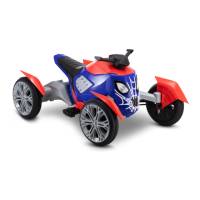

 To Next Page