EasyManua.ls Logo

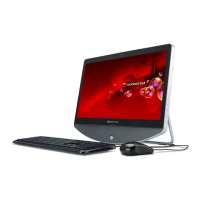
Packard Bell oneTwo M3851 - User Manual

Packard Bell oneTwo M3851
120 pages
Print Icon
To Next Page IconTo Next Page
Loading...
Packard Bell oneTwo M3850 / oneTwo M3851 /
oneTwo L5850 / oneTwo L5851
All-In-One Computer Service Guide
PRINTED IN TAIWAN
Service guide files and updates are available
on the Acer/CSD web site; for more
information, go to http://csd.acer.com.tw

Table of Contents

Questions and Answers

  • T
    Timothy GuzmanSep 12, 2025
    What does 'S.M.A.R.T. Capable and Status BAD' mean on Packard Bell oneTwo M3851?
    • S
      schultzaudreySep 12, 2025
      This message from your Packard Bell Desktop indicates that a S.M.A.R.T. capable hard disk sends this message when it detects an imminent failure. S.M.A.R.T. failure messages may indicate the need to replace the hard disk.
  • E
    ernestallenAug 25, 2025
    What does 'S.M.A.R.T. Status BAD, Backup and Replace' mean on Packard Bell oneTwo M3851?
    • L
      Leonard ColemanAug 25, 2025
      This message from your Packard Bell Desktop indicates that a S.M.A.R.T. capable hard disk has detected an imminent failure. The BIOS tried to send a S.M.A.R.T. message to a hard disk, but the command transaction failed.
  • S
    Sarah ThompsonAug 25, 2025
    What does 'Primary Slave Hard Disk Error' mean on Packard Bell Desktop?
    • H
      harrisjamesAug 26, 2025
      This message on Packard Bell Desktop typically shows up when the BIOS is trying to detect and configure IDE/ATAPI devices in POST, but the IDE/ATAPI device configured as Primary Slave could not be properly initialized by the BIOS.
  • K
    Kristina RiceSep 23, 2025
    What does 'NVRAM Checksum Bad, NVRAM Cleared' mean on Packard Bell oneTwo M3851 Desktop?
    • M
      Mary HillSep 23, 2025
      There was an error in while validating the NVRAM data on your Packard Bell Desktop.
  • N
    Nancy KingSep 12, 2025
    What does 'S.M.A.R.T. Capable but Command Failed' mean on Packard Bell oneTwo M3851?
    • C
      Carol LeonardSep 12, 2025
      This message on your Packard Bell Desktop means that the BIOS tried to send a S.M.A.R.T. message to a hard disk, but the command transaction failed. S.M.A.R.T. failure messages may indicate the need to replace the hard disk.
  • L
    lewisjenniferSep 16, 2025
    What does 'Insert BOOT diskette in A:' mean on Packard Bell Desktop?
    • J
      Joshua GreenSep 17, 2025
      This message on your Packard Bell Desktop indicates that the BIOS attempted to boot from the A: drive but could not find a proper boot diskette.
  • L
    lisaedwardsSep 5, 2025
    What does '3rd Master Drive - ATAPI Incompatible' mean on Packard Bell oneTwo M3851?
    • C
      Christina WalkerSep 5, 2025
      This message on your Packard Bell Desktop means that the IDE/ATAPI device configured as Master in the 3rd IDE controller failed an ATAPI compatibility test. This message is typically displayed when the BIOS is trying to detect and configure IDE/ATAPI devices in POST.
  • H
    horntaylorSep 5, 2025
    What does '3rd Slave Drive - ATAPI Incompatible' mean on Packard Bell Desktop?
    • J
      John RoweSep 6, 2025
      This message on your Packard Bell Desktop means that the IDE/ATAPI device configured as Slave in the 3rd IDE controller failed an ATAPI compatibility test. This message is typically displayed when the BIOS is trying to detect and configure IDE/ATAPI devices in POST.
  • M
    Mary DixonSep 18, 2025
    What does 'NO ROM BASIC' mean on Packard Bell Desktop?
    • W
      wdennisSep 18, 2025
      This message on your Packard Bell Desktop occurs on some systems when no bootable device can be detected.
  • C
    Cynthia HendersonAug 30, 2025
    What does '5th Master Hard Disk Error' mean on Packard Bell oneTwo M3851?
    • L
      Lisa RomanAug 30, 2025
      This message on Packard Bell Desktop is typically displayed when the BIOS is trying to detect and configure IDE/ATAPI devices during POST. The IDE/ATAPI device configured as Master in the 5th IDE controller could not be properly initialized by the BIOS.

Summary

Revision History

Service Guide Information

Copyright

Legal notices regarding usage, reproduction, and liability.

Disclaimer

Legal notices regarding usage, reproduction, and liability.

Service Guide Coverage

Details regarding ordering FRU parts and potential part number changes.

Chapter 1: Features and Specifications

System Features

Lists components and their descriptions for the computer's configuration.

Physical Specifications

Details system dimensions, mainboard form factor, and dimensions.

System Tour - Front View

Illustrates and describes components visible on the front of the computer.

System Tour - Left View

Illustrates and describes components on the left side of the computer.

System Tour - Right View

Illustrates and describes components on the right side of the computer.

System Tour - Rear View

Illustrates and describes components on the rear of the computer.

Hardware Specifications - Processor, Chipsets, BIOS, Memory

Details specifications for Processor, Chipsets, BIOS, and Memory.

Hardware Specifications - Storage and Connectivity

Details specifications for Hard Disk Drive, Optical Disc Drive, Ethernet, Wireless LAN, and Bluetooth.

Hardware Specifications - Audio and Webcam

Details specifications for Audio and Webcam components.

Hardware Specifications - LCD Panel and Power Supply

Details specifications for LCD Panel and Power Supply Unit.

Chapter 2: System Utilities

CMOS Setup Utility

Explains the hardware configuration program and its uses.

Accessing and Navigating Setup Utility

Explains navigation keys and lists available setup utility menus.

Chapter 3: System Disassembly

Disassembly Preparation and Tools

Lists necessary tools and outlines initial steps before performing disassembly.

External Component Disassembly

Procedures for removing the computer stand and external covers.

Internal Component Disassembly - Drives and Boards

Steps to remove drives, I/O plate, scaler board, USB/audio board, wall mount plate, HDD, inverter board.

Internal Component Disassembly - Core Components

Steps to remove the heat sink fan, processor, and memory modules.

Mainboard and Power Supply Removal

Procedures for removing the mainboard and power supply unit.

Display Assembly Disassembly

Steps to remove touchscreen control board, Bluetooth module, power button, LCD assembly, cables, webcam, LED board, light bars.

Chapter 4: Troubleshooting

Diagnostic Procedures and System Checks

Outlines methods for diagnosing system issues and performing checks.

BIOS and POST Error Analysis

Lists and explains various BIOS, POST, and system error messages and codes.

Symptom-to-FRU Troubleshooting Guide

Provides a guide linking symptoms to potential FRU (Field Replaceable Unit) actions.

BIOS Recovery and CMOS Clearing

Explains how to recover BIOS and clear CMOS settings.

Chapter 5: System Architecture

Block Diagram

Shows the core subsystems and their interconnections.

Mainboard Layout

Identifies major components on the mainboard.

Chapter 6: Field Replaceable Unit (FRU) List

Exploded Diagram

Illustrates the physical layout of components for identification.

FRU Part Number Listing

Lists all field-replaceable units with their part numbers and categories.

Appendix B: Test Compatible Components

Compatible Components and Vendors

Lists components tested for compatibility with the system and their respective vendors.

Approved Vendor List (AVL)

Lists approved vendors for system components.

Appendix C: Online Support Information

Packard Bell oneTwo M3851 Specifications

General IconGeneral
RAM4GB DDR3
Operating SystemWindows 7 Home Premium
Optical DriveDVD Super Multi
USB Ports6 x USB 2.0
AudioIntegrated stereo speakers
GraphicsIntel HD Graphics
NetworkGigabit Ethernet, Wi-Fi 802.11b/g/n

Related product manuals