Need help?
Do you have a question about the Panasonic VBHN240SE10 and is the answer not in the manual?
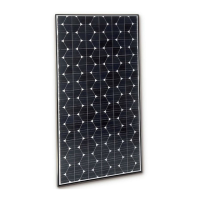
The Panasonic HIT Photovoltaic Module is a solar energy device designed to convert sunlight into electricity. These modules are available in various series, including VBHNxxxSE and VBHHxxxAE, with several model numbers indicating different configurations and power outputs. The device is intended for use in terrestrial applications, providing clean, renewable solar electricity for many years when properly installed and maintained.
The core function of the Panasonic HIT Photovoltaic Module is to generate direct current (DC) electrical energy when exposed to sunlight or other light sources. This is achieved through its advanced Heterojunction with Intrinsic Thin-layer (HIT) cell technology. The modules are designed to be integrated into a larger PV system, which typically includes inverters, fuses, breakers, charging controllers, and batteries for energy storage. The generated electricity can then be used to power homes or businesses.
Each module is equipped with factory-installed bypass diodes, which are crucial for maintaining performance and preventing damage. These diodes help to mitigate the effects of partial shading on the module. When a portion of the module is shaded, the bypass diodes create an alternative path for current to flow, preventing reverse voltage across the shaded cells and minimizing undesirable heating. This feature enhances the module's reliability and longevity, particularly in real-world conditions where shading from trees, buildings, or other obstacles can occur.
The modules are designed for both general access and hazardous voltage/power applications, falling under Application Class A. They are also rated for fire class C, indicating their effectiveness against light fire test exposures when mounted on a fire-resistant roof covering. This classification ensures a degree of fire protection to the roof deck, preventing the spread of flames and flying brands.
The Panasonic HIT Photovoltaic Modules are designed for robust and reliable operation under a range of environmental conditions. They are suitable for installation in locations with ambient temperatures ranging from -20°C (-4°F) to 40°C (104°F) and relative humidity between 45% and 95%. The modules are also built to withstand wind pressure loads up to 2,400 N/m² (50 PSF).
Installation of these modules requires a high degree of skill and should only be performed by qualified, licensed professionals, including licensed contractors and electricians, to ensure safety and proper functionality. During installation, it is critical to cover the entire front surface of the modules with an opaque material, such as a cardboard box, to prevent the generation of electrical energy and mitigate the risk of electric shock.
The modules are typically mounted using four points, symmetrically positioned against the center of the module, to ensure stability and withstand expected loads like wind and snow. Optional mounting ranges are also available, allowing for flexibility in installation while maintaining structural integrity. A clearance of 10 cm between the roof surface and the module frame is recommended to facilitate cooling air circulation, which helps to optimize performance and dissipate condensation or moisture.
Wiring connections are made through a junction box located on the back of the module. These junction boxes are equipped with terminals for both positive and negative polarity, and they utilize specific connector types (e.g., MC plugs or SMK plugs) for secure electrical connections. All wiring must comply with applicable electrical codes and should be protected to ensure personal safety and prevent damage. It is crucial to connect modules of the same model number and/or type in series. Parallel connections should only be made with a connection box. Disconnecting terminals while modules are generating electricity or connected to an electrical load should be avoided to prevent electrical shock.
To ensure optimal output performance and longevity, regular maintenance of the Panasonic HIT Photovoltaic Modules is recommended. The primary maintenance task involves cleaning the module surface. If the module surface becomes dirty, its output power can be reduced. It is recommended to clean the surface with water and a soft cloth or sponge. For more persistent dirt, a micro-fiber cloth and ethanol can be used. A mild detergent is also permissible. However, abrasive detergents, strong alkaline detergents, or strong acid detergents should never be used on any part of the module, as they can cause damage.
In addition to cleaning, an annual inspection of the electrical and mechanical connections is recommended. This inspection should also be carried out by a licensed, authorized professional to avoid the hazards of electric shock or injury. This ensures that all components are secure and functioning correctly, preventing potential electrical or mechanical issues.
The modules are designed for durability, but proper handling is essential. Avoid standing or stepping on the module, puncturing or damaging the back sheet, or artificially concentrating sunlight on the module, as these actions can lead to injury, damage, or fire hazards. The use of different module specifications within the same system should also be avoided to maintain system compatibility and performance.
The Panasonic HIT Photovoltaic Modules are designed for long-term reliability, and adherence to the installation and maintenance guidelines provided in the manual is crucial for maximizing their lifespan and performance. SANYO, as part of the Panasonic Group, continuously strives for product improvement and reserves the right to change product specifications without prior notice.
 General
| Type | Monocrystalline |
|---|---|
| Maximum Power (Pmax) | 240 W |
| Series Fuse Rating | 15 A |
| Operating Temperature Range | -40°C to +85°C |
| Weight | 15 kg |
| Maximum System Voltage | 600V |

 To Next Page