The MA-1040 Magnetic Analyzer is a specialized instrument designed to detect and measure very low levels of magnetic materials in a wide range of substances. It is capable of measuring magnetic content with a resolution down to 0.1 parts-per-million (ppm). This analyzer is particularly useful for applications requiring high purity, such as in the production of fiber optics (high-purity glass), wiring insulation (plastics), and in the analysis of food, precious gems, and pharmaceuticals where low magnetic iron levels are critical. The MA-1040 has been referenced in American National Standards Institute (ANSI) bulletins and by the Abrasive Grain Association, underscoring its reliability and acceptance in various industries.
Function Description:
The core function of the MA-1040 is to quantify the magnetic content within a sample. It operates by measuring the magnetic properties of a sample placed within its chamber. The instrument provides a digital readout of the magnetic content in PPM. The analysis process involves weighing a sample, placing it in a sample holder, and then inserting the holder into the analyzer's sample chamber. Within a few seconds, the device displays the relative percentage of magnetic material. To obtain the actual percentage of magnetic material, a two-step process is used: first, a reading with the sample-filled holder, and then a reading with the empty sample holder. The absolute value of the empty holder reading is added to the sample-filled holder reading to account for any negative readings from the empty holder, thus yielding the true magnetic content.
Important Technical Specifications:
- Magnetic Content Resolution: 0.1 ppm
- Magnetic Content Range: 0.1 ppm - 1999.9 ppm
- Sample Weight Range: 000 - 999 grams
- Operating Temperature: Stable between 10 and 45 °C (50 to 113 °F)
- Non-Operating Temperature: -10 and 55 °C (14 to 131 °F)
- Voltage: 95 - 250 VAC
- Frequency: 50 to 60 Hz
- Dimensions (Physical):
- Height: 16.76 cm (6.6 in.)
- Width: 25.40 cm (10 in.)
- Depth: 13.34 cm (5.25 in.)
- Weight: 6.8 kg (15 lbs)
Usage Features:
- Simple Operation: The MA-1040 is designed for straightforward use. Controls are conveniently located on the top panel for easy visibility and access.
- Digital Display: A five-digit LCD displays readings of magnetic content in PPM.
- WEIGHT-GRAMS Control: This control allows the user to enter the sample weight, with a range of 000-999 grams.
- ZERO Control: Used to zero the reading on the display when the sample chamber is empty, ensuring accurate baseline measurements.
- Sample Chamber: A dedicated chamber for inserting the sample holder or reference standard.
- Power Switch: Located on the side panel for turning the analyzer on and off.
- Warm-up Time: Requires a 30-minute warm-up period after being turned on for optimum performance.
- Reference Standard Test: A reference standard is provided to ensure accurate calibration. It is recommended to perform this test at the beginning of each workday for daily users. The test involves taking three readings of the reference standard, averaging them, and verifying that the average is within 1% of the value printed on the standard (or ± 0.5 PPM, whichever is greater).
- Sample Preparation: Proper lab techniques, such as stirring, are advised to ensure even distribution of grains within the sample, preventing inaccurate readings due to settling.
- Reading Stability: The displayed value of magnetic material content is accurate for approximately three to five seconds, after which the display may drift. Users should record the reading within this stable window.
Maintenance Features:
- Sample Holder Cleaning: Sample holders must be clean and dry before use. A mild soap and water solution with a soft-bristled brush is recommended for cleaning.
- Avoid Harsh Cleaning Agents: Users are cautioned against using steel brushes or harsh solvents like acetone to clean the sample holder, as these can scratch the inside surface.
- Environmental Considerations:
- Magnetic Fields: Avoid placing the analyzer near strong magnetic fields from transformers or high-current power lines.
- Steel Surfaces: If placed on a steel table, a 3/4-inch thick piece of plywood should be placed underneath the instrument to prevent interference.
- Temperature Stability: Maintain a constant room temperature, as fluctuations can lead to inaccurate readings.
- Reference Standard Storage: The reference standard should not be stored in the sample chamber when not in use. It is also important that the reference standard and analyzer are at the same temperature to prevent reading drift. If temperature differences occur, allow 5-10 minutes for equilibration.

 Need help?
 General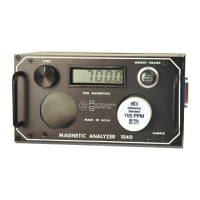

 To Next Page