10
CUTTING METHODS
IMPORTANT POINTS
S Check chain tension before first use and
after 1 minute of operation. See CHAIN
TENSION in the ASSEMBLY section.
S Cut wood only . Do notcut metal, plastics,
masonry, non-wood building materials,
etc.
S The bumper spike may be used as apivot
when making a cut.
S Stop the saw if the chain strikes a foreign
object. Inspectthesawandrepair partsas
necessary.
S Keepthechainoutofdirtandsand. Evena
smallamountofdirtwillquicklydullachain
and increase the possibility of kickback.
S Practice cutting a few small logs using the
following techniques to get the“feel” ofus-
ing your saw before you begin a major
sawing operation.
S Squeeze the throttle trigger and allow the
engine to reach full speed before cutting.
S Begin cutting with the saw frame
against the log.
S Keep theengine atfull speedthe entire
time you are cutting.
S Allowthechaintocutforyou.Exertonly
light downward pressure.
S Release the throttle trigger as soon as
the cut is completed, allowing the en-
gine to idle. If you run the saw at full
throttlewithoutacuttingload,unneces-
sary wear can occur.
S To avoid losing control when cut is com-
plete, do not put pressure on saw at end
of cut.
S Stop the engine before setting the saw
down.
TREE FELLING TECHNIQUES
WARNING:Donotcutnearbuildings
or electrical wires if you do not know the di-
rection of tree fall, at night since you will not
be able to see well, or during bad weather
such as rain, snow ,orstrong winds.as fallis
unpredictable.
Carefully plan your sawing operation in ad-
vance. You need a clear area all around the
tree so you canhave securefooting. Check
for broken or dead branches which can fall
on you causing serious injury .
Natural conditions that can cause a tree to
fall in a particular direction include:
S The wind direction and speed.
S The lean of the tree. The lean of a tree
might not be apparent due to uneven or
slopingterrain. Usea plumb orlevel tode-
termine the direction of tree lean.
S W eight and branches on one side.
S Surrounding trees and obstacles.
Look for decay and rot. If thetrunk isrotted,
it can snap and fall toward the operator.
Make sure there is enough room for the tree to
fall. Maintain a distance of
2-1/2 tree lengths
from the nearest person or other objects. En-
gine noise can drown out a warning call.
Remove dirt, stones, loosebark, nails, staples,
and wire from the tree where cuts are to be
made.
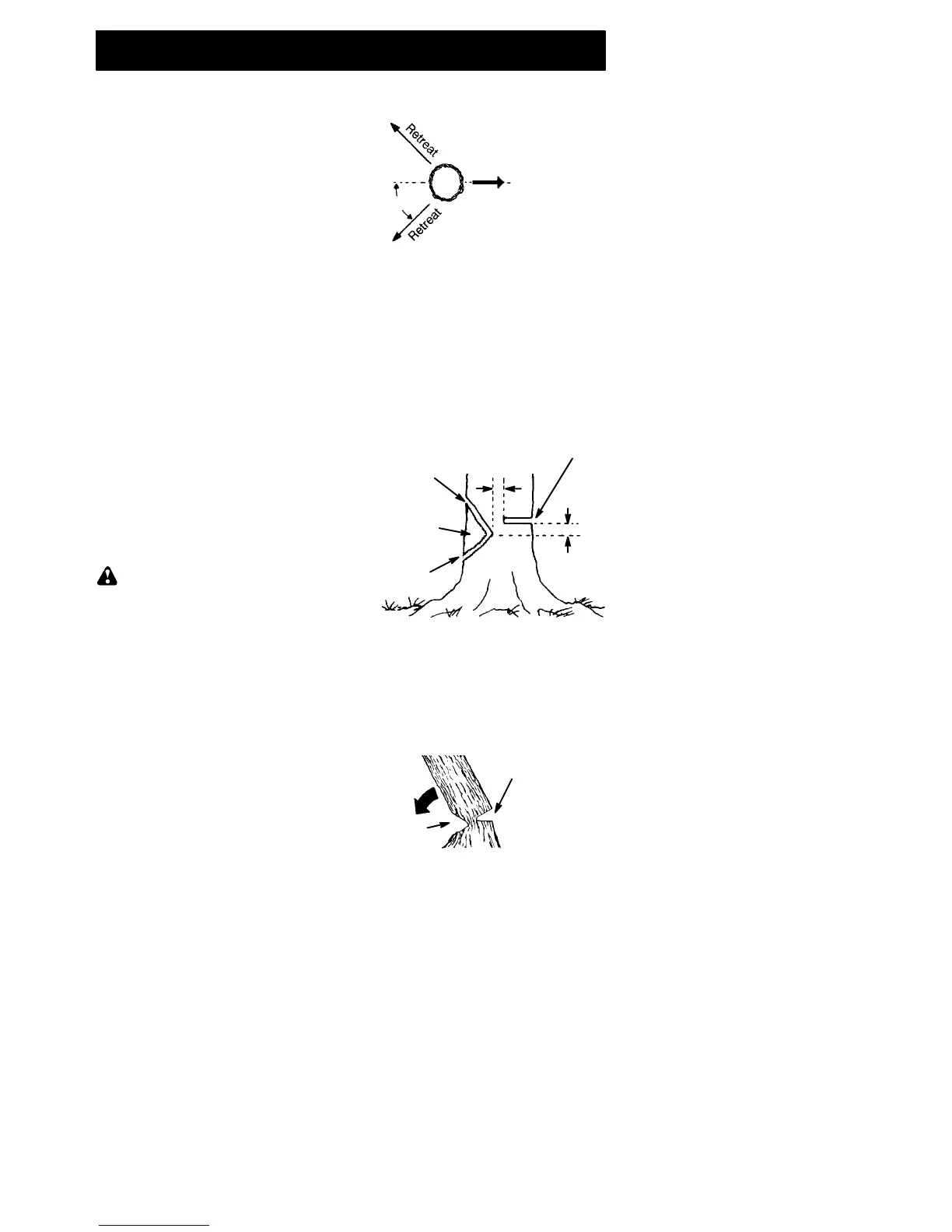
Direction of Fall
45_
Plan a clear retreat path
FELLING LARGE TREES
(15cmindiameterorlarger)
The notch method is used to fell large trees.
Anotchiscut onthesideofthetreeinthede-
sired direction of fall. After a felling cut is
made on the opposite side of tree, the tree
will tend to fall into the notch.
NOTCH CUT AND FELLING THE
TREE
S Make notch cut by cutting the top of the
notch first. Cut through
1/3 of the diameter
ofthetree. Nextcompletethenotch bycut-
ting the bottom of the notch. See illustra-
tion. Once the notch is cut remove the
notch of wood from the tree.
Notch
First cut
Second cut
Final cut here. 5 cm above
center of notch.
5cm
5cm
S After removing the wood from the notch,
makethefelling cuton theoppositeside of
the notch. This is done by making a cut
about two inches higher thanthe center of
the notch. This will leave enough uncut
woodbetweenthe fellingcutandthenotch
to form a hinge. This hinge will help pre-
ventthetreefromfallinginthewrongdirec-
tion.
Opening
of felling
cut
Closing
of notch
Hinge holds tree on stump and helps
control fall
NOTE: Before felling cut is complete, use
wedges to open the cut when necessary to
controlthedirectionoffall. Toavoidkickback
or chain damage, use wood or plastic
wedges, but never steel or iron wedges.


 To Next Page