Two-way communication
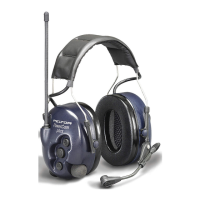
Three alternatives are available for two-way communication via com
radio, mobile or DECT telephone:
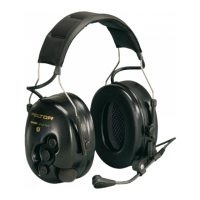
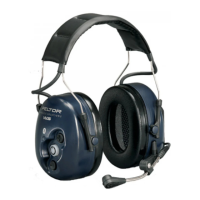
Headset
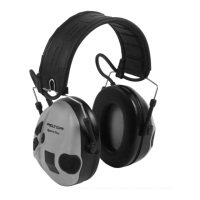
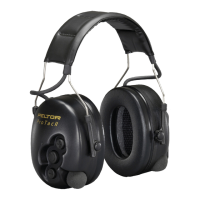
The ProTac and the Tactical XP come in a standard headset model with
a separate adapter. The PTT button is located on the separate adapter.
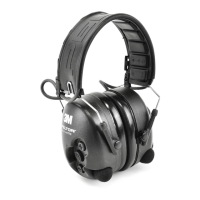
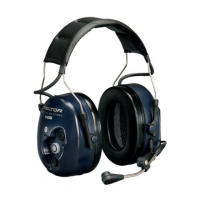
Flex headset
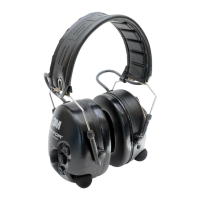
The ProTac and the Tactical XP in a Flex headset model is a solution
without an external adapter. The PTT button is on the shell. Jackable
cables enhance flexibility, since you can connect many kinds of
equipment using a range of cords. Flex cords are available for most
devices on the market.
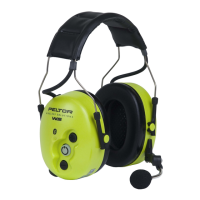
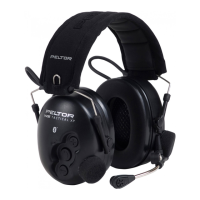
Wireless Bluetooth headset
The ProTac WS headset uses the Bluetooth worldwide standard for
wireless communication. The headset can communicate wirelessly with
another unit that has the Bluetooth standard. The headset and the
other unit can be 10 metres apart without losing contact.
A PTT button and a Bluetooth configuration button are positioned on
the left shell. If a connected mobile phone has voice dialling, you can
use the headset microphone for this.
If your communication radio does not have Bluetooth, Peltor has
developed Bluetooth adapters, the FL6000 series, which can be used
for many of the most common devices on the market.
Bands/Attachments
Peltor hearing protectors are available with a range of attachments
and bands: Headband, neckband, helmet attachment and collapsible
headband.
Attenuation
Peltor hearing protectors can be divided into five different categories,
depending on their attenuation.
The attenuation level of the ProTac and the Tactical XP fall under
category four, which is symbolized by a die with four dots. This means
that the protectors are suitable for high and medium high-frequency
noise in the range of RNR* 94-105dB.
Active-volume function
Both the ProTac II and the Tactical XP are equipped with an active-
volume function that lets you hear ambient noises: conversations,
machine sounds, warning signals, etc. Soft sounds are amplified, so
you hear them even better than you would without hearing protectors.
Two microphones pick up ambient noises and reproduce them in full
stereo, so you can tell what direction they come from. Sudden impulse
noises at harmful levels are immediately attenuated.
An electronic valve detects the noise and attenuates it to a harmless
level. When the noise fades, the electronics automatically go back to
the listening function. A summing function ensures that the combined
sound level from the active-volume function and from connected exter-
nal equipment does not exceed a given level.
Reliable long and short-distance
communication
* (* RNR = Recommended Noise Rating)



 To Next Page