
 Need help?
Do you have a question about the Penton PBC6T/EN and is the answer not in the manual?
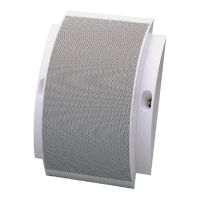
The device described in this manual is a Penton PBC6T/EN or PBC6T/ENC loudspeaker, designed for voice alarm systems in fire detection and alarm systems for buildings. It is certified to EN54-24:2008, Type A, with certification number 0359-CPD-0151, and carries RoHS and CE 13 0359 markings.
This loudspeaker is specifically engineered for voice alarm applications, providing clear audio output for emergency notifications. It is suitable for both 100V and 70V line systems, incorporating a transformer for impedance matching. The "ENC" model includes a capacitor, likely for line supervision or specific filtering requirements. The design emphasizes reliability and performance in critical safety systems, as indicated by its compliance with fire alarm standards.
The loudspeaker is designed for easy installation on walls or ceilings.
The device features multiple power tappings for both 100V and 70V line systems, allowing installers to select the appropriate power output (and thus volume) for specific zones. This flexibility is crucial for optimizing sound coverage and intelligibility in different environments.
The use of "Low smoke zero Halogen UL-94V0 Plastic with UV inhibitors" for the material highlights its suitability for fire safety applications, minimizing hazardous smoke and maintaining material integrity over time, even with UV exposure.
While the manual does not explicitly detail maintenance procedures, the robust design and material choices suggest a low-maintenance device. The "100 hours max power (6W)" testing ensures long-term reliability without significant deviation from original performance. The compliance with EN54-24:2008 indicates that the device is built to withstand environmental conditions and maintain performance in critical situations, reducing the need for frequent servicing. The "Voice alarm loudspeaker for fire detection and fire alarm system for building" designation implies that it is a critical component that should be regularly checked as part of a building's overall fire safety system maintenance.

 To Next Page
 General