Check the electrical wires daily for wires that are
loose or frayed. Tighten all loose electrical
connections before the engine is started. Repair all
frayed electrical wires before the engine is started.
See the Operation and Maintenance Manual for
specific starting instructions.
Grounding Practices
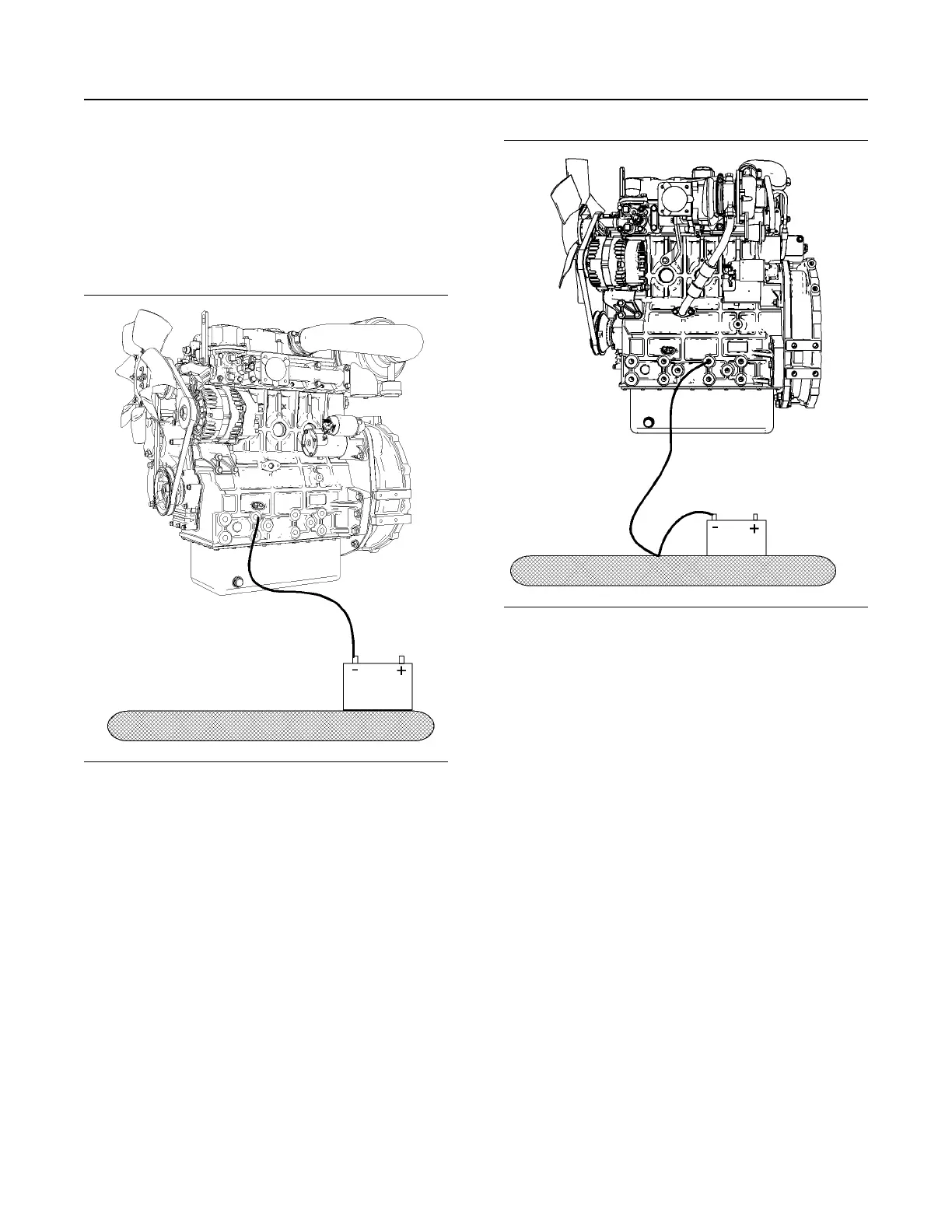
Illustration 13 g06672182
Typical example
Ground to battery
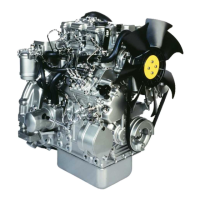
Illustration 14 g06672194
Typical example
Alternate ground to battery
Correct grounding for the engine electrical system is
necessary for optimum engine performance and
reliability. Incorrect grounding will result in
uncontrolled electrical circuit paths and in unreliable
electrical circuit paths.
Uncontrolled electrical circuit paths can result in
damage to the crankshaft bearing journal surfaces
and to aluminum components.
Engines that are installed without engine-to-frame
ground straps can be damaged by electrical
discharge.
To ensure that the engine and the engine electrical
systems function correctly, an engine-to-frame
ground strap with a direct path to the battery must be
used. This path may be provided by way of a direct
engine ground to the frame.
The connections for the grounds should be tight and
free of corrosion. The engine alternator must be
grounded to the negative “-” battery terminal with a
wire that is adequate to handle the full charging
current of the alternator.
The power supply connections and the ground
connections for the engine electronics should always
be from the isolator to the battery.
M0132847 17
Safety Section
Electrical System



 To Next Page