
 Need help?
Do you have a question about the Petzl Astro Bod Fast and is the answer not in the manual?
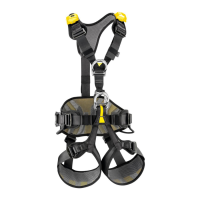
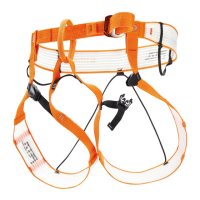
Details the preparation and test steps for ASTRO BOD FAST and ASTRO SIT FAST harnesses.
Details the preparation and test steps for CANYON GUIDE harnesses.
Instructions for products confirmed not affected by the defect.
Actions required for harnesses identified with the defect.
Guidance for users unsure about performing the inspection.
This document is a safety alert and inspection request issued by Petzl on October 25, 2023, concerning specific models of their ASTRO and CANYON GUIDE harnesses. The alert highlights a potential defect in the gated opening attachment point of these harnesses, which could lead to unintentional opening and a life-threatening situation. Users are instructed to immediately stop using the affected harnesses and perform a mandatory inspection.
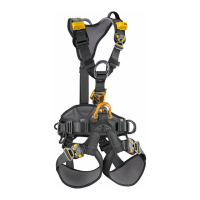
The Petzl ASTRO and CANYON GUIDE harnesses are designed for professional use, likely in activities such as work at height, rescue, or caving, where a secure and reliable connection point is crucial. These harnesses feature a gated ventral attachment point, which is a critical component for connecting various pieces of equipment, such as lanyards, descenders, or other personal protective equipment (PPE). The ASTRO BOD FAST and ASTRO SIT FAST models are full-body and sit harnesses, respectively, offering different configurations for various applications. The CANYON GUIDE is a specialized harness, likely designed for canyoning activities, emphasizing durability and specific features for wet and abrasive environments. The ventral attachment point is designed to provide a strong and secure connection, allowing the user to manage their position and connect to a safety system. The "gated" aspect implies a mechanism that can be opened and closed, likely for ease of attaching and detaching equipment while maintaining security during use. The presence of screws in the attachment point suggests a robust, semi-permanent assembly that is not intended for frequent user disassembly but rather for secure, long-term integrity.
The harnesses are intended for use in situations requiring fall protection or positioning. The ASTRO BOD FAST (European and International versions) and ASTRO SIT FAST are likely used in industrial rope access, tree care, or rescue operations, where comfort, adjustability, and multiple attachment points are beneficial. The CANYON GUIDE harness is tailored for canyoning, implying features such as resistance to water, abrasion, and quick drainage. The ventral attachment point, which is the focus of this inspection, is a primary connection point for the user's main working or safety line. Its design with a "pin" and "screws" suggests a system that, when functioning correctly, should prevent accidental disengagement of connected equipment. The inspection procedure itself is a usage feature, as it guides users through a critical safety check to ensure the harness remains safe for its intended purpose. The instructions emphasize checking the presence and correct installation of the two screws, which are vital for the integrity of the gated attachment point. The test involves applying pressure to the pin to check for any sideways movement, which would indicate a defect. This user-performed test is designed to be straightforward, requiring only a flat surface for ASTRO models or a pen for the CANYON GUIDE, making it accessible for all users to verify the safety of their equipment.
While the document primarily focuses on an inspection due to a manufacturing defect, it implicitly touches upon maintenance aspects. The requirement to check for the presence and correct installation of screws suggests that routine visual checks of these components are part of good maintenance practice. Although the document states that "torque has no impact" for this specific inspection, in general, the correct torque of screws on safety-critical equipment is a fundamental maintenance consideration. The instruction to "remove any accessories mounted in the shackle connection holes" before the test indicates a need for clear access to the attachment point for proper inspection, which can be considered a preparatory step in maintenance. The overall emphasis on inspection and the potential for a "non-compliant result" leading to isolation and quarantine of the metal D, and ultimately contacting Petzl support, highlights a structured approach to equipment maintenance and safety management. This process ensures that defective equipment is removed from service and handled appropriately, preventing further use and potential hazards. The FAQs also provide guidance on maintenance-related queries, such as whether to dismantle the attachment point (No), remove lanyards (No), or check screw torque (No, for this inspection). These answers streamline the inspection process and clarify what is and isn't necessary for this specific safety check, indirectly guiding users on what constitutes proper care and handling of their harnesses. The information about where to find the serial number (on the plastic label inside the belt) is also a maintenance-related detail, as serial numbers are crucial for tracking equipment, managing inspections, and facilitating any necessary recalls or repairs.
 General
| Material | Nylon, polyester, aluminum, steel |
|---|---|
| Certification | CE EN 361, CE EN 358, CE EN 813 |
| Adjustability | Leg loops, shoulder straps |
| Attachment points | Dorsal, sternal, lateral, ventral |
| Color | Yellow/Black |

 To Next Page

