12
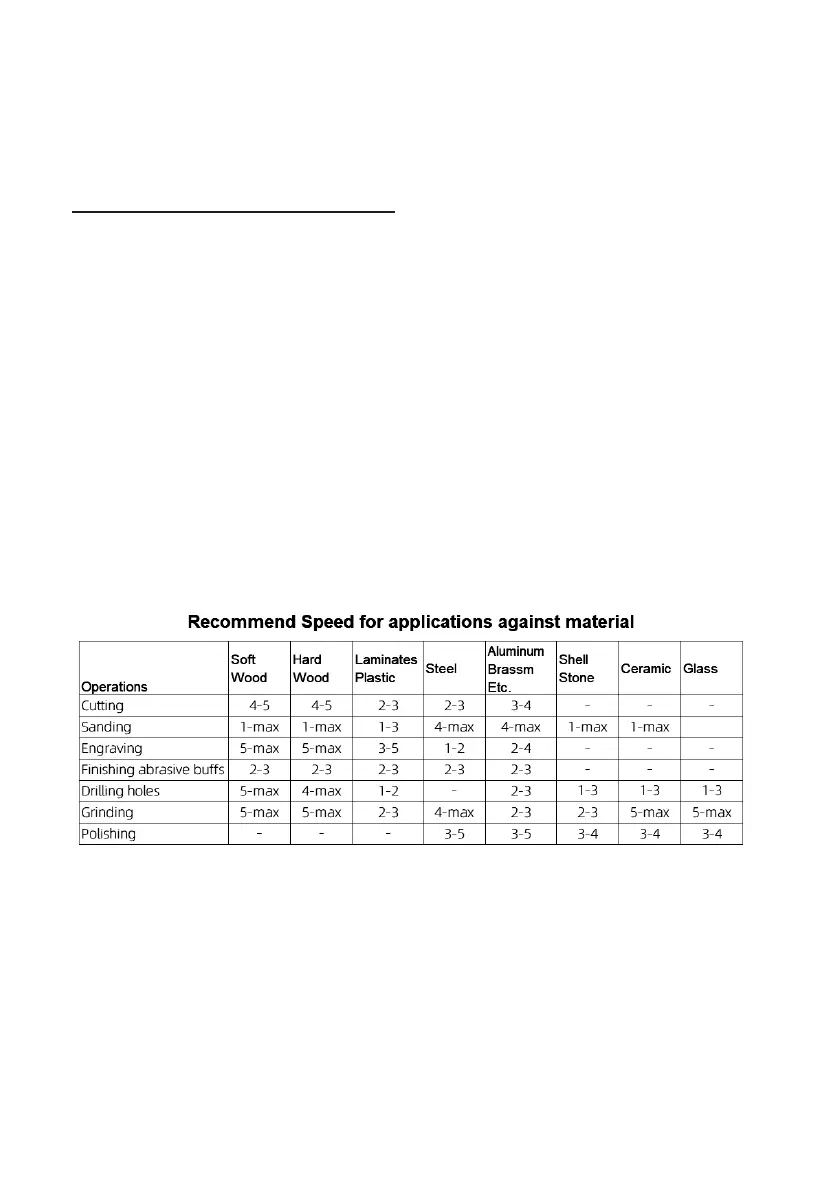
can quickly learn that a slower or faster speed is more effective just by observing what
happens as you make a pass or two at different speeds. When working with plastic, for
example, start at a slow rate of speed and increase the speed until you observe that
the plastic is melting at the point of contact. Then reduce the speed slightly to get the
optimum working speed.
Some rules of thumb in regard to speed:
1. Plastic and other materials that melt at low temperatures should be cut at low
speeds.
2. Polishing, buffing and cleaning with any type of bristle brush must be done at
speeds not greater than 15,000 RPM to prevent damage to the brush from
bristles flying toward operator.
3. Wood should be cut at high speed.
4. Iron or steel should be cut at high speed. If a high-speed steel cutter starts to
chatter — this normally means it is running too slo
w.
5. Aluminum, copper alloys, lead alloys, zinc alloys and tin may be cut at various
speeds, depending on the type of cutting being done. Use paraffin or other
suitable lubricant on the cutter to prevent the cut material from adhering to the
cutter teeth.
Increasing the pressure on the tool is not the answer when it is not performing as
you think it should. Perhaps you should be using different accessory, and perhaps
an adjustment in speed would solve the problem
. Leaning on the tool does not help.
Let speed do the work!


 To Next Page
 Loading...