
 Need help?
Do you have a question about the PICOTE New Boy EPS133TDE and is the answer not in the manual?
Explains symbols used to draw attention to potential hazards.
Details necessary protective gear for safe operation of the generator.
Lists critical safety rules for operating the generator to prevent injury.
Presents key technical specifications including size, power, engine, and weight.
Emphasizes the need for ear protection due to exhaust gases and noise.
Provides information on CE marking and reference to manufacturer documentation.
Outlines the step-by-step procedure for starting the generator engine.
Explains the process and considerations for charging the generator.
Details the terms and conditions of the limited warranty for the generator.
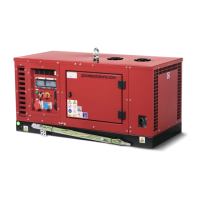
The Picote Generator 400V is a robust and reliable power source designed for professional use, emphasizing both operational efficiency and user safety. This generator is engineered to provide consistent electrical power, making it suitable for a variety of applications where a stable and independent power supply is crucial.
The primary function of the Picote Generator 400V is to convert mechanical energy into electrical energy, supplying power to connected tools and equipment. It features a water-cooled Kubota diesel engine operating at 3000 rpm, paired with an alternator (either Sincro FT2MES with brushes or Mecc Alte ECP3-3S/2 brushless with AVR) to generate electricity. The generator is housed within a silenced canopy, which helps to reduce noise levels during operation. The chassis also serves as the fuel tank, integrating essential components like the fuel filler cap, mechanical fuel gauge, and fuel drain plug.
The control panel is the central interface for managing the generator's operation. It includes a starting key for ignition, a voltmeter to monitor output voltage, an hour counter to track operational time, and pilot lamps (green for contact ON/OFF, red for battery charging status). Crucially, it incorporates comprehensive safety features such as thermal-magnetic protection for the sockets, earth leakage protection, and an emergency stop button. The generator is equipped with multiple sockets, including CEE Socket (red, 5-Poles 16A), Socket Schuko (16A 230V with Lateral Earth Pins), and CEE Socket (blue, 3-Poles 16A), allowing for versatile connectivity to various electrical devices.
Internally, the control panel also houses the battery charging regulator, a timer-relay for the stop solenoid, and a 12V/30A relay for oil pressure and cooling water temperature protection. This relay is designed to automatically stop the engine if oil pressure drops too low or cooling water temperature becomes too high, preventing potential damage.
Operating the Picote Generator 400V involves a series of steps designed to ensure safe and efficient power delivery. Before starting, users must perform essential checks: verifying the oil level, opening the fuel cock on the fuel filter, checking the fuel level, and ensuring the radiator coolant level is adequate (up to the filler cap and 1cm below the "FULL" mark in the expansion tank). The coolant mixture consists of 50% water and 50% antifreeze, suitable for temperatures down to -30°C.
A critical safety step is connecting the earth pin to the generator and drawing it completely into the soil. This ensures the proper functioning of the earth leakage protection, which is a type A residual current device with a 30 mA permission, safeguarding against electric shocks. After these checks, the engine can be preheated for approximately 10 seconds before being started with the key. It is recommended to let the engine warm up for a few minutes at no load before connecting any users.
The generator is designed to operate horizontally on a stable, even surface, at least 1 meter away from buildings and other equipment to ensure adequate ventilation. It is permissible to use the generator in the rain (IP23 protection class) but not in snow. The generator should never be run in a closed environment due to the risk of carbon monoxide poisoning from exhaust gases. Overload conditions will trigger the thermal-magnetic protection, switching off the power. Users must reduce the load and then reset the protection. In case of a short-circuit, the protection will trip immediately, requiring the user to identify and resolve the cause before resetting.
A key operational guideline is to avoid running the diesel engine for extended periods (more than 30 minutes) at no load or very low load (<15%), as this can severely damage the engine. The generator is not suitable for powering welding machines or sensitive electronic devices like computers, TVs, or plastic welders, as this could lead to damage or malfunction.
The Picote Generator 400V is designed with accessibility in mind for routine maintenance. Key maintenance points, including the air cleaner, oil drain pump, oil fill cap, oil filter, fuel filters, and radiator filling cap, are easily accessible. For detailed maintenance schedules and procedures, users are directed to consult the engine manual provided with the generator. In the event of engine or alternator failure, contact with a Picote Reseller or Service Centre is advised.
The generator's engine is factory-filled with coolant meeting BS6580/92 – SAE J1034 specifications, suitable for use down to -30°C. Only coolant of this specification should be used. The engine is also factory-filled with 15W40 oil, suitable for temperatures down to -10°C (14 F), with a minimum specification of API SJ/CF-4. For colder ambient temperatures, 10W40 oil (down to -20°C) or 5W40 oil (down to -30°C) with the same API SJ/CF-4 specification should be used.
For the alternator, all single-phase (1*230V) and three-phase alternators are maintenance-free, meaning periodic checks are not strictly necessary. However, a visual inspection of the different alternator parts and the rotor shaft bearing is recommended during general generator maintenance.
When transporting the generator, it should be secured upright with the engine switch in the "OFF" position to prevent fuel spillage. The fuel cock must be closed, and the tank should not be overfilled. The generator should not be used while placed in a vehicle but rather taken off and used in a well-ventilated area.
For extended storage (more than 2 months), specific precautions are necessary to ensure the unit remains in good condition. The storage area should be free of excessive humidity and dust. It is advisable to completely fill the fuel tank to prevent condensation and corrosion. The engine oil should be refreshed, and the battery removed and connected to a charger to prolong its lifespan.
The manual also provides a troubleshooting flowchart to assist users in diagnosing common issues such as the generator not powering up, fuses tripping, or the RCD tripping. This guide helps users identify problems related to fuel level, switches, electrical cables, wiring, water damage, power load, and cooling issues, directing them to appropriate solutions or to contact support when necessary.
 General
| Model | EPS133TDE |
|---|---|
| Category | Portable Generator |
| Voltage (V) | 230 |
| Frequency (Hz) | 50 |
| Engine Type | Forced Air-cooled, 4-stroke, OHV |
| Displacement (cc) | 80 |
| Noise Level (dB(A)@7m) | 65 |
| Displacement | 80cc |
| Noise Level | 65dB(A)@7m |
| Fuel Type | Petrol |
| Starting System | Recoil |
| DC Output | 12V / 8.3A |
| Outlets | 1x DC |

 To Next Page