EasyManua.ls Logo

PIETRO FIORENTINI SBC 782 - User Manual

PIETRO FIORENTINI SBC 782
146 pages
Print Icon
To Next Page IconTo Next Page
Loading...
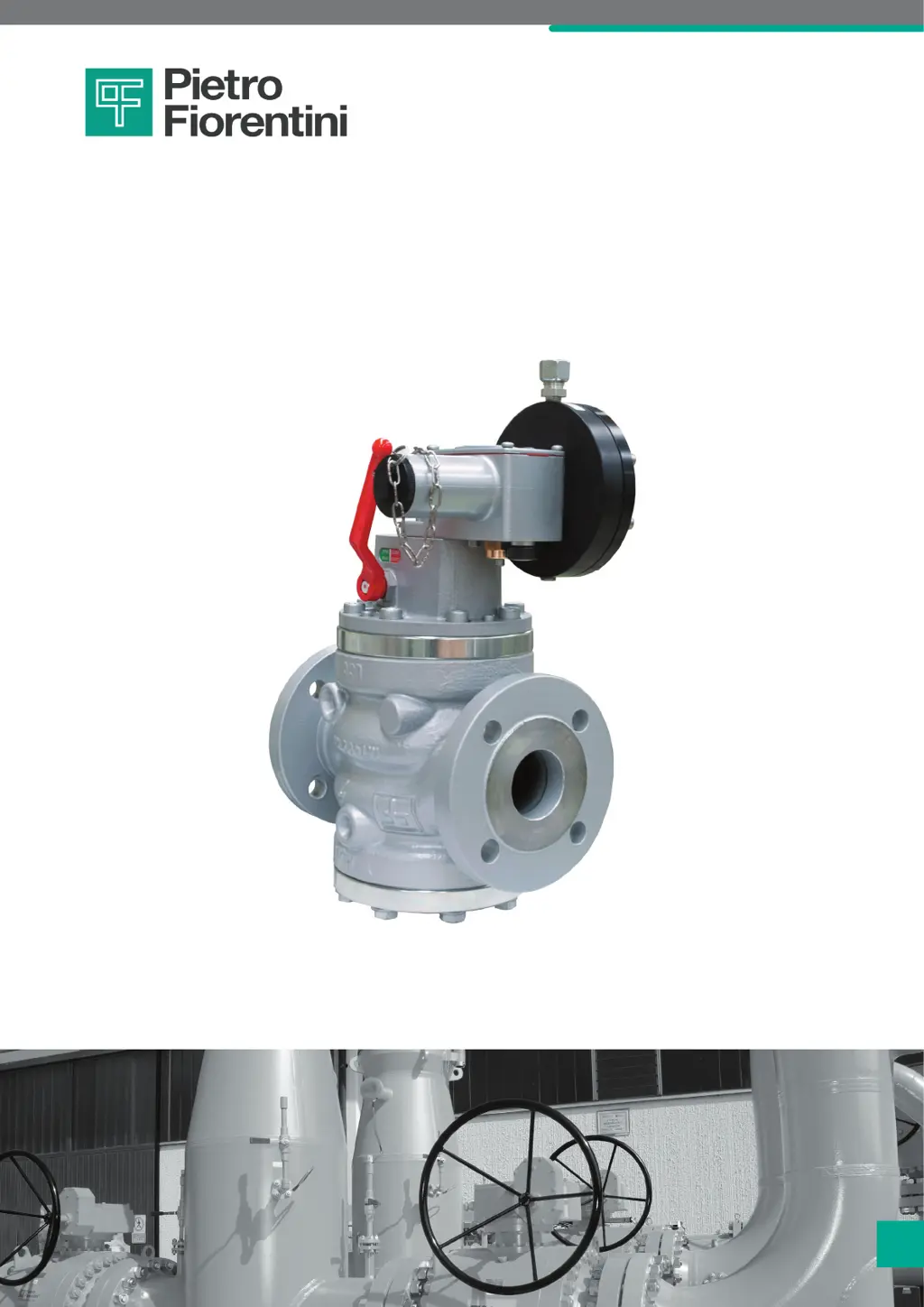
SBC 782
EN
Slam-shut valve
USE, MAINTENANCE
AND WARNING
MANUAL
EN
Revision A - Edition 02/2023

Table of Contents

Other manuals for PIETRO FIORENTINI SBC 782

Questions and Answers

  • M
    Meagan CampbellAug 7, 2025
    What to do if resetting PIETRO FIORENTINI SBC 782 is not possible?
    • R
      Robert YangAug 7, 2025
      If the resetting of your PIETRO FIORENTINI Control Unit is not possible, it could be due to the persistence of the cause which led to downstream pressure increase or decrease. Try to decrease or increase the downstream pressure. Alternatively, the lever system might be broken or chipped, requiring you to change the standard box containing the assembly outside the regulator.
  • A
    april22Aug 15, 2025
    Why does my PIETRO FIORENTINI SBC 782 Control Unit have wrong release pressure?
    • A
      Amber RochaAug 15, 2025
      If your PIETRO FIORENTINI Control Unit has wrong release pressure, it might be caused by an incorrect setting of the maximum and/or minimum spring. Reset it using the rings [14] and/or [15]. Another cause may be friction in the lever system, in that case change the box containing the whole assembly.
  • G
    Garrett CarrAug 22, 2025
    What to do if there is leakage from slam-shut obturator in PIETRO FIORENTINI SBC 782 Control Unit?
    • H
      Hunter MackAug 22, 2025
      If there's leakage from the slam-shut obturator in your PIETRO FIORENTINI Control Unit, it could be due to a deteriorated obturator gasket [40]. In this case, change the gasket. Alternatively, the O-ring [15] might be worn and needs replacement, or the obturator seat [104] could be eroded or chipped, requiring a seat change.
  • J
    Julie HancockAug 30, 2025
    How to fix slam-shut obturator that does not close in PIETRO FIORENTINI SBC 782 Control Unit?
    • J
      Joshua HarperAug 30, 2025
      The slam-shut obturator in your PIETRO FIORENTINI Control Unit might not close because the control diaphragm [4] has ruptured. To fix this, change the diaphragm.

Summary

1 - INTRODUCTION

1.1 - REVISION HISTORY

Document revision history and first issue details.

2 - GENERAL INFORMATION

2.1 - MANUFACTURER IDENTIFICATION

Details of the manufacturer, PIETRO FIORENTINI S.p.A.

2.2 - IDENTIFICATION OF THE PRODUCT

Identifies the equipment as VALVOLA DI BLOCCO SBC 782.

2.3 - REGULATORY FRAMEWORK

Information on compliance with Directive 2014/68/EU and Standard EN 14382.

2.4 - WARRANTY

Outlines warranty conditions and circumstances under which it is void.

2.5 - SYMBOLS USED IN THE MANUAL

Explains symbols for hazard, warning, attention, and notice.

2.6 - ADDRESSEES, SUPPLY AND STORAGE OF THE INSTRUCTION MANUAL

Specifies the intended audience and manual handling requirements.

2.7 - LANGUAGE

States the original language and translation policy.

2.8 - APPLIED RATING PLATES

Illustrates and describes the equipment and accessory nameplates.

2.8.1 - GLOSSARY FOR NAMEPLATES

Defines terms and abbreviations found on equipment nameplates.

2.9 - GLOSSARY OF MEASUREMENT UNITS

Lists common measurement units used in the manual and their descriptions.

2.10 - QUALIFIED PROFESSIONAL FIGURES

Defines the roles and qualifications of personnel involved with the equipment.

3 - SAFETY

3.1 - GENERAL SAFETY WARNINGS

General safety precautions for operating, installing, and maintaining the equipment.

3.2 - PERSONAL PROTECTIVE EQUIPMENT

Details required PPE for various operations and general operator obligations.

3.3 - RESIDUAL RISKS

Assessment of risks associated with the equipment and prevention principles.

3.3.1 - TABLE SHOWING RESIDUAL RISKS DUE TO PRESSURE

Lists risks related to pressure, their causes, effects, and solutions.

3.3.2 - TABLE OF RESIDUAL RISKS FOR POTENTIALLY EXPLOSIVE ATMOSPHERES

Identifies conditions leading to explosive atmospheres and management measures.

3.4 - OBLIGATIONS AND PROHIBITIONS

Lists mandatory actions and forbidden practices for operator safety.

3.5 - SAFETY PICTOGRAMS

Shows safety pictograms and emphasizes not to remove or damage them.

3.6 - RISK LEVEL

Addresses potential noise generation and hearing protection requirements.

4 - DESCRIPTION AND OPERATION

4.1 - GENERAL DESCRIPTION

Describes the SBC 782 slam-shut valve and its main features.

4.2 - OPERATION

Explains the tripping mechanism and how to reset the device.

4.3 - INTENDED USE

Specifies permitted operations, non-permitted uses, and work environments.

4.3.1 - ENVISAGED USE

Specifies permitted operations, non-permitted uses, and work environments.

4.3.2 - REASONABLY FORESEEABLE MISUSE

Lists common ways the equipment might be misused and consequences.

4.3.3 - TYPES OF FLUIDS

Details compatible gases and fluids for equipment operation.

4.4 - TECHNICAL FEATURES;PERFORMANCE

Provides technical specifications like pressure, temperature, and ranges.

4.4.1 - SLAM-SHUT VALVE PRESSURE SWITCHES

Lists and describes the components of the slam-shut valve pressure switch.

5 - TRANSPORT AND HANDLING

5.1 - SPECIFIC WARNINGS FOR TRANSPORT AND HANDLING

General warnings and requirements for personnel involved in transport and handling.

5.1.1 - PACKAGING AND FASTENERS USED FOR TRANSPORT

Describes packaging types and handling instructions upon receipt.

5.2 - PHYSICAL CHARACTERISTICS OF THE EQUIPMENT

Provides overall dimensions and weights for different SBC 782 models.

5.3 - EQUIPMENT ANCHORING AND LIFTING METHOD

Safety warnings and procedures for moving and lifting the equipment.

5.3.1 - FORKLIFT HANDLING METHOD

Step-by-step guide and safety precautions for handling with a forklift.

5.3.2 - CRANE HANDLING METHOD

Step-by-step guide and safety precautions for handling with a crane.

5.4 - PACKAGING REMOVAL

Instructions for unpacking the equipment and checking for anomalies.

5.4.1 - PACKAGING DISPOSAL

Guidance on proper disposal of packaging materials.

5.5 - STORAGE AND ENVIRONMENTAL CONDITIONS

Specifies conditions for extended storage to maintain performance.

5.5.1 - PRE-INSTALLATION WARNINGS AFTER PROLONGED STORAGE

Recommendations for checking rubber parts after long-term storage.

6 - INSTALLATION

6.1 - INSTALLATION PRE-REQUISITES

Requirements for the installation site and environmental conditions.

6.1.2 - CHECKS BEFORE INSTALLATION

Lists checks to perform before installing the equipment, including fittings and site conditions.

6.2 - SPECIFIC SAFETY INSTRUCTIONS FOR THE INSTALLATION STEP

Safety instructions to follow during the installation process.

6.3 - GENERAL INFORMATION ON CONNECTIONS

Details on in-line installation, required valves, gauges, and connection standards.

6.4 - REGULATOR INSTALLATION POSITIONS

Illustrates standard and inverted arrangements for regulator installation.

6.5 - INSTALLATION PROCEDURES

Step-by-step guide for installing the equipment and connecting sensing lines.

6.6 - POST-INSTALLATION AND PRE-COMMISSIONING CHECKS

Checks to perform after installation and before commissioning.

7 - COMMISSIONING;MAINTENANCE EQUIPMENT

7.1 - LIST OF EQUIPMENT

Lists required equipment and operator qualifications for commissioning and maintenance.

7.2 - EQUIPMENT NEEDED FOR THE DIFFERENT CONFIGURATIONS

Details the specific equipment required based on different valve configurations.

8 - COMMISSIONING

8.1 - GENERAL WARNINGS

General safety requirements and warnings before commissioning.

8.2 - PRELIMINARY PROCEDURES FOR COMMISSIONING

Procedures to follow before commissioning, including hazard elimination and suitable conditions.

8.3 - PROPER COMMISSIONING CHECK

Instructions for checking the equipment's tightness using a foaming solution.

8.4 - CALIBRATION OF EQUIPMENT AND ACCESSORIES INSTALLED

Guidance on calibrating equipment based on nameplate accuracy classes.

8.5 - SLAM-SHUT VALVE COMMISSIONING PROCEDURE SBC 782

Steps to check the internal tightness of the slam-shut valve using a bleed cock.

8.5.1 - CHECKING THE TIGHTNESS OF THE SLAM-SHUT VALVE SBC 782

Steps to check the internal tightness of the slam-shut valve using a bleed cock.

8.5.2 - START-UP OF THE SLAM-SHUT VALVE SBC 782

Procedure for starting up the slam-shut valve, referencing figures.

8.5.3 - PRESSURISING WITH EXTERNAL SOURCE

Method for pressurizing the pressure switch control head using an external source.

8.5.4 - CALIBRATION PROCEDURE FOR PRESSURE SWITCHES MOD. 100

Steps for calibrating pressure switches without a regulator.

8.5.4.1 - CALIBRATION PROCEDURE WITHOUT REGULATOR

Steps for calibrating pressure switches without a regulator.

8.5.4.2 - CALIBRATION PROCEDURE WITH REGULATOR

Steps for calibrating pressure switches with a regulator.

9 - MAINTENANCE AND FUNCTIONAL CHECKS

9.1 - GENERAL WARNINGS

General safety warnings and precautions for maintenance activities.

9.2 - PERIODICALLY CHECKING AND INSPECTING THE EQUIPMENT FOR PROPER OPERATION

Details periodic checks for equipment performance and visual inspection.

9.3 - ROUTINE MAINTENANCE

Safety warnings before performing routine maintenance procedures.

9.3.1 - GENERAL SAFETY WARNINGS

Safety warnings before performing routine maintenance procedures.

9.3.2 - REPLACEMENT FREQUENCY FOR COMPONENTS SUBJECT TO WEAR

Specifies minimum replacement frequencies for non-metallic parts based on wear and aging.

9.4 - ROUTINE MAINTENANCE PROCEDURES

Outlines procedures for routine maintenance, including operator qualifications and PPE.

9.4.1 - TIGHTENING TORQUES

Lists tightening torques for various screws on the SBC 782 slam-shut valve for 1" size.

9.4.1.1 - SLAM-SHUT VALVE TIGHTENING TORQUES SBC 782

Lists tightening torques for various screws on the SBC 782 slam-shut valve for 1" size.

9.4.1.1 - SLAM-SHUT VALVE TIGHTENING TORQUES SBC 782

Lists tightening torques for 2" and 2" 1/2 sizes of the SBC 782 slam-shut valve.

9.4.1.1 - SLAM-SHUT VALVE TIGHTENING TORQUES SBC 782

Lists tightening torques for 3" size of the SBC 782 slam-shut valve.

9.4.1.1 - SLAM-SHUT VALVE TIGHTENING TORQUES SBC 782

Lists tightening torques for 4" and 6" sizes of the SBC 782 slam-shut valve.

9.4.1.1 - SLAM-SHUT VALVE TIGHTENING TORQUES SBC 782

Lists tightening torques for 8" size of the SBC 782 slam-shut valve.

9.4.1.2 - TIGHTENING TORQUES FOR PRESSURE SWITCHES MODELS 102 M;102 MH - 105 M;105 MH

Provides tightening torques for specific pressure switch models.

9.4.1.2 - TIGHTENING TORQUES FOR PRESSURE SWITCHES MODELS 102 M;102 MH - 105 M;105 MH

Lists tightening torques for pressure switch models 103M/103MH and 104M/104MH.

9.4.2 - REPLACING ELEMENTS SUBJECT TO WEAR AND ABRASION

Initial safety precautions before replacing worn or abraded parts.

9.4.2.1 - INITIAL OPERATIONS

Initial safety precautions before replacing worn or abraded parts.

9.4.2.2 - CROSS DIAGRAM FOR TIGHTENING SCREWS

Diagrams showing the sequence for tightening screws.

9.4.3 - SLAM-SHUT VALVE MAINTENANCE PROCEDURE SBC 782

Detailed maintenance steps for the 1" SBC 782 slam-shut valve.

9.4.3.1 - SBC 782 1”

Detailed maintenance steps for the 1" SBC 782 slam-shut valve.

9.4.3.2 - SBC 782 2” - 3”

Detailed maintenance steps for the 2" and 3" SBC 782 slam-shut valve.

9.4.3.3 - SBC 782 4” - 8”

Detailed maintenance steps for the 4" and 8" SBC 782 slam-shut valve.

9.4.3.4 - SBC 782 10”

Detailed maintenance steps for the 10" SBC 782 slam-shut valve.

9.4.4 - MAINTENANCE PROCEDURE FOR PRESSURE SWITCHES MOD. 100

Maintenance steps for pressure switch models 102M/102MH.

9.4.4.1 - PRESSURE SWITCH MOD. 102 M;102 MH

Maintenance steps for pressure switch models 102M/102MH.

9.4.4.2 - PRESSURE SWITCH MOD. 103 M;103 MH

Maintenance steps for pressure switch models 103M/103MH.

9.4.4.3 - PRESSURE SWITCH MOD. 104 M;104 MH - 105 M;105 MH

Maintenance steps for pressure switch models 104M/104MH and 105M/105MH.

9.4.5 - PROCEDURE FOR RECOMMISSIONING AFTER MAINTENANCE

Instructions for recommissioning the valve after maintenance.

10 - TROUBLESHOOTING

10.1 - GENERAL WARNINGS

General warnings and safety precautions for troubleshooting.

10.2 - OPERATOR QUALIFICATION SPECIFICATION

Specifies qualifications for operators performing troubleshooting.

10.3 - TROUBLESHOOTING PROCEDURES

General steps to follow for troubleshooting and referring to tables.

10.4 - TROUBLESHOOTING TABLES

Table listing failures, possible causes, and services for the SBC 782 regulator.

10.4.1 - TROUBLESHOOTING SBC 782 REGULATOR

Table listing failures, possible causes, and services for the SBC 782 regulator.

11 - UNINSTALLATION AND DISPOSAL

11.1 - GENERAL SAFETY WARNINGS

Safety warnings related to uninstallation and disposal, especially regarding ignition sources.

11.2 - QUALIFICATION OF THE OPERATORS IN CHARGE

Operator qualifications required for uninstallation and disposal.

11.3 - UNINSTALLATION

Pre-uninstall procedures, including draining the fluid.

11.4 - INFORMATION REQUIRED IN CASE OF RE-INSTALLATION

References for re-installation procedures after uninstallation.

11.5 - DISPOSAL INFORMATION

Guidelines for proper disposal of equipment components and materials.

12 - RECOMMENDED SPARE PARTS

12.1 - GENERAL WARNINGS

Warnings regarding the use of non-original spare parts and liability.

12.2 - HOW TO REQUEST SPARE PARTS

Information on how to request spare parts from the sales network.

13 - CALIBRATION TABLES

13.1 - CALIBRATION TABLES FOR PRESSURE SWITCHES MOD. 100

Tables providing calibration data for pressure switches, including spring codes and dimensions.

13.1 - CALIBRATION TABLES FOR PRESSURE SWITCHES MOD. 100

Continues calibration tables for pressure switches, covering various models.

13.1 - CALIBRATION TABLES FOR PRESSURE SWITCHES MOD. 100

Continues calibration tables for pressure switches, covering various models.

PIETRO FIORENTINI SBC 782 Specifications

General IconGeneral
BrandPIETRO FIORENTINI
ModelSBC 782
CategoryControl Unit
LanguageEnglish