Need help?
Do you have a question about the Planet VIP-1140PT and is the answer not in the manual?
This document provides a Quick Installation Guide for the High Definition Color PoE IP Phones, specifically the VIP-1140PT and VIP-1260PT models. It covers the initial setup, hardware installation, and basic web management access, guiding users through the essential steps to get their IP phone operational.
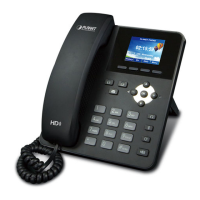
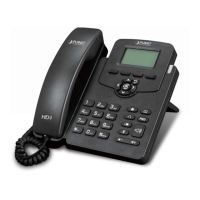
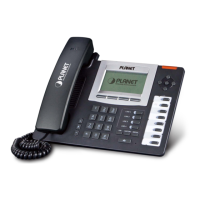
The primary function of these devices is to provide high-definition voice communication over an IP network, leveraging Power over Ethernet (PoE) for simplified deployment. As color IP phones, they offer an enhanced user experience with a visual interface, making navigation and feature access more intuitive. The VIP-1140PT supports 4 direct lines, while the VIP-1260PT supports 6, catering to different communication needs. Both models integrate with existing network infrastructures, with the VIP-1140PT featuring a 10/100 network interface and the VIP-1260PT offering a faster 10/100/1000 interface, ensuring compatibility with various network speeds. The LCD displays, 2.4-inch for the VIP-1140PT and 2.8-inch for the VIP-1260PT, provide clear visual feedback for calls, menus, and other information.
The installation process begins with verifying the package contents. Each phone comes with essential accessories, including a handset, handset cord, stand, and an RJ45 cable. A Quick Installation Guide Sheet is also included for immediate reference. The stand offers two adjustable angles for desktop placement, allowing users to choose the most comfortable viewing and interaction position. This flexibility in stand setup enhances the ergonomic use of the phone.
Connecting the device involves several key steps. The phone requires a 5V 600mA power input, which can be supplied either through an AC adapter (not included) or via Power over Ethernet (PoE). The "Internet" port is the primary network connection and supports PoE, meaning it can receive both data and power from an IEEE 802.3af/at PSE device, such as a PoE injector, hub, or switch. This PoE capability significantly simplifies cabling requirements, as only one Ethernet cable is needed for both connectivity and power, reducing clutter and installation complexity. The "PC" port allows a computer to be connected directly to the phone, effectively acting as a pass-through, which is convenient for workstations with limited network drops. For audio communication, the phone includes a "Headset" port for external RJ9 earphones, providing hands-free operation, and a "Handset" port for the included IP phone handset. These connectivity options ensure that users can choose their preferred method of communication, whether it's through the traditional handset or a headset for extended calls or multitasking.
Once the hardware is connected, the next step is to access the web management interface for configuration. This involves setting up the computer's network to be on the same subnet as the phone. The default IP address for the phone is 192.168.0.1. Users are instructed to set their computer's IP address within the range of 192.168.0.2 to 192.168.0.254 to ensure proper communication. Accessing the web interface is done through a standard web browser (Microsoft Edge, Chrome, Firefox, or Safari) by typing the phone's default IP address into the address bar. Upon accessing the interface, users will be prompted to log in using the default username "admin" and password "123". This initial access allows for further customization and configuration of the phone's features, such as SIP account settings, call forwarding, and other advanced functionalities.
While the quick installation guide focuses on initial setup, it implicitly supports ongoing maintenance through its design and documentation. The web management interface, accessible after the initial setup, is the primary tool for configuring and maintaining the phone. This interface allows administrators to update firmware, troubleshoot issues, and adjust settings as needed, ensuring the phone operates optimally over time. The availability of a detailed user manual, downloadable from the manufacturer's website, is a crucial maintenance feature. This manual provides comprehensive information on all configuration options, advanced features, and troubleshooting steps, empowering users and IT staff to manage the device effectively.
The support for PoE simplifies not only initial installation but also ongoing maintenance. By reducing the number of cables and power adapters, it minimizes potential points of failure and makes it easier to identify and resolve connectivity issues. If a phone needs to be moved or replaced, the single-cable solution streamlines the process. The clear labeling of ports (Power, Internet, PC, Headset, Handset) on the device itself aids in correct cabling and troubleshooting, reducing the likelihood of misconnections.
For any further questions or support, the guide directs users to contact their dealer or PLANET directly via email. This accessible support channel is a key maintenance feature, ensuring that users can get assistance with complex configurations or unexpected issues, thereby extending the lifespan and usability of the IP phone. The emphasis on checking the user's manual for detailed configuration highlights a self-service maintenance approach, where users are encouraged to leverage available resources for problem-solving before escalating to support. This structured approach to support and documentation contributes to the overall maintainability of the device.
 General
| Model | VIP-1140PT |
|---|---|
| Type | IP Phone |
| SIP Accounts | 4 |
| Power over Ethernet | IEEE 802.3af Class 2 |
| Operating Temperature | 0°C to 40°C |
| Ethernet Ports | 2 x 10/100Mbps |
| Audio Codecs | G.711, G.729, G.722 |
| Power Supply | 5V DC, 1A |
| Humidity | 10% to 90% (non-condensing) |
| Features | Call hold, call transfer, 3-way conferencing, DND, call waiting |
| Protocols | SIP RFC3261, TCP/IP/UDP, RTP/RTCP, HTTP/HTTPS, ARP, ICMP, DNS, DHCP, PPPoE, SNTP, TFTP, VLAN 802.1Q, QoS, etc. |

 To Next Page