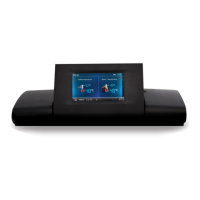
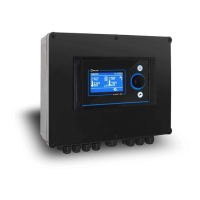
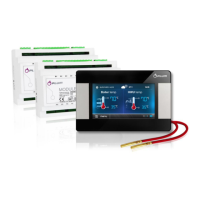
The ecoMAX360I is a controller designed for managing heating and cooling systems, including central heating, domestic hot water (DHW), and various heat sources like gas, oil, pellet boilers, and heat pumps. It consists of a main module and a control panel, which operates via a touch screen interface.
Function Description
The controller's primary function is to regulate the operation of the main heat source based on the demand for heating or cooling from the heat circuits. It supports one non-adjustable heat circuit and two adjustable heat circuits. Water temperature in these circuits is set based on external weather conditions, ensuring a consistent room temperature regardless of outside fluctuations. For DHW, the controller manages a DHW pump to load the tank to a user-defined temperature, with programmable time intervals. It also controls a DHW circulating pump for quick hot water delivery to distant points.
The ecoMAX360I offers various operation modes for both heating circuits and DHW, including Day, Night, and Schedule modes, allowing users to optimize energy consumption. An "Auto" mode automatically switches between heating and cooling based on external temperature, particularly when a heat pump is the main source. The controller also supports a single DHW load activation when the energy-saving mode is active.
Additional functionalities include:
- Time Schedules: Users can program time schedules for decreasing preset temperatures in circuits and for the circulation pump, as well as ON/OFF schedules for the main heat source and DHW tank, optimizing energy use when the building is unoccupied or at night.
- Weather Control: When an external temperature sensor is connected and enabled, the controller adjusts circuit water temperature based on outside conditions using a heating curve. This curve can be adjusted to match the building's thermal characteristics.
- Heat Source Output Modulation: The controller can modulate the output power of heat sources equipped with a 0-10 VDC interface, allowing for more precise control.
- Firmware Update: The device's firmware can be updated using a microSDHC memory card.
- Power Stoppage Recovery: In case of a power outage, the controller returns to its last operational mode.
- Prevention Cooling: This function helps cool down the heat source to prevent overheating alarms.
- Pump Anti-Standstill Function: The controller periodically switches on pumps (every 167 hours for a few seconds) to prevent immobilization due to scaling.
Important Technical Specifications
Controller:
- Power Supply: 230 VAC, 50 Hz
- Current Consumption: 0.4 A (overall consumption depends on connected devices)
- Maximum Rated Current: 6 (6) A
- Protection Class: IP 20
- Ambient Temperature: 0...50°C
- Storage Temperature: 0...65°C
- Relative Humidity: 5...85% (without water vapor condensation)
- CT-10 Sensor Temperature Measurement Range: 0...100°C
- CT6-P Sensor Temperature Measurement Range: -40°C...+40°C
- Temperature Measurement Accuracy: ±2°C
- Connectors: Screw terminals for supply voltage (0.75-2.5 mm²) and control voltage (0.14-1.0 mm²)
- Dimensions: 234x225x64 mm
- Weight: 1.0 Kg
- Standards: EN 60730-2-9, EN 60730-1
- Software Class: A, according to EN 60730-1, Class I
- Pollution Degree: 2nd pollution degree according to PN-EN 60730-2-9
- Installation Method: On the wall
Control Panel:
- Power Supply: 12 VDC
- Current Consumption: 0.15 A (12 VDC)
- Display: Touch screen, graphical 480x272 pixels
- Protection Class: IP 20
- Ambient Temperature: 0...50°C
- Storage Temperature: 0...65°C
- Relative Humidity: 5...85% (without water vapor condensation)
- Connectors: Screw terminals (0.15-1.5 mm²)
- Dimensions: 144x97x20 mm
- Weight: 0.2 Kg
- Standards: EN 60730-2-9, EN 60730-1
- Software Class: A, according to EN 60730-1
- Installation Method: On the wall or stand
Usage Features
The ecoMAX360I is operated via a user-friendly touch screen. Parameters are edited by touching symbols on the screen. The main screen displays current temperature, set temperature, and operation mode. The controller supports various optional additional equipment, including wireless and wired room thermostats, and an internet module (ecoNET300) for remote monitoring and control via a web interface or mobile application.
The "System configuration assistant" in the service menu is recommended for initial setup, guiding the user through parameter configuration. User settings allow for customization of language, parental lock, screen brightness, screen saver, alarm and key sounds, and panel temperature correction. The controller can cooperate with multiple room panels, either dependent (affecting all assigned circuits) or independent (controlling specific circuits).
Maintenance Features
- Safety: Installation must be performed by a qualified installer following all applicable norms and regulations. The controller should not be used in steam condensation conditions or exposed to water. Before any work involving power supply or connections, the controller must be disconnected from the power mains.
- Component Replacement: Mains fuses (6.3 A, 5x20 mm, anti-surge porcelain) can be replaced. Spare fuses are located under the controller cover. When replacing the control panel or executive module, compatibility of software versions is crucial to avoid malfunctions.
- Sensor Installation: The controller only works with CT-10 and CT6-P temperature sensors. Circuit temperature sensors (CT-10) should be installed on supply pipes, insulated with thermal insulation. External temperature sensors (CT6-P) should be fixed on the coldest wall (typically north-facing), at least 2m above ground and 1.5m away from heat sources or windows, and not exposed to direct solar radiation or rain.
- Wiring: Electrical connections must adhere to the provided schemes, using appropriate cable cross-sections and ensuring proper grounding. Low-voltage connections (e.g., for room panels, web module) must be kept separate from 230 VAC mains to prevent damage and electrocution.
- Documentation: The assembly and operation manual should be stored diligently and transferred to new users if the device is removed or sold.
- Disposal: The product complies with Directive 2012/19/EU (WEEE) and should be disposed of in an appropriate recycling facility, not with unsorted waste, and should not be burned.

 Need help?
 General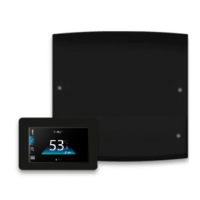

 To Next Page