This document serves as a user guide for PMC's Mid/Main monitor series, which includes the IB2S-AII, IB2S XBD-AII, MB3-A, MB3 XBD-A, BB6-A, BB6 XBD-A, QB1-A, and QB1 XBD-A models. These are fully active, three-way studio reference monitors designed for high-resolution audio reproduction across various professional applications, from composition to mastering.
Function Description:
The PMC Mid/Main monitor series comprises a quartet of fully active, three-way studio designs. They integrate custom PMC-designed drivers, Class-D electronics, and DSP control with PMC's proprietary Advanced Transmission Line (ATL™) bass-loading technology. This combination aims to deliver ultimate power, precision, and forensic levels of detail in audio reproduction. The monitors are designed to recreate the true essence of an artist's intention, offering maximum sonic resolution with robust engineering principles. They are suitable for use throughout the entire audio chain, from studio and film stages to post-production and mastering, and are engineered to excel across all audio genres, reproducing spoken word, rock, pop, and classical music with consistent precision and accuracy.
Important Technical Specifications:
The monitors feature highly damped, low-resonance cabinets and ATL™ technology, which absorbs unwanted mid-range energy while extending bass output with minimal harmonic distortion. The front baffles utilize absorbent material to reduce reflections, improving dispersion and definition, leading to more vivid and clear reproduction of instruments and vocals.
All models share common HF and mid-range drivers:
- HF Driver: PMC 34mm soft-dome tweeter with acoustic radiator, noted for its sensitivity and ability to deliver neutral, uncoloured, high-resolution audio. The perforated acoustic lens extends response beyond 25kHz and controls dispersion.
- MF Driver: PMC hand-built 75mm soft-dome mid-range driver, designed for perfect integration through the crossover region.
Bass drivers vary by model:
- IB2S-AII & IB2S XBD-AII: PMC 250mm/10" Carbon Fibre/Nomex™ piston drivers.
- MB3-A & MB3 XBD-A: PMC 310mm (12-inch) Radial™ bass units, known for dynamic response and thermal efficiency.
- BB6-A & BB6 XBD-A: PMC 380mm (15-inch) Radial™ bass units.
- QB1-A & QB1 XBD-A: Individually matched PMC 250mm/10" piston drivers, providing accurate, near-instantaneous transient response.
The electronics are housed in 19-inch rackmount units, featuring ultra-low distortion Class-D power amplification. A DSP-based crossover ensures perfect driver optimization and integration, along with a non-invasive protective limiting system.
Amplifier Power (per channel):
- IB2S-AII: LF 1 x 1200Wrms, MF 1 x 550Wrms, HF 1 x 275Wrms.
- IB2S XBD-AII: LF & LFX 1 x 2400Wrms, MF 1 x 550Wrms, HF 1 x 275Wrms.
- MB3-A: LF 1 x 1200Wrms, MF 1 x 550Wrms, HF 1 x 275Wrms.
- MB3 XBD-A: LF & LFX 1 x 2400Wrms, MF 1 x 550Wrms, HF 1 x 275Wrms.
- BB6-A: LF 1 x 2400Wrms, MF 1 x 550Wrms, HF 1 x 275Wrms.
- BB6 XBD-A: LF 2 x 2400Wrms, MF 1 x 550Wrms, HF 1 x 275Wrms.
- QB1-A: LF 2 x 2400Wrms, MF 1 x 550Wrms, HF 1 x 275Wrms.
- QB1 XBD-A: LF 4 x 2400Wrms, MF 1 x 550Wrms, HF 1 x 275Wrms.
Connectivity:
- Balanced analogue input and digital AES3 input (24-bit, 96kHz).
- Adjustable analogue input sensitivity (+4dB to +20dBu).
- LF shelf and HF shelf EQ options (both +/-8dB).
- Remote control via RJ45, with rotary volume control (-48.5dB to +15dB).
- Operational voltage: 100-115V/220-230V selectable.
Maximum SPL:
- IB2S-AII: 125dB @1metre
- IB2S XBD-AII: 128dB @1metre
- MB3-A: 126dB @1metre
- MB3 XBD-A: 129dB @1metre
- BB6-A: 128dB @1metre
- BB6 XBD-A: 131dB @1metre
- QB1-A: 132dB @1metre
- QB1 XBD-A: 132dB @1metre
Usable Frequency Response:
- IB2S-AII & IB2S XBD-AII: 25Hz - 25kHz
- MB3-A & MB3 XBD-A: 20Hz - 25kHz
- BB6-A & BB6 XBD-A: 17Hz - 25kHz
- QB1-A & QB1 XBD-A: 20Hz - 25kHz (QB1 XBD-A: 17Hz - 25kHz)
XBD-A Versions: These models feature a second bass driver in a separate powered cabinet, increasing the system's LF headroom by 3dB. The XBD-Active cabinet can also function as a standalone subwoofer or LFE monitor.
Usage Features:
- Running-in Period: New PMC monitors require approximately 50 hours of use to reach their full potential. During this period, the mechanical and acoustical characteristics of the drive units will relax, leading to warmer, fuller bass, increased bass extension, sweetened treble, and more vivid sound staging.
- Positioning: The unique ATL™ cabinet design, wide dispersion, ultra-low distortion, and smooth bass roll-off make PMC loudspeakers forgiving of difficult room conditions. For optimal stereo imaging, monitors should be angled so their axes cross about 0.5 meters (2ft) behind the listening position. Placing speakers more than 0.5 meters from side and rear walls helps prevent "lumpy" or "boomy" bass. Plinth modules can be used to fine-tune bass response relative to room boundaries.
- Surround Monitoring: The monitors are designed for multi-channel playback, with ideal layouts provided for 5.1 and 7.1 Dolby® Digital Surround EX™/DTS® ES™/Blu-ray™ systems. The LFE input on the control1200 mixes the .1 effects/LFE channel signal into the main monitors, which are capable of faithfully reproducing these frequencies.
- Remote Control (rc2): A supplied remote control panel with an LCD display, push buttons, and a rotary control allows users to calibrate system level, equalization, select between analogue and AES3 digital inputs, and recall personal EQ presets. Up to 12 channels can be linked and controlled.
- User EQ Options: Five user-configurable equalization presets are available, each namable for easy recognition. These DSP-based options include LF and HF shelf responses, adjustable over a range of ±8dB in increments of less than 1dB, with fixed knee frequencies of 200Hz and 5kHz, respectively.
- Connections: The control1200 and power2400 units have various connectors for audio, control, and mains power. Electronically-balanced analogue audio and AES3 digital inputs accept 3-pin male XLR connectors. Thru connections are provided for signal distribution. IEC mains sockets are provided with integral fuse-holders and voltage selectors. A 'Trigger In' facility allows remote switch-on from external devices (4-12V AC or DC). The 'Remote In' RJ45 socket connects to the remote control unit, and the 'Thru' socket distributes the control signal to other speakers in the system. The final loudspeaker in the chain requires a loopback connector fitted to the RJ45 Remote Thru socket.
- Standby Mode: Activated on start-up, via power-off in the main menu, or if a trigger signal is lost (if Trigger ON mode is enabled).
- Channel Aliases: Allows assigning specific roles (e.g., Left Master, Left XBD, Centre Master, LFE1) to individual channels for clear identification in multi-channel setups.
- Input Sensitivity: Analogue input sensitivity can be adjusted in 0.25dB steps from +4dB to +20dB.
- Trim Menus: Main Trim and LFE Trim allow fine-tuning of levels in 0.125dB steps.
- Preset Settings: Users can configure and save presets for Front LF Shelf, Front HF Shelf, Rear LF Shelf, and Rear HF Shelf, each adjustable in 0.125dB steps.
Maintenance Features:
- Servicing: All servicing should be referred to PMC authorized personnel. The equipment should not be opened by the user. Servicing is required if the apparatus is damaged, exposed to moisture, or exhibits a sudden change in operation or audio performance.
- Cleaning: The cabinet should only be cleaned with a dry, lint-free cloth. Solvents, abrasives, waxes, or liquids should not be used as they may damage the finish.
- Product Support: For product support, accessories, or servicing advice, users should contact a PMC authorized dealer or visit www.pmc-speakers.com. Products should not be returned directly to PMC without first contacting their service department.
- Warranty: PMC monitors come with a 5-year warranty. Users are encouraged to complete the warranty card or register online at www.pmc-speakers.com. The warranty covers defects due to faulty materials or workmanship but excludes accidental damage, misuse, or unauthorized repairs.
- Quality Control: Every component is measured, tested, matched, and recorded by hand. Each completed monitor undergoes objective listening tests and measurements to ensure it meets performance criteria and sounds identical to the original reference model.
- Electrical Safety: Heed all electrical safety warnings. Ensure sufficient clearances and free airflow around the control1200 and power2400. Unplug the product during electrical storms or extended periods of disuse. The control1200 and power2400 units must be earthed. Only change fuses with the power cord completely removed.
- Magnetic Sensitivity: PMC main monitors contain powerful magnets that may affect nearby magnetically-sensitive items (e.g., CRT televisions, floppy discs, cassettes, videotapes).
- Sound Pressure Levels: PMC main monitors can produce sound pressure levels exceeding 120dB. Users should exercise care when adjusting volume to avoid hearing damage.

 Need help?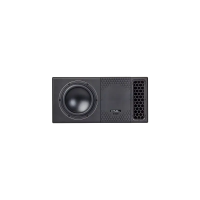

 To Next Page
 General