Need help?
Do you have a question about the Polar Electro Equine Belt and is the answer not in the manual?
Measures horse's heart rate in real time and sends data wirelessly to training devices.
Features electrode areas for heart rate detection and a protective pocket for the sensor.
Clean sensor with mild soap and water. Avoid alcohol or abrasive materials.
Rinse belt after use, dry, and clean gently with mild soap. Avoid moisturizers.
Store belt and sensor separately when dry to maximize battery life.
Recommend authorized service for repairs during the 12-month warranty period.
Detailed steps for wetting the belt and horse, attaching the sensor, and positioning the belt.
The Polar Equine Belt is a specialized device designed for monitoring a horse's heart rate in real-time during equine sports. It consists of a heart rate sensor and an equine belt, working together to provide continuous, wireless heart rate data to a compatible Polar training device or mobile application.
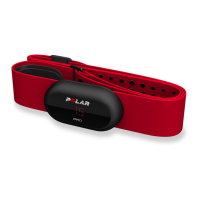
The core function of the Polar Equine Belt is to accurately measure and transmit a horse's heart rate. The equine belt features plastic electrode areas (A, B) on its reverse side, which are responsible for detecting the horse's heart rate. These electrodes need to be in good contact with the horse's skin to ensure proper readings. The heart rate sensor, which is compatible with Bluetooth® smart ready devices that support heart rate service, receives the electrical signals from the electrodes and wirelessly transmits this information. The belt also includes a pocket (C) specifically designed to house and protect the heart rate sensor from shocks, scratches, and accidental dislodgement. The straps attached to the belt are used to secure it to the horse's girth or harness. The heart rate sensor has a range of over 10 meters, allowing for monitoring even during activities like lungeing.
To ensure optimal performance, several steps are required for using the Polar Equine Belt. First, the belt needs to be thoroughly wetted, for example, in a bucket of water, to facilitate good contact between the electrode areas and the horse's skin. Additionally, the horse's hair in the areas where the electrodes will be placed should also be wetted. For horses with long or thick hair, clipping these areas is recommended to significantly improve signal quality. Once the belt is prepared, the heart rate sensor is attached to the pocket on the belt, and the pocket is firmly closed. The strap is then placed on the reverse side of the heart rate sensor pocket. The belt is positioned on the horse with the heart rate sensor pocket on the left side, ensuring the electrode areas are correctly placed on the horse's left side. After positioning the belt, the horse is saddled or harnessed. The heart rate sensor will remain under the girth or harness, and the belt is attached to the girth or harness using the provided straps. The girth or harness is then secured on the right side of the horse, with the heart rate sensor belt remaining underneath. For enhanced contact between the horse's skin and the electrodes, a contact gel can be applied to the electrode areas on the reverse side of the belt, which helps in better detection of the horse's heart rate.
Proper care and maintenance are crucial for fulfilling guarantee obligations, keeping the device in peak condition, ensuring reliable measurements, and maximizing the lifespan of both the belt and the heart rate sensor.
Heart Rate Sensor Maintenance: After each use, the heart rate sensor should be detached from its pocket and wiped dry with a soft towel. When necessary, the heart rate sensor can be cleaned with a mild soap and water solution. It is important to never use alcohol or any abrasive materials, such as steel wool or harsh cleaning chemicals, on the sensor.
Belt Maintenance: The equine belt should be rinsed under running water after every use and hung to dry. It can be gently cleaned with a mild soap and water solution when needed, but moisturizing soaps should be avoided as they can leave residue on the belt. The belt should never be soaked, ironed, dry cleaned, or bleached. Stretching the belt or sharply bending the electrode areas should also be avoided. Specific washing instructions can be found on the belt's label.
Storage: To maximize the heart rate sensor's battery lifetime, both the belt and the heart rate sensor should be dried and stored separately. The heart rate sensor should be kept in a cool and dry place. To prevent snap oxidation, it should not be stored wet in non-breathing material. Additionally, the heart rate sensor should not be exposed to direct sunlight for extended periods.
Service: During the 12-month guarantee/warranty period, any service other than battery replacement should be performed by an authorized Polar Service Center. The warranty does not cover damage or consequential damage resulting from unauthorized service. For information on Polar Service Centers, users can visit the support.polar.com website.
 General
| Battery Type | CR2025 |
|---|---|
| Use | Equine training and heart rate monitoring |
| Care | Hand wash |
| Strap Length | Adjustable |
| Water Resistance | Water-resistant |


 To Next Page