This document is a user manual for the POTANE VS2690 vacuum sealer, a device designed to extend the life of foods by removing air from sealed containers, thereby reducing oxidation and inhibiting the growth of microorganisms.
Function Description
The POTANE VS2690 vacuum sealer is a user-friendly appliance that automatically draws air out of bags and seals them, or can be used with various accessories like canisters and bottle stoppers for different sealing needs. It features a control panel with several buttons and LED indicators to manage the vacuum and sealing processes.
Control Panel Functions:
- VACUUM & SEAL / CANCEL: Initiates automatic air extraction and sealing. Pressing it a second time stops or pauses the process.
- SEAL ONLY (AUTO): Has two functions:
- Seals bags only, typically used to seal one end of a bag roll before use.
- Stops the vacuum process and immediately seals the bag when the "Vac&Seal" function is in operation. This function requires the food type to be set to "DRY."
- VACUUM ONLY (MANUAL): Allows for finer suction control; the vacuum stops when the button is released. This is useful to avoid excessive suction.
- FOOD TYPE: Offers settings for different food consistencies:
- DRY: For most dry objects and food types, providing the highest vacuum pressure.
- MOIST: For wet food with little moisture (e.g., fresh vegetables, chicken, steak). For liquid foods, it's recommended to freeze them first.
- SOFT: For delicate food types like strawberry or cheese.
- DELICATE: For crisp food items requiring the lowest suction, such as cookies or nuts. The default setting is "DRY" for strongest suction, but "VACUUM ONLY" can be used for finer control.
- LED Indicators: Display the status of the vacuum or seal process and the machine's settings.
- Canister Switch: Used for vacuuming POTANE canisters, wine bottle stoppers, and other containers. It stops automatically when vacuuming is complete but can also be stopped manually.
Internal Components:
- Release button: Two buttons on the sides of the machine to open the lid and release internal vacuum pressure.
- Air intake: Connects the vacuum chamber and pump, used for canisters and wine stoppers with a hose.
- Sealing strip: Where the bag is placed for sealing.
- Vacuum chamber: Holds the bag opening, extracts air, and catches any moisture overflow.
- Lower gasket: Forms a vacuum with the upper gasket to keep air out.
- Upper gasket: Forms a vacuum with the lower gasket to keep air out.
- Sealing element: Made of PTFE resin and special glass fabric, heats up to seal the bag.
- Hose: Used with POTANE canisters, wine bottle stoppers, and other containers, can be stored in the lid's groove.
- Hook: Locks the lid to the base, indicated by two distinct sounds.
Important Technical Specifications
- Model: VS2690
- Rated voltage: 120V 60Hz
- Rated power: 120W
- Pump power: 17W
- Motor speed: 2800RPM +/-10%
- Heating power: 103W
- Sealing time (Moist setting): 18 seconds
- Sealing time (Other setting): 6-8 seconds
- Heating wire width: 2.5 mm
- Work width: 300 mm
- Vacuum power: max -0.85bar
- Unit size: 370mm x 144mm x 74mm
- Unit weight: 1.4 Kg
Usage Features
The POTANE VS2690 is designed for easy operation, from making custom bags to sealing various food items and non-food items.
Making a Bag from a POTANE® Roll:
- Plug in the cord and wait for the "Dry" light to turn green (5-7 seconds).
- Cut enough bag material from a roll, ensuring 3 extra inches for the seal and keeping the bag straight.
- Open the lid, insert one end of the bag material across the Sealing Strip.
- Press down the lid firmly until it locks on both sides.
- Ensure "DRY" food type is selected, then press "Seal Only."
- Once the "Seal Only" indicator light turns off, the sealing is complete. Press release buttons to open the lid and remove the bag.
Vacuum Sealing with POTANE® Bags:
- Place items in the bag, leaving at least 3 inches of space between contents and the top.
- Open the lid and place the open end of the bag into the Vacuum Chamber.
- Close the lid firmly until it locks.
- Choose the appropriate food setting ("DRY," "MOIST," "SOFT," "DELICATE"). Press "Vacuum&Seal" to start; the motor runs until fully vacuumed, then seals automatically.
- For manual suction control, press "Vacuum Only."
- When the Seal Indicator Light turns off, press the release buttons, lift the lid, and remove the bag. Refrigerate or freeze as needed.
- Note: Allow the appliance to cool for 20 seconds between seals. Always store with the lid closed gently, not locked, to prevent gasket compression.
Vacuum Sealing with POTANE® Accessories (Canisters and Bottle Stoppers):
- Canisters:
- Ensure the container is clean, dry, and not overfilled, leaving space within the vacuum cover.
- Insert one end of the hose into the hose port in the vacuum chamber and the other into the center hole of the canister cover. Turn the cover button to "Seal."
- Press the "Canister Switch" to start; it stops automatically when air is out.
- Bottle Stoppers:
- Push the bottle seal as far down into the bottle as possible.
- Plug the white adapter (with two connecting pieces) into the vacuum sealer's hose port. The larger piece is for VS2690, the smaller can be removed.
- Push the round rubber knob of the vacuum adapter onto the grey valve in the bottle seal.
- Press the "Canister Switch" to start; it stops automatically when air is out.
- Remove the vacuum adapter from the valve.
- Note: POTANE accessories are available on www.potane.com. Video instructions can be found on YouTube by searching "potane."
Guidelines for Successful Vacuum Sealing:
- Food Safety: Vacuum sealing extends food life by reducing oxidation and inhibiting mold growth. It slows yeast growth (refrigeration needed, freezing stops it) and can prevent bacterial growth. However, it is NOT a substitute for refrigeration or freezing. Perishable foods must still be refrigerated or frozen.
- Hard Cheeses: Vacuum seal after each use. Make bags extra long for resealing. Soft cheeses should never be vacuum sealed due to anaerobic bacteria risk.
- Meat and Fish: Pre-freeze for 1-2 hours for best results (retains juice and shape, better seal). If not possible, place a folded paper towel between meat/fish and the top of the bag (below seal area) to absorb moisture. Beef may darken due to oxygen removal, which is normal.
- Vegetables: Blanch vegetables before vacuum sealing to stop enzyme action. Blanching times vary (1-2 min for leafy greens/peas, 3-4 min for snap peas/zucchini/broccoli, 5 min for carrots, 7-11 min for corn on the cob). After blanching, immerse in cold water, then dry thoroughly. All vegetables (broccoli, Brussels sprouts, cabbage, cauliflower, kale, turnips) emit gases and must be stored in the freezer only after blanching. Fresh mushrooms, onions, and garlic should NEVER be vacuum sealed due to anaerobic bacteria risk.
- Fruits: Pre-freeze soft fruits/berries for 1-2 hours until solid. Spread them on a baking sheet to prevent freezing together. Once frozen, vacuum seal in a POTANE® Bag and return to the freezer.
- Leafy Vegetables: Use a canister for best results. Wash, dry, then vacuum seal and store in the refrigerator.
- Baked Goods: Use a POTANE® Canister for soft/airy goods to maintain shape. If using a bag, pre-freeze for 1-2 hours.
- Liquids: Pre-freeze liquids (soup stock, etc.) in a casserole dish, loaf pan, or ice cube tray until solid. Vacuum seal the "frozen bricks" in a POTANE® Bag.
- Coffee and Powdery Foods: Place a coffee filter or paper towel at the top of the bag/canister to prevent particles from entering the vacuum pump.
- Make-ahead Meals, Leftovers, Sandwiches: Store efficiently in POTANE® square containers, which are microwaveable and top-rack dishwasher safe.
- Snack Foods: Use a POTANE® Canister for crushable items like crackers.
- Water for Drinking: Fill a POTANE® Bag with ice, vacuum seal, and use as an ice pack. Cut a corner to pour.
- Outdoor/Camping Gear: Vacuum seal food, extra batteries, memory cards, cash, identification cards, boating license, and dry changes of clothes.
- Emergency Kits: Vacuum seal flares, batteries, flashlights, matches, candles, first aid kits, extra food, and other necessities.
Maintenance Features
Proper care and cleaning ensure the longevity and optimal performance of the POTANE VS2690 vacuum sealer.
Cleaning Appliance:
- Always unplug the unit before cleaning.
- Do not immerse the unit in water or any other liquid.
- Avoid abrasive products or materials to prevent scratching the surface.
- Use mild dishwashing soap and a warm, damp cloth to wipe away food residue or clean components.
- Dry thoroughly before reuse.
- The foam gaskets around the vacuum chamber should be dried thoroughly before re-assembling. Ensure correct re-assembly to prevent damage and vacuum leaks.
- Wash all vacuum accessories in warm water with mild dishwashing soap. Do not immerse canister covers in water.
- Canister bases (not lids) are top-rack dishwasher safe. Canister covers should be wiped down with a damp cloth.
- Ensure accessories are thoroughly dry before reusing.
- Canister covers are not allowed in microwave or freezer.
Storing Appliance:
- Clean the unit thoroughly as described above.
- After cleaning and drying, close the lid without locking it. This prevents undue pressure on the internal sealing gaskets.
- Never store the lid in a LOCKED position, as gaskets may become compressed, leading to improper unit function.
Troubleshooting:
- No lights on control panel: Check if plugged in, wall outlet is functional, and lid is all the way down (but not locked).
- Cannot insert bag into machine: Ensure enough bag material (3 inches extra) to reach the drip tray. Gently stretch the bag flat and insert it CURL DOWN into the Vacuum Channel.
- Vacuum pump runs, but bag not evacuating:
- If making a bag from a roll, ensure one end is sealed.
- Adjust the bag, ensuring the open end is inside the vacuum channel.
- Check for wrinkles along the Sealing Strip; gently stretch the bag flat.
- Open the unit and ensure gaskets are properly inserted and free of foreign objects.
- If the latch was left in the LOCKED position, gaskets may be compressed. Unlatch and allow 10-20 minutes for gaskets to expand.
- Ensure the accessory hose is not attached to the accessory port.
- Ensure the lid is latched down all the way; a leak will occur if not.
- If the problem occurs suddenly after 4-8 months, check if the foam gasket is compressed and has lost elasticity. Replace with a new foam gasket.
- Gasket is loose or has a tear: Remove, clean, and reinsert the gasket. Email support@potane.com for replacement.
- Bag not sealing properly:
- Too much liquid in the bag; freeze before vacuuming.
- Check for food debris around the seal area; clean if present.
- Bag has wrinkles; gently stretch the bag flat.
- Air removed from bag, but air re-entered:
- Examine the seal for wrinkles.
- Moisture or food material along the seal can prevent proper sealing; cut bag open, wipe, and reseal.
- Sharp food items may have punctured the bag; use a new bag and cover sharp items with cushioning material.
- Fermentation or natural gas release from food may indicate spoilage; discard food.
- Bag melts: The Sealing Strip may be too hot. Wait at least 20 seconds between seals. Use POTANE® brand bags, as they are specially designed for POTANE® units.
- Further assistance: Email support@potane.com.
Storage Guide:
The manual provides detailed storage charts for various foods (meat, cheese, vegetables, fruits, baked goods, nuts, coffee, prepared liquids, bottled liquids, dry foods, powdery foods), indicating recommended POTANE® bags/accessories, extended storage life with vacuum sealing, and normal storage life. For example, beef, pork, and lamb can be stored for 2-3 years with a POTANE® Bag compared to 6 months normally. Cheddar and Swiss cheese can last 4-8 months in a POTANE® Bag/Canister compared to 1-2 weeks.

 Need help?
 General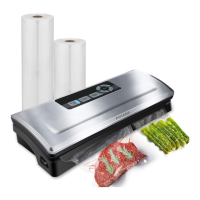

 To Next Page