Need help?
Do you have a question about the Power smart PS5040 and is the answer not in the manual?
Hazards associated with carbon monoxide (CO) from generator exhaust.
Safety precautions related to flammable gasoline vapors and fire hazards.
Warnings about electrocution risks and proper electrical connections.
Requirements for connecting generator to building wiring systems.
This document serves as an instruction manual for the PowerSmart 4400W Open Frame Inverter Generator, Model # PS5040. It provides comprehensive information regarding the safe operation, maintenance, and troubleshooting of the product. The manual emphasizes the importance of reading and understanding all instructions and safety warnings before using the generator to prevent injury and machine damage.
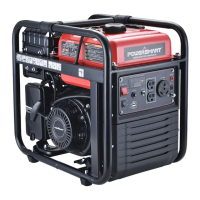
The PowerSmart 4400W Open Frame Inverter Generator is designed to provide portable electrical power for various applications. It features a 4-stroke, OHV, single-cylinder engine with a forced air-cooling system, ensuring reliable performance. The inverter technology allows for stable and clean power output, making it suitable for sensitive electronic devices. The generator includes multiple output receptacles, including AC American-type three-hole receptacles and a USB port, to accommodate a range of electrical devices. A parallel kit terminal is also present, enabling parallel operation with another inverter (sold separately) to increase overall power output.
The control panel is equipped with several indicators and switches for easy monitoring and operation. These include an oil alarm lamp, overload indicator, running indicator, AC breaker, DC breaker, energy-saving switch, and engine switch. The energy-saving switch allows the engine to adjust its speed based on the connected load, optimizing fuel consumption and reducing noise levels. When connecting devices that require a large starting current, such as air compressors or sinking pumps, it is recommended to set the energy-saving switch to the "OFF" position.
Before starting the generator, users must perform several preparatory steps. This includes adding the proper amount of engine oil, as the engine is not pre-filled from the factory. The manual specifies the recommended oil type and capacity, along with instructions for checking and filling the oil level using a dipstick. It also details the process for adding regular unleaded gasoline, emphasizing safety precautions such as not overfilling the tank and avoiding operation near open flames or while smoking.
A critical safety feature highlighted is the necessity of grounding the generator before use to prevent electrocution. The manual explains how to properly connect the generator to an appropriate ground using a heavy gauge copper wire and a copper rod. It also warns against connecting the generator directly to a building's electrical system without a qualified electrician and a transfer switch, to avoid back-feed and potential harm to utility workers.
Starting the generator involves a sequence of steps: turning the fuel valve to "ON," adjusting the choke valve based on engine temperature (cold or hot start), and then pulling the recoil starter. The manual provides detailed guidance on choke valve positioning for different starting conditions and advises on how to handle unstable engine operation during warm-up.
When connecting electrical devices, users are instructed to inspect power cords for damage, allow the engine to stabilize, ensure proper grounding, and confirm that devices are in the "OFF" position before plugging them into the generator. It is crucial not to exceed the generator's wattage capacity to prevent damage to both the generator and connected devices. The manual provides a "Wattage Reference Chart" to help users calculate the total running and starting watts needed for their electrical equipment. In case of an overload, the overload indicator will light up, and the AC protector will stop the output. Users are advised to reduce the connected load and press the reset button.
For parallel operation, both generating sets should be in a good running state, and their energy-saving switches should be in the same position. The parallel kit (sold separately) is used to connect the generators, and electrical devices are then plugged into the AC receptacle of the parallel kit.
Stopping the generator involves removing all loads, allowing the generator to run at no load for a few minutes to stabilize temperatures, turning the engine switch to "OFF," and then turning the fuel valve to "OFF." Finally, all electrical equipment should be disconnected from the generator panel.
Routine maintenance is essential to prolong the life of the generator. The manual provides a detailed maintenance schedule, outlining inspection and replacement intervals for various components such as engine oil, air filter, spark plug, spark arrester, idle speed, valve clearance, and oil tubes. Some maintenance tasks are recommended for knowledgeable owners or authorized dealers, while others can be performed by the user.
Key maintenance procedures include checking and changing the engine oil. The manual specifies the oil capacity and recommends changing the oil when the engine is hot, with warnings about high temperatures. Instructions are provided for draining old oil and refilling to the proper level.
Air filter maintenance involves loosening a fix bolt, removing the cover and foam filter element, washing the element in liquid detergent and warm water, squeezing it dry, saturating it in clean engine oil, and then reassembling. The manual warns against running the engine without the air filter.
Spark plug inspection and replacement are also covered, including instructions for checking the spark plug gap and cleaning carbon deposits from the spark arrester screen. The manual emphasizes using only recommended spark plugs and allowing the generator to cool completely before servicing the spark arrester.
General maintenance advice includes keeping the generator clean and stored properly, using a damp cloth or soft brush for exterior cleaning, and using an air compressor to clear dirt and debris from air vents and cooling slots. Users are explicitly warned not to clean the generator with water while it is running or to modify the generator in any way, as tampering with the governed speed will void the warranty.
For storage and transport, the manual advises emptying the fuel tank and shutting off the fuel valve to prevent spillage and explosions. For longer-term storage, additional steps include draining all fuel from the tank, hose, and carburetor, changing the oil, and pouring a small amount of oil into the cylinder to lubricate it. The unit should be stored in a clean, dry area away from direct sunlight. When transporting, the generator must be secured upright with the engine switch and fuel valve turned off, and it should not be operated on a vehicle.
 General
| Model | PS5040 |
|---|---|
| Engine Type | 4-Stroke OHV |
| Fuel Type | Gasoline |
| Starting System | Recoil |
| Fuel Tank Capacity | 4 Gallons |
| AC Output | 120V |
| DC Output | 12V, 8.3A |
| Outlets | 2x 120V 20A, 1x 12V DC |

 To Next Page