
 Need help?
Do you have a question about the Powerful Signal Cel-Fi GO G32 and is the answer not in the manual?
Attach the antenna vertically to a roof mount or pole at the highest point. Directional antennas must be pointed at the cell tower.
Mount the booster in a climate-controlled location near an AC outlet, ideally with the shortest cable run to the outside antenna.
Position the inside antenna with 20' vertical and 10' horizontal separation from other components for optimal signal.
Connect coax cables from the roof to the booster's outside port and from the booster's inside port to the inside antenna.
Perform a temporary setup to test functionality before permanent installation, allowing for adjustments.
Connect the surge protector between the outside antenna and booster, grounding it to a proper ground rod.
Install a dome antenna through a ceiling hole, ensuring the mounting nut is flush with the surface.
Connect multiple inside antennas to the booster using a splitter and appropriate jumper/coax cables.
The Cel-Fi GO G32 Cell Signal Booster is a sophisticated device designed to enhance cellular signal strength within a building, ensuring reliable connectivity for various cellular devices. This installation guide provides comprehensive instructions for setting up and optimizing the booster system, covering everything from antenna placement to cable management and advanced configurations. The system is engineered for ease of installation, but also emphasizes the importance of proper setup to achieve maximum performance.
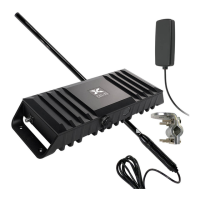
The primary function of the Cel-Fi GO G32 is to capture weak cellular signals from outside a building, amplify them, and then rebroadcast the stronger signal indoors. This process effectively extends the coverage area of cellular networks, eliminating dead zones and improving call quality, data speeds, and overall cellular experience. The booster operates by utilizing an outside antenna to receive signals, a cellular signal booster unit to amplify them, and an inside antenna to distribute the enhanced signal within the desired area.
The system is designed to be versatile, supporting various types of outside antennas (omnidirectional or directional) and inside antennas (dome or panel), allowing for customization based on specific environmental and structural needs. An omnidirectional outside antenna is suitable for areas with generally good signal coverage from multiple towers, as it receives signals from all directions. In contrast, a directional outside antenna is ideal for areas with weak signals or when a specific cell tower needs to be targeted, as it focuses on a particular direction to maximize signal capture.
The cellular signal booster unit, the core of the system, is responsible for intelligent signal amplification. It is designed to work with specific cellular bands, ensuring compatibility with major carriers. The booster unit processes the incoming signal, filters out noise, and amplifies the desired frequencies before sending them to the inside antenna. This intelligent processing helps maintain signal integrity and prevents interference with the cellular network.
The inside antenna, whether a dome or panel type, is crucial for distributing the amplified signal throughout the indoor space. Dome antennas are typically installed in ceilings, providing a broad, downward-spreading signal pattern, making them suitable for open areas. Panel antennas, often wall-mounted, offer a more directional signal, which can be advantageous for long corridors or specific rooms.
The Cel-Fi GO G32 system is designed with several usage features that make it adaptable and user-friendly.
Flexible Antenna Placement: The system offers flexibility in placing both the outside and inside antennas. The outside antenna should be mounted at the highest point on the roof, ideally on a roof mount or pole, to maximize signal reception. For directional antennas, precise aiming towards the desired cell tower is critical. The inside antenna, on the other hand, should be strategically placed to cover the intended indoor area. For dome antennas, installation in the ceiling, close to the center of the home or the area most in need of signal, is recommended. Panel antennas can be mounted on walls to direct signal where it's most needed.
Separation Requirements: To prevent oscillation and ensure optimal performance, specific separation distances between the inside and outside antennas are crucial. The guide recommends at least 20 feet of vertical separation between the inside and outside antennas and 10 feet of separation between the inside antenna and the booster. Adhering to these guidelines helps prevent the amplified signal from the inside antenna from feeding back into the outside antenna, which could lead to reduced performance or system instability.
Cable Management: The system utilizes coax cables for connecting the components. The guide emphasizes proper cable management, including using 2-foot jumper cables and barrel connectors to complete connections. It also advises against kinking, looping, or coiling excess cable, as this can degrade signal quality. Bringing the outside cable into the house through a vent or other opening ensures a clean and secure installation.
Multiple Inside Antennas: For larger homes or commercial spaces, the system supports the installation of two or more inside dome or panel antennas. This feature allows for broader and more even signal distribution across multiple rooms or floors. To achieve this, a splitter is used to divide the amplified signal from the booster among multiple inside antennas. This modularity ensures that the system can be scaled to meet various coverage demands.
Lightning Surge Protector: An optional but highly recommended feature is the inclusion of a Lightning Surge Protector. This device is connected between the outside antenna and the coax cable leading to the booster. It provides crucial protection against lightning strikes, safeguarding the booster and other connected equipment from electrical damage. Proper grounding of the surge protector with an 8- to 10-gauge solid copper ground wire to an 8-foot solid copper ground rod is essential for its effectiveness.
Cel-Fi Wave App Integration: The Cel-Fi GO G32 is designed to be configured and monitored using the Cel-Fi Wave app, available on iOS App Store and Google Play Store. This app provides a user-friendly interface for setting up the booster, checking its performance, and making adjustments. The app can display real-time signal strength, system status, and other diagnostic information, empowering users to optimize their booster's operation.
While the Cel-Fi GO G32 is designed for reliable, long-term operation with minimal direct maintenance, several aspects contribute to its overall upkeep and longevity.
"Soft Installation" Recommendation: The guide strongly recommends a "soft installation" before permanently mounting components and pulling cables. This involves setting up and connecting all components without permanent mounting, bringing the outside cable through an open window or door, and positioning antennas where they are intended to be installed. This allows users to test the system's performance and make adjustments before committing to a permanent setup. This proactive approach helps identify and resolve potential issues early, preventing the need for costly and time-consuming rework.
Climate-Controlled Environment: The cellular signal booster unit should be mounted near an AC power outlet in a climate-controlled location. This ensures that the booster operates within its optimal temperature range, preventing overheating or damage from extreme environmental conditions. Maintaining a stable environment contributes significantly to the device's lifespan and consistent performance.
Cable Integrity: The emphasis on proper cable management, avoiding kinks, loops, or coiling excess cable, is a maintenance-related feature. Maintaining the integrity of the coax cables ensures optimal signal transmission and prevents signal loss. Regular visual inspection of cables for any signs of wear or damage can help prevent performance degradation.
Grounding for Surge Protection: For systems including a Lightning Surge Protector, proper grounding is a critical maintenance aspect. Ensuring that the ground wire is securely connected to the surge protector and an 8-foot solid copper ground rod is vital for effective lightning protection. Periodic checks of the ground connection can help ensure its continued effectiveness.
App-Based Monitoring: The Cel-Fi Wave app serves as a powerful maintenance tool. It allows users to monitor the booster's performance, diagnose issues, and receive alerts. This proactive monitoring can help identify potential problems before they escalate, enabling timely intervention and ensuring continuous optimal performance. If the system is not performing as expected, the app can provide valuable insights, and the guide encourages users to contact support for assistance.
Professional Assistance: The guide explicitly states, "If it's not working the way you expect, give us a call – we're happy to help you!" This highlights the availability of professional support, which is a crucial maintenance feature. Users are not left to troubleshoot complex issues alone, ensuring that expert assistance is available to resolve any problems and maintain the system's functionality.
In summary, the Cel-Fi GO G32 Cell Signal Booster is a robust and adaptable solution for improving cellular connectivity. Its design prioritizes ease of installation, flexible configuration, and reliable performance, backed by intelligent signal processing and app-based monitoring. The emphasis on proper installation techniques, environmental considerations, and available support ensures that users can achieve and maintain optimal cellular signal enhancement within their desired coverage areas.
 General
| Model | Cel-Fi GO G32 |
|---|---|
| Category | Extender |
| Frequency Bands | 700 MHz, 850 MHz, 1900 MHz, 2100 MHz |
| Max Gain | 100 dB |
| Mobile Network Support | 4G LTE |
| Connector Type | N-Type |
| Maximum Output Power | 20 dBm |
| Coverage Area | Up to 15, 000 sq ft |
| Power Supply | AC 100-240V, 50/60Hz |
| Connectivity | Ethernet |
| Operating Temperature | -20°C to 60°C |
| Downlink Gain | 100 dB |
| Supported Carriers | AT&T, Verizon, T-Mobile, Sprint |

 To Next Page