This document provides fitting instructions for the Prorack K399 Fitting Kit, designed for basic carriers. It includes details on the components, installation process, vehicle-specific information, maintenance guidelines, and warranty information.
Function Description:
The Prorack K399 Fitting Kit is an accessory designed to facilitate the secure attachment of a basic carrier (roof rack system) to specific vehicle models, particularly the Land Rover Range Rover 5-door SUV from 2002 onwards. The kit ensures that the crossbars are correctly positioned and safely mounted onto the vehicle's fixed points, providing a stable platform for carrying loads. The instructions guide users through the process of preparing the crossbars, installing the fitting kit components, and securing the entire system to the vehicle. It emphasizes proper adjustment and tightening to ensure safety and optimal performance.
Important Technical Specifications:
- Load Capacity: The maximum load capacity for the Prorack K399 Fitting Kit, when used with appropriate crossbars, is 75 kgs (165 lbs) for various regions including NZ, US, ZA, EU, and AU. This load capacity is subject to the vehicle manufacturer's roof load rating, which should not be exceeded if it is lower than the specified kit capacity.
- Components: The kit includes:
- 1 x 3 mm hex key
- 4 x M6 x 60mm grubscrews
- 2 x plastic internal blocks (part number 11-04-220)
- 1 x plastic internal block (part number 11-04-224)
- 1 x plastic internal block (part number 11-04-225)
- 4 x adaptors (metal cylindrical components)
- 4 x foot covers (red plastic caps)
- 4 x plastic knobs
- Crossbar Compatibility: The fitting kit is compatible with Prorack crossbar types A, B, C, and D. The instructions primarily illustrate fitting with type A crossbars but state that they also apply to types B, C, and D.
- Crossbar Adjustment: The adjusting screw on the crossbar legs requires 10 turns with a hex screwdriver to reverse, allowing the legs to be pulled out for length adjustment. The adjusting screw should be tightened to 5 Nm (3.7 ft lb) hand tight.
- Minimum Crossbar Distance: For optimal load distribution, crossbars should be set a minimum distance of 700mm (27 1/2") apart, unless otherwise specified in the fitting instructions. This is particularly important for carrying long loads.
- Pad Part Numbers and Positions:
- Pad A: 11-04-220 (used in positions A on the vehicle diagram)
- Pad B: 11-04-224 (used in position B on the vehicle diagram)
- Pad C: 11-04-225 (used in position C on the vehicle diagram)
- Vehicle Fitment (Land Rover Range Rover 5dr SUV):
- A (Front-to-Rear Measurement): 330mm (13")
- B (Crossbar Length): 1200mm (47 1/4")
- C (Front Crossbar Position): 990mm (39")
- 1 (Front Crossbar to Rear Crossbar Distance): 940mm (37")
- 2 (Rear Crossbar Position): 1015mm (39 15/16")
These measurements are consistent across NZ, US, ZA, EU (02-12), and AU (Aug 02-+) models.
Usage Features:
- First Time Installation: Users are instructed to remove and check all parts from the package. Any missing or damaged parts should be reported to the dealer.
- Crossbar Preparation: The process involves using keys to remove crossbar covers, then using a hex screwdriver to adjust the crossbar legs to the correct length. It is crucial to ensure both ends of the crossbar are adjusted equally and to refer to the crossbar instructions for detailed adjustment methods.
- Fitting Kit Component Installation:
- Remove the plastic clamp block from the crossbar leg by pushing firmly with thumbs until it drops out.
- Select the correct plastic internal block from the fitting kit and insert it into the foot of the crossbar leg. This step should be repeated for all legs.
- Vehicle Fitment:
- Open or remove the vehicle's fixed-point covers.
- Remove original screws from the fixed points using the 4mm hex driver supplied with the crossbars.
- Assemble the four grubscrews into the adaptors using the 3mm (1/8") hex key.
- Screw the grubscrews with adaptors into the vehicle's fixed points, ensuring not to overtighten. Repeat for all four positions.
- Refer to the underside of the pads for part numbers and ensure they are placed in the correct positions (A, B, C) as indicated in the vehicle diagram.
- Ensure the fixed-point covers sit vertically in the recess of the pads.
- Place the crossbars onto the pads, ensuring the pads fit into the holes underneath the foot and the grubscrew passes through the hole in the foot. Repeat for all four positions.
- Tighten the plastic knob, ensuring the side with the nut showing faces up. The knob should be in the position shown when fully tightened. Repeat for all legs.
- Final Check: After installation, verify that the crossbar is securely attached to the vehicle. Use keys to fit and lock the covers.
- Safety Precaution: Recheck all fasteners immediately after applying a load to the crossbars and regularly check that screws are tight.
Maintenance Features:
- Cleaning: Clean the car roof and the surfaces of the product that will be in contact with the car roof.
- Regular Checks:
- Ensure the unit is securely attached whenever refitting it to the vehicle. If loose, refer to fitting instructions and readjust.
- Regularly check fasteners and screws for tightness, especially after carrying loads.
- Check and replace worn out or defective parts.
- Lubrication: Lubricate locks and adjusting screws at regular intervals.
- Storage: Remove the product from the vehicle when not in use and store all loose parts safely.
- Avoid Car Washes: Never drive into a car wash with the roof rack system fitted.
- Product Modification: Do not modify the product.
- Load Management:
- Adhere to the maximum permitted load capacity of both the fitting kit and the vehicle manufacturer's roof load rating.
- Loads should not overhang the sides of the product and must be evenly distributed with the lowest possible center of gravity.
- Secure long loads with non-elastic straps to the front and rear of the vehicle.
- Carry objects with pointed ends (e.g., ski poles) with the pointed ends facing the rear of the vehicle.
- Remove all loose or removable objects from the load prior to loading.
- Secure all loads with non-elastic straps and check regularly during longer journeys.
- Driving Considerations: A loaded roof rack system can alter vehicle performance. Be aware of side winds, changes in direction, and braking performance. Avoid rapid acceleration and deceleration, and drive carefully.
- Vehicle Height: Note that the total height of the vehicle increases when upright loads are carried.
- Security: Products should be locked during transport if they have locks fitted.
The product comes with a warranty from Yakima Australia Pty Ltd (ABN 58 154 440 221).
- Warranty Period: Three (3) years from the date of original purchase for defects in materials and/or workmanship. Proof of purchase is required.
- Exclusions: The warranty does not cover defects, loss, or damage resulting from misuse, overloading, failure to assemble/fit according to instructions, accidents, unlawful use of the vehicle, or inconsistencies in the vehicle.
- Claim Process:
- Contact the Prorack dealer from whom the product was purchased.
- If unable to contact the dealer or if the dealer cannot remedy the defect, contact Yakima directly via phone (0800 4776 722 NZ or 1800 143 548 AU) or email (warranty@yakima.co.nz or warranty@yakima.com.au).
- Provide a full description of the defect and follow Yakima's instructions for returning the product with a copy of the original purchase invoice or receipt.
- Costs associated with making a claim, including returning the product, are borne by the customer.
- If the claim falls within the warranty, Yakima will replace or repair the defective product or component free of charge. If not, the product will be returned at the customer's expense.
- Australian Consumer Law: The warranty is in addition to rights under the Australian Consumer Law, which provides guarantees for acceptable quality and remedies for major failures.

 Need help?
 General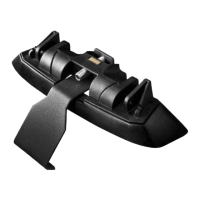

 To Next Page