The proMtec µ-ICC 2.45 compact is a microwave concentration measurement system designed for industrial applications. It combines a compact housing with advanced microwave measurement technology, building upon the successful µ-ICC 2.45 model.
Function Description:
The µ-ICC 2.45 compact measures the dielectricity of a medium using microwave transmission technology. It transmits a very low capacity of microwave radiation, which is harmless to humans and the environment and does not alter product properties. The system calculates a phase shift (decrease of propagation velocity) or an attenuation by comparing a microwave signal transmitted through the medium with a reference signal. This information is then used to determine values for water content, density, or total dry matter content. The system is temperature-compensated, requiring connection to an integrated temperature sensor.
Important Technical Specifications:
- Housing: Aluminium wall housing, IP65 protection, 160 x 160 x 120 mm, 3.1 kg.
- Mounting: 4 holding flaps (H x B = 120 x 180 mm for Ø 6 mm).
- Power Supply: 24 V DC, max. 1000 mA.
- Display: 3.9" monochrome QVGA-LC, 320 x 240 pixels, illuminated. Features a large display of the measurement result and a drag pointer with an analogue bar graph for deviation display.
- Microwave: Extremely stable phase, attenuation, and level measurement with PLL-synthesizer, 2.45GHz, transmission performance of 10 mW, 10 dBm.
- Microwave Cable: 2 x N-plugs for highly shielded coaxial cable 50 ohms, 1.5 m; 0.5 kg.
- Insertion Sensor (Type A):
- DN65 flange, tube length 100 mm, Pt100 integrated, 3.1 kg.
- DN80 flange, tube length 100 mm, Pt100 integrated, 5.4 kg.
- Handling: Foil keyboard with 4 soft keys, well-structured multilingual interface.
- Status Display: LEDs for measurement status and access-PIN for parameters.
- Output: 4-20 mA isolated output for concentration and temperature, load max. 500 ohms.
- Data Interface: USB 2.0 interface for software updates, data output, and calibration via PC.
- Data Memory: SD-/SD-HC-Card Slot for writing/reading measuring data and storage of parameters.
- Environmental Temperature (Evaluation Unit): 0 to +70 °C.
- Environmental Temperature (Microwave Cable): -40 to +90 °C.
- Temperature Compensation: Pt 100 with four-wire system, M12 plug-in.
- Sample Push-button: M12 plug-in for memorizing measured data.
Usage Features:
- Simplified Handling: The device features higher-class components, simplified handling (e.g., USB plug-in for PC connection, additional sample push-button), and an improved memory mode.
- Measurement Modes: Offers three different measuring modes: Phase measuring (default), Level measuring, and Attenuation measuring. The most suitable mode depends on the application.
- Temperature Compensation: The microwave signal is influenced by temperature changes, requiring temperature compensation. Users define a temperature reference (Tref) and a temperature coefficient (Tk).
- Calibration: The system needs to be calibrated based on laboratory results, requiring the setting of start coefficients (A0 and A1) which define the measuring range. A reference point is also set by taking a sample, analyzing it, and entering the value into the evaluation unit.
- Phase Correction with Level: If the measuring range is too narrow, phase correction with level can be engaged using coefficients B0 and B1 from an Excel file, along with additional temperature compensation for level measurement.
- Amplification: The microwave signal strength should be between 30 to 60 dB (ideally 40 to 50 dB) under normal process conditions. If the signal is too weak, amplification can be increased using a TX-Booster (10/20 dB) or RX-Transponder (20/40 dB), or a combination of both.
- Language Selection: Users can choose from Deutsch, English, Francais, Italiano, Español, or Portugues-Standard.
- Date and Time Setting: Allows setting of date and time.
- System Reset: Option to perform a system reset in case of configuration modifications or incorrect operation.
- Keyboard Locking: A PIN-protected feature to prevent unauthorized changes to sensor configuration parameters. The initial PIN is "000000" and can be changed.
- Data Logging: Data can be recorded and stored directly on a PC's hard disk drive or on an internal SD card. The logging frequency can be adjusted.
- USB HID Mode: Enables data logging and operation via PC remote control, as well as system software updates.
- Measuring Range Adjustment: The measuring range can be adjusted by adding a calculated phase offset to the existing phase offset.
Maintenance Features:
- Sensor Settings Save/Reload: Users can save current settings, load previously saved configurations (up to 30 memory capacities), or reload factory settings.
- Memory Allocation: Allows loading and deleting of internal and external memory, including copying configurations.
- Troubleshooting: Provides guidance for issues like a non-working PIN (contact proMtec for override) and constant offset (correct by adding the difference to A0).
- Software Updates: The USB 2.0 interface allows for software updates, typically performed by proMtec staff.

 Need help?
 General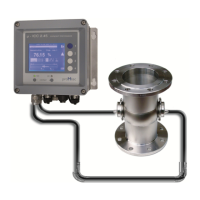

 To Next Page