EasyManua.ls Logo

Pumptec 107SS Series - User Manual

Pumptec 107SS Series
11 pages
Print Icon
To Next Page IconTo Next Page
Loading...
Pumptec Operating Instructions and Parts Manual PUMP SERIES 205V | 207V
1
Please read and save these instructions. Read carefully before attempting to assemble, install, operate, or maintain the
product described. Protect yourself and others by observing all safety information. Failure to comply with instructions could
result in personal injury and/or property damage in which Pumptec, Inc. will not assume any liability for! Retain instructions
for future reference. Refer to the following video to assist in pump reconstruction:
107SS Pump Rebuild Tutorial
PUMP SERIES
107SS
PERFORMANCE FEATURES
• Long Life
High-Pressure
• High-Efficiency
• Durability
• Application Flexibility
• Chemical Compatibility
• Compact Design
• Enhanced Priming
Question and Answer IconNeed help?

Do you have a question about the Pumptec 107SS Series and is the answer not in the manual?

Summary

Safety Information

General Safety Information

Provides definitions for safety symbols like DANGER, CAUTION, WARNING, and IMPORTANT.

Warning and Cautionary Statements

Details specific hazards and precautions related to pump operation and electrical safety.

Installation and Location

Installation Mounting

Guidance on how to mount the pump motor set, including preferred orientation.

Location

Recommendations for optimal pump placement considering environmental factors and ventilation.

Pre-Operation Procedures

Inlet Conditions

Crucial checks for pump inlet, including temperature limits and avoiding dry running.

Discharge Conditions

Instructions for managing discharge valves before starting operation to prevent pressure spikes.

Pressure Regulation

Ensuring pressure regulation devices are functioning correctly for safe operation.

Motor Shaft Rotation

Important note on correct motor shaft rotation direction to maintain pump function and warranty.

Pumped Liquids

Considerations for different types of liquids and when to consult a supplier.

Operation Guidelines

General Operating Information

Explains how pressure and flow are generated and controlled in the pump system.

Inlet Condition Checklist

A detailed checklist to prevent malfunctions caused by inadequate inlet conditions.

Inlet Supply

Requirements for the inlet supply to ensure proper pump performance and avoid issues.

System Design and Applications

Inlet Line Size and Pressure

Guidelines for inlet line diameter, pressure, and factors affecting performance.

Bypass to Inlet

Best practices for routing bypass fluid back to the pump inlet safely.

Using Chemicals and Heating Fluid

Handling chemical mixing and precautions for heated fluids.

Application Performance

Considerations for pressure cleaning, pest spraying, and line loss.

Application Guidance

Misting Applications

Critical factors for selecting the correct pump for misting applications and bypass fluid routing.

Storing the Pump

Proper procedures for draining and flushing the pump to prevent damage during storage or cold weather.

Maintenance and Troubleshooting

Disassembly and Reassembly

Step-by-step instructions for taking apart and putting back together the pump.

Preventive Maintenance Checklist

Schedule for routine checks and replacements to ensure pump longevity.

Troubleshooting Chart

Identifies common symptoms, their possible causes, and corrective actions.

Repair Parts

Repair Parts List

Detailed list of components and part numbers for repair kits.

Additional Resources

Warranty Policy

Information regarding product warranty, claims, and return procedures.

Overview

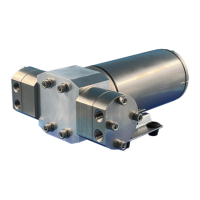
The Pumptec 107SS is a positive displacement plunger pump designed for high-pressure, high-efficiency applications, offering a compact design, long life, and enhanced priming capabilities. It is suitable for various uses including pressure cleaning, pest spraying, and misting systems, handling liquids other than just water.

Function Description:

The pump operates by drawing fluid through a set of valves into a pumping chamber, where the back-and-forth movement of plungers creates suction and discharge actions, forcing the fluid out through another set of valves. As a positive displacement pump, it delivers a specific and constant amount of fluid during operation. The pressure is generated by forcing this fluid volume through a restricted opening (nozzle) or into a non-expanding chamber. Flow rate is determined by the pump's displacement and the motor's RPM, with larger plungers and faster motor speeds increasing flow.

The pump is designed to be integrated into a system that controls the fluid after it exits the pump, typically using components like unloaders or regulators. A safety device, such as a regulating valve, is recommended to be installed directly on the pump head to prevent excessive pressure buildup in case of other component failures. Pressure switches can automate pump operation but must be used in conjunction with a pressure regulating device for safety.

Important Technical Specifications:

  • Max Pressure: Up to 1000 PSI
  • Open Flow: Up to 0.25 GPM
  • Seals: U-Cup
  • O-Rings: Buna, EPDM
  • Inlet Ports: Two 1/4" F NPT ports
  • Discharge Ports: Two 1/4" F NPT ports
  • Max Fluid Temp: Up to 140°F
  • Materials of Construction:
    • Body: Stainless Steel
    • Plunger: Ceramic
    • Valves: Stainless Steel
    • Fasteners: Stainless Steel

Usage Features:

  • Mounting: The pump motor set can be mounted in any position except with the pump head higher than the motor (e.g., not in a "T" configuration). Flexible hoses are recommended for inlet and discharge ports to minimize amp draw, noise, and vibration. If used in dirty or humid conditions, enclosure is recommended. It must be protected from rain, dirt, and chemical spray.
  • Inlet Conditions: Crucial for proper function. The pump should never be starved of fluid or run dry. Temperatures above 130°F require a pressurized inlet to prevent cavitation and seal damage. Inlet line size should be at least one size larger than the pump inlet fitting, using flexible hoses (not rigid pipes) on suction systems to prevent collapsing. Minimize elbows and joints in the inlet plumbing. Optimum performance is achieved with +20 PSI (1.4 BAR) inlet pressure.
  • Discharge Conditions: All system valves should be open prior to operation to avoid excessive load on the motor and pressure spikes.
  • Motor Shaft Rotation: Must always be counterclockwise to ensure proper pump function; otherwise, the warranty may be void.
  • Pumped Liquids: Some liquids may require flushing between operations or before storage. For liquids other than water, consult the supplier. Chemical compatibility is a key feature, and chemicals can be mixed into the fluid or introduced via a downstream injector. Injectors offer advantages such as fewer components in contact with chemicals, controlled injection rates, and increased chemical use efficiency.
  • Bypass Systems: Care should be taken when designing bypass methods from control valves. It is recommended that bypass fluid be directed to a baffled reservoir tank, with at least one baffle between the bypass line and the pump's inlet line. Returning bypass fluid directly to the pump inlet is not recommended, especially in misting applications, as it can introduce air bubbles, leading to cavitation and damage.
  • Heating Fluid: If used with downstream heaters, precautions are necessary to protect the system and personnel. Heated water expands, potentially requiring additional pressure release safety devices.
  • System Design: Proper pump selection is critical. An oversized pump can lead to wasted energy and fluid, while excessive pressure can reduce equipment effectiveness and pump life.
  • Nozzle Performance: Nozzles create pressure in the system. The manual provides a nozzle performance chart to assist in selecting the correct nozzle size based on desired flow rate and pressure. For example, two '02 nozzles equate to the performance of one '04 nozzle.
  • Line Loss: When spraying, pressure loss in the hose must be considered, especially with long hoses (200-300 ft common). Pressure is greatest at the pump and decreases along the hose length.

Maintenance Features:

  • Preventive Maintenance Checklist:
    • Daily: Clean filters, check for water leaks.
    • Weekly: Descale pump.
    • 50 Hours: Check cam & bearing.
    • 500 Hours: Seal change.
    • 1500 Hours: Valve change.
    • 3000 Hours: Valve change.
  • Disassembly and Reassembly: Detailed instructions are provided for removing and reassembling pump components, including bolts, heads, stuffing boxes, tubes, plungers, valves, o-rings, and washers. Specific attention is given to the orientation of valves and o-rings. A video tutorial (107SS Pump Rebuild Tutorial) is available for assistance.
  • Cleaning and Inspection: Stuffing boxes, heads, and crankcase should be cleaned and inspected for damage or corrosion during maintenance. Damaged stuffing boxes should not be rebuilt.
  • Lubrication: Super Lube® multi-purpose grease should be applied to the plunger slot during reassembly.
  • Storage: For extended storage or use in cold climates, all pumped liquids should be drained, and the pump flushed with antifreeze solution to prevent freezing and damage. The pump should never be run with frozen liquid.
  • Troubleshooting Chart: Provides common symptoms, possible causes, and corrective actions for issues such as no water flow, low pressure, pump pulsation, motor not operating, leaks, and regulator leaks.
  • Repair Parts: A repair parts list is provided, detailing components available in Kit A (107SS) and Kit B, including plungers, plunger guides, o-rings, u-cups, valves, and white washers. Parts are sold only as part of a kit.
  • Service Cycle: Each system's maintenance cycle is unique. Performance decreases should be investigated immediately. Valves typically require changing at every seal change. Duty cycle, temperature, pumped liquid quality, and inlet feed conditions all impact part life and service cycles. The regulator/unloader and all system accessories and connections should be serviced and checked at each seal servicing.

Pumptec 107SS Series Specifications

General IconGeneral
BrandPumptec
Model107SS Series
CategoryWater Pump
LanguageEnglish