Need help?
Do you have a question about the Qilive Q. 6706 and is the answer not in the manual?
This document is a user manual for the Q. 6706 Table Top Refrigerator, providing detailed information in multiple languages, including English, French, Spanish, Portuguese, Polish, Hungarian, Romanian, Russian, and Ukrainian.
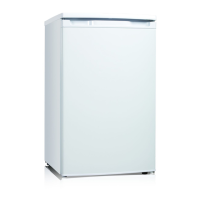
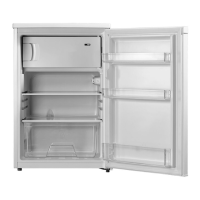
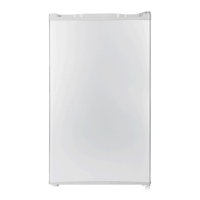
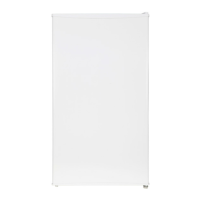
The Q. 6706 Table Top Refrigerator is designed for household and similar applications. Its primary function is the storage of food, particularly fruits, vegetables, beverages, and other short-term consumables. It features a refrigerating chamber and a temperature control knob to adjust the internal temperature. The "OFF" setting stops the appliance's operation, while "MAX" lowers the internal temperature and "MIN" raises it. The recommended setting for general use is "MED".
The refrigerator operates on a power supply of 220-240 V~, 50 Hz, with a rated current of 0.5 A. Its annual energy consumption is 86 kWh/a, placing it in Protection Class I. The climate class is N/ST/T, indicating suitability for ambient temperatures ranging from 16 °C to 38 °C (Normal, Subtropical, and Tropical). For extended temperate conditions, it can operate from 10 °C to 32 °C. The lamp has a rated power of 10 W. The total volume and fresh food compartment volume are both 93 L. It uses R600a/24g as a refrigerant and has a net weight of 20.1 kg.
Placement: Before use, all packing materials, including bottom cushions, foam pads, and tapes, must be removed. The protective film on the doors and body should also be peeled off. The refrigerator should be placed in a well-ventilated indoor area, away from direct sunlight, heat sources, and moist or watery environments to prevent rust and maintain insulation efficiency. It should not be sprayed or washed with water. The ground must be flat and sturdy, with leveling feet that can be adjusted to ensure stability. A minimum clearance of 10 cm above and behind the refrigerator is required for proper heat dissipation.
Door Reversal: The door's opening direction can be changed from right to left. This process requires a cross screwdriver, a putty knife or thin-blade screwdriver, a 5/16" socket spanner, and masking tape. The refrigerator must be powered off, and all items removed from the door trays. The door is then secured with tape, and the upper hinge cover, screws, and upper hinge are dismantled. The bottom hinge assembly and adjustable foot are then moved to the opposite side. Finally, the door stopper, upper hinge, and covers are reassembled.
Starting to Use: After placement, the refrigerator should remain still for half an hour before being connected to power. Before storing fresh or frozen foods, it should run for 2-3 hours, or for more than 4 hours in summer when ambient temperatures are high.
Energy Saving Tips: To optimize energy efficiency, the appliance should be located in the coolest part of the room, away from heat-producing appliances and direct sunlight. Hot foods should be cooled to room temperature before being placed inside. Overloading the refrigerator forces the compressor to run longer. Foods should be properly wrapped and containers wiped dry to reduce frost buildup. Avoid lining storage bins with aluminum foil or paper, as this can impede cold air circulation. Organizing and labeling food helps reduce door openings and search times.
Cleaning: Regular cleaning is essential for optimal performance and hygiene. Dust behind and under the refrigerator should be cleaned periodically to improve cooling and energy saving. The door gasket should be checked regularly for debris and cleaned with a soft cloth dampened with soapy water or diluted detergent. The interior should be cleaned regularly to prevent odors. Before cleaning the interior, the refrigerator must be unplugged, and all food, drinks, shelves, and drawers removed. A soft cloth or sponge with two tablespoons of baking soda and a quart of warm water can be used for interior cleaning, followed by rinsing and wiping dry. The door should be left open to air dry before reconnecting power. Hard-to-clean areas, such as narrow gaps and corners, should be cleaned with a soft rag, soft brush, or auxiliary tools like thin sticks. Avoid using soap, detergent, scrub powder, spray cleaner, hard brushes, steel wool, abrasive materials (like toothpaste), organic solvents (alcohol, acetone, banana oil), boiling water, or acidic/alkaline items, as these can damage surfaces or cause odors. Do not rinse the refrigerator directly with water or other liquids to prevent electrical insulation damage or short circuits.
Defrosting: The refrigerator must be unplugged for defrosting. Food should be removed and stored appropriately to prevent melting. The drain pipe should be cleared using soft materials to avoid damage to the liner. Water containers should be prepared for defrosting, paying attention to clean the compressor compartment water draining tray to prevent overflow. Natural defrosting at room temperature is an option, or an ice shovel (plastic or wooden) can be used to remove frost. Hot water can also be used to speed up defrosting, followed by drying with a towel. After defrosting, food can be returned, and the refrigerator powered on.
Disposal: The refrigerant (R600a) and cyclopentane foaming material used in the appliance are flammable. Therefore, when scrapping the refrigerator, it must be kept away from fire sources and recovered by a specialized company to prevent environmental damage. The doors, door gaskets, and shelves should be disassembled and placed in a proper location to prevent child entrapment. The product should not be disposed of with other household waste but recycled responsibly through return and collection systems or by contacting the retailer.
Parts Availability: For new European standards, ordered parts such as thermostats, temperature sensors, printed circuit boards, light sources, door handles, door hinges, trays, baskets, and door gaskets can be acquired. Professional maintenance personnel can provide thermostats, temperature sensors, printed circuit boards, and light sources for at least 7 years after the last model is launched. Professional repairers and final users can obtain door handles, door hinges, trays, baskets, and door gaskets for the same duration.
 General
| Brand | Qilive |
|---|---|
| Model | Q. 6706 |
| Category | Refrigerator |
| Language | English |

 To Next Page