Quick marinade with the Marinate ring
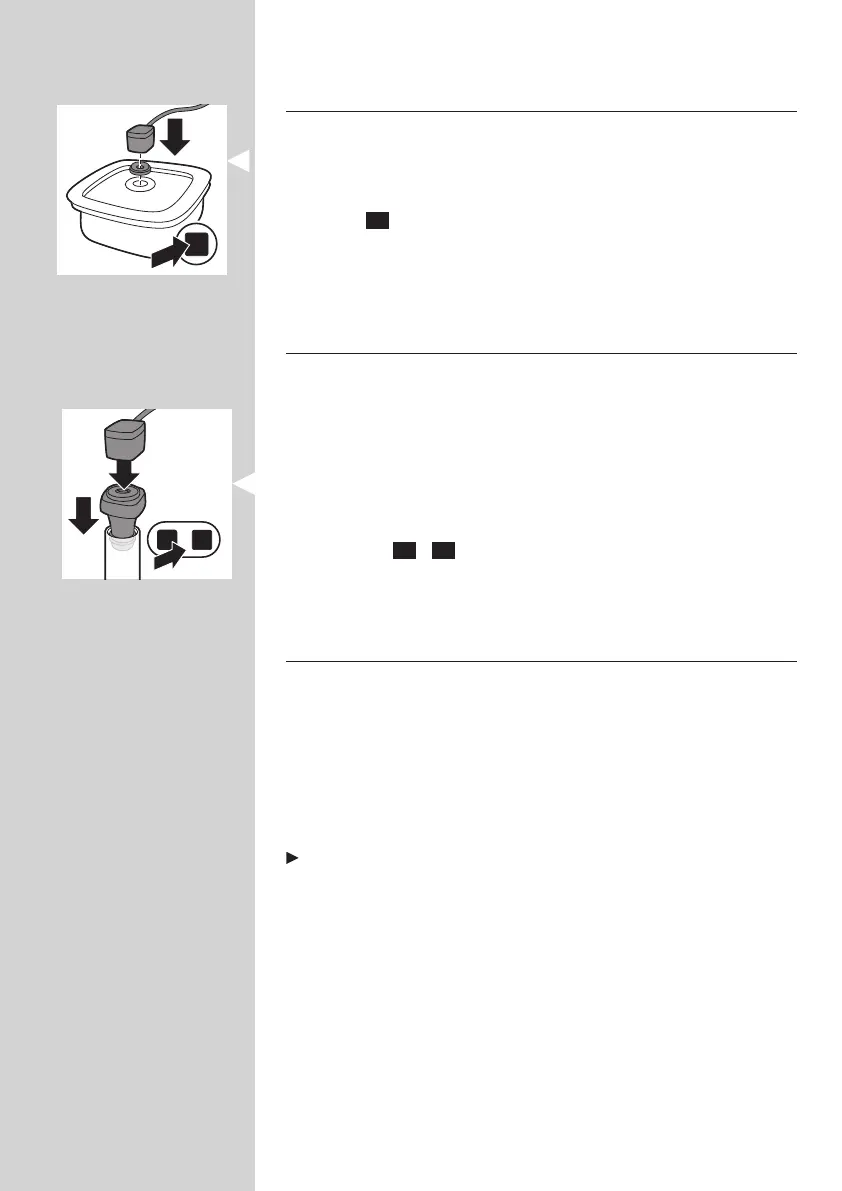
Place the ingredients and your marinade into a fresh food container. Gently
remove the green valve, remove the release component from the container
lid, and place the lid on the container. Connect the vacuum head of your
Quva appliance with the marinate ring and activate the marinate process
by pressing
M
. Throughout this process, the system will run through a
number of cycles helping the food to absorb the marinade in a matter of
minutes rather than hours.
Using Quva with the Wine Saver
Quva’s wine saver should only be used with standard (glass) wine bottles.
Bottles made of other materials can be compressed due to the force created
by the vacuum. Rinse the wine saver before use, a clean wine saver ensures
a better seal. To use the wine saver feature, please follow the instructions
below.
1. Place the wine saver into the bottle and connect the vacuum head with
the valve and release button.
2. For optimal preservation of your wine or other liquids, select the “power
mode” (Hold
||
+
M
for 3 seconds).
3. Release the vacuum by pressing the green release button.
Vacuum sealing and food safety
Vacuum packing is not a substitute for canning, cooling, or freezing food.
Removing the air when packing food will not stop microorganisms that
cause food decay from growing. It can only extend the lifetime of some
foods under specic conditions. Perishable foods must still be refrigerated or
frozen following vacuum sealing. Proper hygienic measures should also be
taken to prevent foodborne illnesses, including not re-using vacuum bags
after storing meat, sh, or other foods inside.
Due to the risk of anaerobic bacteria soft cheeses, raw garlic, onions
and mushrooms should never be vacuum sealed. Though it is very rare,
anaerobic bacteria can be very dangerous!
M
II
+
M


 To Next Page
 Loading...