1. Make sure that the item is installed by a competent installer.
2. Shut off the main water supply.
3. Observe all local plumbing and building codes.
4. Provided that the thermostatic mixing valve is installed, commissioned, operated within
the specication limits and maintained according to this Manual, the risk of malfunction,
if not eliminated, is considerably reduced.
The use of the word ‘failsafe’ to describe the function of a thermostatic mixing valve is both
incorrect and misleading. In keeping with every other mechanism it cannot be considered as
being functionally infallible.
Malfunction of thermostatic mixing valves is almost always progressive in nature and will be
detected by the use of proper temperature checking and maintenance routines.
Certain types of system can result in the thermostatic mixing valve having excessive ‘dead-
legs’ of pipework. Others allow an auxiliary cold water supply to be added to the mixed water
from the mixing valve. Such systems can disguise the onset of thermostatic mixing valve
malfunction.
Ultimately, the user or attendant must exercise due diligence to ensure that the delivery of
warm water is at a stable, safe temperature. This is particularly important in such healthcare
procedures as supervised bathing of patients unable to respond immediately to unsafe
temperatures.
General
Safety
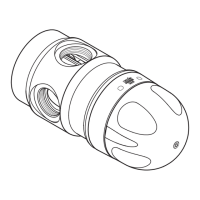
Critical Component Table
Part Number Description
414.51 Cartridge Assembly
1847.232 and 1847.233 Check Valves (where applicable)
The designed service life of all critical components used in this product is 5 years providing
the Rada 320 is operated within the recommended operating conditions and parameters.
However when supply conditions and/or usage patterns do not conform to the recommended
operating parameters and/or conditions the critical components may need to be replaced
more frequently (refer to 'Specication').
Important! In healthcare applications such as hospitals, aged person facilities,
residential care homes, etc. and in any other applications where the user is similarly
at risk, irrespective of supply and usage conditions or the evidence of in-service tests,
the critical components must be replaced at intervals of no more than 5 years.
To ensure continued safe operation of this product, all 'Critical Components' should be
changed every 5 years.
However, when supply conditions or usage patterns do not conform to the recommended
operating parameters the cartridge may need to be replaced more frequently in line with
appropriate risk assessments.


 To Next Page
 Loading...