Need help?
Do you have a question about the RADLEY 5073-356 and is the answer not in the manual?
Provides technical specifications for the blower/sweeper and its battery/charger.
Essential guidelines and hazard symbols for safe tool operation.
Guidelines on wearing eye, hearing, hand, foot, and body protection.
Rules for blowing near others, dust control, and blower handling.
Precautions for fan screen, nozzle, and preventing unauthorized modifications.
Instructions for safe charging, handling, and recycling of batteries.
Visual guide to common symbols found on the tool and their meanings.
Identification of the blower's main parts and features.
How to check the battery charge level using the LED indicator.
Step-by-step guide for charging the battery using the provided charger.
Instructions for assembling the nozzle and operating the blower.
Procedure for cleaning the blower's air intake grille for optimal performance.
Guidelines for tool maintenance, including general care and lubrication.
Instructions for proper recycling and disposal of the battery pack.
Visual representation of all parts for assembly and repair reference.
A comprehensive list of all parts with their corresponding numbers.
Information on the product's limited warranty coverage and terms.
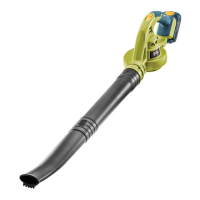
The Radley 20V Max Cordless Grass Trimmer & Blower/Sweeper Kit is a versatile outdoor power tool designed for various lawn and garden maintenance tasks. This kit includes a cordless blower/sweeper, a 20V 2.0 Ah Li-ion battery, and a charger, offering users the convenience of cordless operation.
The primary function of this device is to serve as a grass trimmer and a blower/sweeper. As a blower/sweeper, it is designed to clear debris such as leaves, grass clippings, and light garden waste from various surfaces. The high-velocity airflow generated by the blower nozzle effectively moves these materials, making cleanup tasks quicker and less strenuous than manual methods. The cordless design allows for unrestricted movement around the yard without the need for an electrical outlet or the hassle of managing extension cords. The battery-powered operation also means lower noise levels and no emissions, making it a more environmentally friendly option compared to gas-powered alternatives.
The Radley Cordless Blower/Sweeper is engineered for ease of use and operator comfort. It features a lightweight design, weighing approximately 3 lbs 9 oz, which helps reduce user fatigue during extended periods of operation. The tool is designed to be well-balanced and can be operated with one hand, further enhancing maneuverability.
To begin operation, the fully charged battery pack is inserted into the matching slots in the rear of the tool handle until the battery release button "clicks" into place. The nozzle assembly, consisting of front and rear sections, is then connected. The small end of the rear nozzle section is inserted into the large end of the front nozzle section, and the two sections are pushed together until the nozzle release button "clicks" to lock them. The assembled nozzle is then slid onto the blower intake and pushed firmly until the release button "clicks," securing it in place.
The blower is activated by sliding the ON/OFF switch forward and turned off by sliding it toward the rear of the tool. For optimal performance and safety, it is recommended to operate the blower below waist height, holding it at an angle of less than 45° to the ground with the nozzle close to the surface. A side-to-side sweeping motion is suggested for efficiently clearing large areas.
The device incorporates several safety features and recommendations for its use. Users are advised to wear appropriate personal protective equipment, including CSA approved eye protection (goggles or safety glasses conforming to ANSI Z87.1 or CSA Z94.3), ear protection (plugs or mufflers), a dust mask, nonslip gloves, and sturdy clothing (long sleeves, long pants, nonslip safety boots). Loose clothing, jewelry, and long hair should be secured to prevent them from being caught in moving parts or the air intake.
Before each use, the operating area should be inspected and cleared of any foreign objects such as sticks, rocks, broken glass, nails, wire, tools, or toys that could be thrown by the blower. Bystanders, children, and pets should be kept at least 50 feet (15 meters) away from the operating area. The blower fan screen should also be checked for damage, and any damaged parts should be replaced immediately. The blower should never be operated without the nozzle and intake fan screen in place, and foreign objects should never be inserted into the nozzle, air exhaust tube, or intake fan screen.
The blower should not be used in explosive atmospheres or near flammable liquids, gases, or dust. It is also advised not to work against the wind, as dust may blow back towards the operator. When blowing very dusty materials in extremely dry conditions, static electricity may build up; to avoid this, the blower should be operated for short periods and turned OFF at regular intervals. The tool should only be used in daylight or good quality artificial light.
Proper maintenance is crucial for ensuring the longevity and safe operation of the Radley Cordless Blower/Sweeper. General maintenance involves keeping the tool clean and free from debris. Plastic parts should be cleaned with a clean cloth dampened with soapy water, avoiding solvents, brake fluids, gasoline, petroleum-based products, penetrating oils, or chemical solvents, as these can damage or weaken plastic components. Pressure washers or garden hoses should not be used to clean the blower.
A key maintenance task is cleaning the air intake grille. The air intake grille should be checked frequently to ensure it is clean and not restricting airflow to the blower fan. To clean it, the battery must first be removed from the blower. The blower should then be turned onto its right side, and any debris should be carefully brushed off the air intake grille using a soft dry brush or dry rag. It is important never to insert a screwdriver or other small tool into the intake grille, as this could damage the grille or the blower fan. After cleaning the grille, the blower should be turned onto its left side and shaken to dislodge any loose debris that may have fallen into the blower fan.
The tool's bearings are pre-lubricated with a high-grade lubricant for the life of the unit under normal conditions, so no further lubrication is required.
For servicing, only identical replacement parts should be used to maintain safety and prevent product damage. Any electrical repairs should be performed by a qualified technician. Modifying the blower or using unauthorized accessories is not recommended, as it can create safety hazards and will void the warranty.
The 20V Li-ion battery and charger also require specific care. The battery charge status can be checked by pressing and holding the battery status button on the end of the battery, which illuminates LED lights to indicate the remaining charge (1/3 or less, 1/3-2/3, or 2/3-fully charged). This check should only be performed when the battery is removed from the charger or when installed in the tool with the ON/OFF switch turned OFF.
To charge the battery, the charger is plugged into a 110-120V 60 Hz electrical outlet. The green LED indicator light on the charger will turn ON, indicating it is "live." The battery is then slid onto the charger until it "clicks" into place. When a discharged battery is installed, the green light turns OFF, and the red light turns ON, indicating charging. A fully discharged battery pack typically takes 3-5 hours to charge. It is normal for the charger to hum and be warm during operation.
Batteries should not be charged if the work area or battery temperature is below 0°C (32°F) or above 45°C (113°F). The charger should be unplugged when not in use and before cleaning or maintenance. Only the diagnostic charger supplied with the kit should be used to charge the 20V Li-ion battery. Charging other batteries may damage the charger and cause serious injury.
The battery should not be stored or carried in a manner where metal objects could contact the exposed metal ends, as this could cause a short circuit, leading to fire, personal injury, or damage. The battery should never be opened, and if the housing breaks or cracks, its use should be discontinued, and it should not be recharged. If a small leakage occurs from the battery, and the liquid gets on the skin, it should be washed immediately with soap and water and neutralized with a mild acid. If liquid gets into the eyes, they should be flushed with clean water for at least 10 minutes, and medical attention should be sought.
To preserve natural resources and protect the environment, batteries should be recycled or disposed of properly. Rechargeable batteries, which may contain harmful chemicals and metals, should never be disposed of in normal household garbage or landfill sites. Upon removal of the battery pack for recycling, its terminals should be covered with electrical tape to prevent short circuits. The battery pack should not be destroyed or disassembled. Local waste authorities can provide information on available recycling and disposal options.
 General
| Model | 5073-356 |
|---|---|
| Category | Blower |
| Power | Unknown |
| Voltage | Unknown |
| Airflow Capacity | 130 CFM |
| Power Source | Electric |
| Airflow | 130 CFM |

 To Next Page