 Need help?
Do you have a question about the Regal 33 REGAL 33 SAV 2018 and is the answer not in the manual?
Details on fuel systems, including California EVAP emissions regulation and US EPA standards.
Information on the evaporative emission control system warranty coverage.
Outlines owner's responsibilities for maintenance and presenting the vessel for warranty.
Regal's mission statement focusing on integrity, people, relationships, and customer satisfaction.
Details on the owner's information packet contents and storage recommendations.
Explanation of the Hull Identification Number (HIN) and its location.
Recommendation to fill out vessel information for vital statistics and safe keeping.
Information about the NMMA yacht plate and its compliance standards.
Guidance on formulating and filing a float plan before departure.
Definition and explanation of safety precaution labels and signal words used in the manual.
Instructions to read and understand all safety labels affixed to the boat and in the manual.
Guidance on safe boating practices, regulations, and equipment.
Details on personal flotation devices (PFDs) and USCG minimum equipment requirements.
Recommendations for using personal flotation devices for pets on board.
Instructions for maintaining and inspecting personal flotation devices (PFDs).
Information on fire extinguisher classification, types, and required quantities.
Details on pyrotechnic visual distress signals, requirements, and types.
Information on non-pyrotechnic visual distress signals, including flags and lights.
Illustrations and descriptions of various international distress signals.
Requirements for sound producing devices like whistles and horns.
Information on VHF radio usage for distress and ship-to-shore communications.
Requirements for displaying navigation lights during periods of reduced visibility.
Regulations for operable marine sanitation devices (MSDs) on recreational vessels.
Establishment of actions for vessels to avoid collision, divided into Inland/International.
International convention prohibiting overboard dumping of oil, garbage, plastic, and chemicals.
Explanation of the effects of carbon monoxide on the human body and symptoms of poisoning.
Notes on carbon monoxide production from diesel engines and general precautions.
List of symptoms associated with carbon monoxide exposure.
Discussion of common myths and facts related to alcohol consumption and boating.
Guidelines for reporting boating accidents involving death, injury, or significant damage.
Inspection and maintenance recommendations for the swim platform.
Tips for safe operation and navigation around fishing boats and areas.
Explanation of how cloud formations indicate current and upcoming weather.
Information on wave formation, fog development, and navigation in fog.
Explanation of Navigation Rules (Inland/International) for avoiding collisions.
Guidelines for right-of-way, crossing, overtaking, and vessel interactions.
Specific duties and importance of establishing a lookout for navigation safety.
Description and illustration of lateral aids used for waterway navigation.
Information on mid-channel markers used to indicate the center of a navigable channel.
Explanation of regulatory markers indicating controlled areas or restrictions.
Awareness of specified bridge clearance heights and measurement.
Explanation of bridge lighting maintained by the Department of Homeland Security.
Introduction to onboard systems including fire protection, fuel, electrical, water, and waste.
Details on automatic fire extinguishing systems and their activation.
Information on portable fire extinguishers, including types and recommended quantities.
Introduction to DC and AC electrical systems, components, location, and function.
Information on battery specifications, terminology, and maintenance.
Troubleshooting common battery issues like weak or dead batteries.
Explanation of the battery switch panel controls for engine and house batteries.
Overview of battery management system components and their functions.
Instructions for operating the remote battery switch, including normal and manual modes.
Detailed view of the battery management system panel, including fuse locations.
Description of the auxiliary DC breaker panel and its protected circuits.
Information on the 40 amp battery charger, its operation, and maintenance.
Summary notes regarding the charging system components and connections.
Explanation of the DC junction block as a common attachment point for battery cables.
Introduction to alternating current (AC) systems, terms, and dockside cord usage.
Troubleshooting common shore power connection issues and marina inlet problems.
Explanation of the Equipment Leakage Circuit Interrupter (ELCI) system and its function.
Information on ELCI leakage fault detector LED indicators and system status.
Overview of the AC ship's panel, including main breakers and indicators.
Details on reverse polarity indicators, main AC panel shore power breakers, and generator breaker.
Explanation of Ground Fault Circuit Interrupter (GFCI) outlets and their protection features.
Information on galvanic isolators, their purpose, and precautions for use.
Overview of the typical AC generator, fuel system, and components.
Explanation of the generator starting system, remote instrument panel, and safety warnings.
Checklist of items to verify before starting the generator.
Overview of the air conditioning system, BTU output, and components.
Explanation of the reverse heat cycle for air conditioning in colder climates.
Quick start-up checklist for operating the air conditioning system.
Tips for inspecting and maintaining the air conditioning system components.
Introduction to the EPA-approved gasoline fuel system, including tank and fittings.
Details on EPA-compliant fuel tanks, hoses, and carbon canisters.
Information on fuel filters and onboard fuel storage safety recommendations.
Overview of the fresh water system, including tank, pump, and components.
Explanation of the fresh water pressure pump operation and potential issues.
Procedure for using the fresh water system with the onboard tank only.
Procedure for using the fresh water system with an external city water supply.
Recommended procedure for sanitizing the vessel's fresh water system annually.
Guidance on winterizing the fresh water system to prevent damage in cold climates.
Overview and operation of the ship's 120-volt AC hot water heater.
Troubleshooting and tips for common issues with the fresh water system.
Overview of the standard waste system, including toilet, holding tank, and monitor panel.
Instructions for operating the vacuum style toilet, including water addition and flushing.
Explanation of the monitor panel for checking potable water and waste tank levels.
Information on the waste tank capacity, vent, and pump-out fittings.
Operation of the optional overboard discharge system, including macerator functions.
Details on the vent filter for the waste holding tank, and its maintenance.
Description of the shower box as a collection and distribution point for used water.
Information on carbon monoxide (CO) detectors, their function, and alarm response.
Details on optional fishing systems, including bait wells and fish boxes.
Tips for using the fish box effectively to keep catches fresh.
Information on the location and types of rod holders installed on the vessel.
Overview of optional outriggers, their primary use, and installation notes.
Basic operation data for using and positioning outriggers, including storage and trolling positions.
General information on outboard engine location, function, and basic operation.
A general checklist of engine checks to perform before each outing.
Explanation of the raw water cooling system and its importance for engine operation.
Information on inspecting and maintaining the coolant system's impeller and water pump.
Details on the power head thermostat, its function, and potential replacement.
Information on the engine's electronic equipment, signals, alarms, and battery switch.
Explanation of spark plugs and their role in engine ignition.
Description of the stator's function in recharging batteries while the engine is running.
Information on fuses that protect engine components from overcurrent.
Reference to the fuel system specifics and associated warnings.
Explanation of the lubrication system's purpose for reducing engine wear.
Purpose of engine oil, oil filters, and recommended oil change intervals.
Information on gear case oil, its function, and inspection schedules.
Explanation of power trim fluid and its role in maneuvering the outboard unit.
Information on propeller selection, types, and the importance of correct rotation.
Checklist for inspecting propellers for damage or wear.
Overview of the helm station, including monitoring engine functions via Garmin plotter.
Description of the Garmin chartplotter's display for engine functions and GPS.
Explanation of port helm switch panel controls for various vessel electrical components.
Information on the electric horn, its testing, and hardware inspection.
Description of the Nav/Anc switch for controlling navigation lights and stern light.
Explanation of starboard helm switch panel controls for various vessel systems.
Description of breakers protecting various onboard systems and their functions.
Information on the optional helm-mounted Garmin chart plotter.
Description of switches located in the aft cockpit panel.
Basic information on starting and stopping outboard engines, including remote controls.
Details on the twin binnacle remote control for shifting, throttle, and trim operations.
Explanation of the safety lanyard's function to shut off the engine if the operator is dislodged.
Description of the electronic helm power steering system and its components.
Details on the electronic helm's sport steering wheel and adjustable tilt positions.
Explanation of the electronic power steering system wiring and breaker setup.
Information on the steering system hydraulic pump, fluid, and service valve.
Description of the steering smart cylinder, its sensors, and stainless steel construction.
Guidance on vessel operation, including pre-departure, underway, and disembarking procedures.
A checklist of items to verify before departing for a voyage.
A checklist of items to monitor while underway for safe operation.
A checklist of procedures to follow when disembarking the vessel.
Safety precautions and procedures for fueling the vessel, including fire prevention.
Fundamentals of dock line terminology, including bow, stern, and breast lines.
Explanation of spring lines and their use in mooring and tidal control.
Guidance on securing a boat to a dock using multiple lines for stability.
Recommendations for selecting appropriate dock line sizes based on vessel type.
Information on fenders, their purpose, types, and proper storage.
Basic information on how outboard boats handle in normal conditions.
Explanation of how outboard drives create thrust and advance the vessel forward.
Description of how turning the helm wheel affects vessel direction and torque.
Information on handling the boat in reverse, including tendency to move to port.
Explanation of how boats use reverse thrust from propellers to stop.
Explanation of power trim and trim tabs for fine-tuning vessel performance.
Hazards and precautions for operating a vessel in shallow water conditions.
Guidance on selecting anchors, attaching rode, and proper anchoring procedures.
Safety guidelines and preferred methods for towing or being towed.
Basic principles of Admiralty (salvage) law regarding assistance to distressed vessels.
Importance of knots in docking, towing, and emergency situations.
General advice for handling emergencies on the water and fire prevention.
Importance of first aid knowledge and availability of a first aid kit.
Description of hypothermia, its symptoms, and treatment procedures.
Practices for environmentally conscious boating to conserve waterways.
Assistance in understanding selected standard and optional equipment components.
Introduction to the anchor windlass, its components, and operation.
Instructions for paying out and hauling in the anchor using gravity or power.
Safety tips for operating the windlass, including clear warnings and maintenance checks.
Check operation of the bilge pump, automatic switch, and manual switch before each outing.
Information on the teak bow table, its location, and setup procedure.
General safety notices and usage instructions for the bow thruster system.
Details on the companionway door, its construction, and ensuring it is closed and locked.
Information on the variety of canvas available for your vessel and their benefits.
Instructions for becoming acquainted with the cockpit electric grill's safety features.
Description of the cockpit refrigerator, its capacity, and usage recommendations.
Information on optional cockpit sea-grass mats, their features, and cleaning.
Overview of various electronics components available on the vessel.
Explanation of fender clip options for quick deployment and attachment.
Information on Flexiteek decking, its advantages, and installation options.
Details on the joystick system for vessel maneuvering, especially in tight situations.
Information on the stereo system's remote control mounting and functionality.
Description of SeaDek material for swim platforms and walk-through areas.
Explanation of the Seakeeper system for reducing boat motion in waves and wakes.
Details on the side boarding door, its construction, and ensuring it is latched and locked.
Overview of Fusion marine stereo audio systems, their features, and components.
Instructions for operating cockpit and mid-berth televisions, including setup procedures.
Explanation of the aft transom door for accessing the swim platform.
Information on trim tabs located on the transom and how they affect vessel attitude.
Using trim tabs to correct a vessel list by adjusting boat attitude.
Description of the optional underwater lighting system with blue LED clusters.
Information on the windshield wiper features, maintenance, and blade replacement.
Covers care and maintenance for cosmetic aspects, upholstery, fiberglass, and canvas.
General cosmetic care tips for hardware, upholstery, fiberglass, and canvas.
Instructions for periodic cleaning of cockpit and interior vinyl upholstery.
Recommendations for using approved cleaners on cockpit carpet and spot removal.
Guidelines for using marine-specific plastic cleaners and polishes.
Care instructions for acrylic materials, including cleaning and scratch removal.
Cleaning instructions for interior fabrics, wallpaper, and vinyl headliners.
Maintenance for fiberglass and gel coat surfaces, including washing and waxing.
Materials and procedures needed for performing minor repairs on gel coat and fiberglass.
Care, cleaning, and storage information for marine canvas, including Sunbrella.
Care instructions for clear vinyl glass, zippers, and snap fasteners.
Instructions for maintaining stainless steel and other metal parts.
Cleaning and maintenance for the boat's hull bottom to prevent drag.
Maintenance for propellers, including inspection, reconditioning, and replacement.
Guidance on checking battery terminals for corrosion and maintaining electrolyte levels.
Checking helm control box for smoothness and tightness, and remote control operation.
Care of seating includes periodic cleaning and checking hardware for tightness.
Annual inspection of fuel system components for loose clamps, hose deterioration, and leaks.
Explanation of galvanic and stray current corrosion and their effects on underwater metal parts.
Tips for maintaining galvanic integrity, including anode inspection and painting precautions.
Location and maintenance of sacrificial zinc anodes to protect softer metals from electrolysis.
Overview of outboard engine maintenance, emphasizing factory-trained service.
Information on fuses protecting engine components and their location.
Procedure for checking and replacing fuel filters and water separator elements.
Instructions for checking the engine-mounted fuel filter for cleanliness and leaks.
How to use the flushing device to circulate fresh water through the engine.
Procedure for checking and filling engine crankcase oil levels.
Diagnostic information to assist in identifying minor electrical, fuel, and mechanical problems.
Guidelines for storage procedures, especially over winter in colder climates.
Checklist for decommissioning the outboard engine and boat for storage.
Steps for winterizing the fresh water system and waste system.
Checklist for recommissioning the engine, boat, and trailer after storage.
A brief list of nautical terminology and an index for easy reference.
Definitions of nautical terms used throughout the manual.
An alphabetical index of topics covered in the manual with corresponding page numbers.
Technical information and drawings for troubleshooting electrical and mechanical problems.
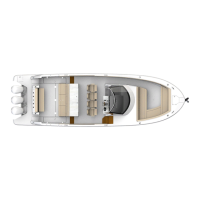
 General
| Max Horsepower | 600 hp |
|---|---|
| Sleeping Capacity | 4 |
| Beam | 3.20 m (10 ft 6 in) |
| Fuel Capacity | 200 gallons |
| Holding Tank Capacity | 29 gallons |
| Cabin Headroom | 6 ft 4 in |


 To Next Page