MANUAL4 |
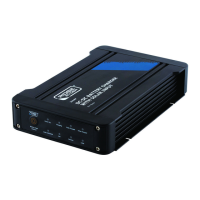
DC-DC BATTERY CHARGER
WITH SOLAR INPUT
20AMP & 40AMP
If the vehicle is tted with a low voltage or variable voltage alternator, the ignition
sensing wire will need to be connected. This will allow the charger to continue to
operate when it senses much lower voltages (as low as 10.8V) from the main battery,
because it can sense the engine running.
Using 2mm automotive cable, connect the small ignition cable from the back of
the charger to an ignition power source. This can be complicated and may require
the assistance of an auto electrician or qualied installer. Once the charger senses
ignition power it will start charging.
INSTALLATION OPTIONS / INSTRUCTIONS
●
Choose a location to install the charger, ideally somewhere cool and dry for best
performance. Under the bonnet will work, but try and maximise airow around the charger,
without too much water. Excessive heat will lower the charger output. It is also advisable to
place the charger as close to the auxiliary battery as possible for best charging performance
●
Ensure the charger is securely mounted. This can be in any orientation, inverted, vertical or
horizontal, as required. If the unit is being installed in a harsh vibration area, like an engine
bay, consider mounting over small rubber or high density foam pads
●
Measure the distance from the starting battery to the charger; the distance between the
charger and the auxiliary battery; the distance between the solar panel output and the
charger. Source cable and terminations to suit. A minimum of 10mm
2
, twin-core cable is
recommended for this application
●
Ensure ALL cabling meets specication and will not be exposed to excessive heat / moving
parts or abrasion
●
Connect the auxiliary battery to the charger – make sure polarity (+ & -) are correct
●
Connect the solar panels to the charger – make sure polarity (+ & -) are correct
●
Connect the main battery to the charger - make sure polarity (+ & -) are correct
●
It is recommended that a 20 Amp / 40 Amp circuit breaker or fuse be installed between
the main battery and the charger, but is not essential
●
Make sure all connections are tight
LOW OR VARIABLE VOLTAGE ALTERNATORS


 To Next Page
 Loading...