EasyManua.ls Logo

ROBEL 13.45SKS Vers. 01 - User Manual

ROBEL 13.45SKS Vers. 01
83 pages
Print Icon
To Next Page IconTo Next Page
Loading...
OPERATING MANUAL
13.45SKS Vers. 01
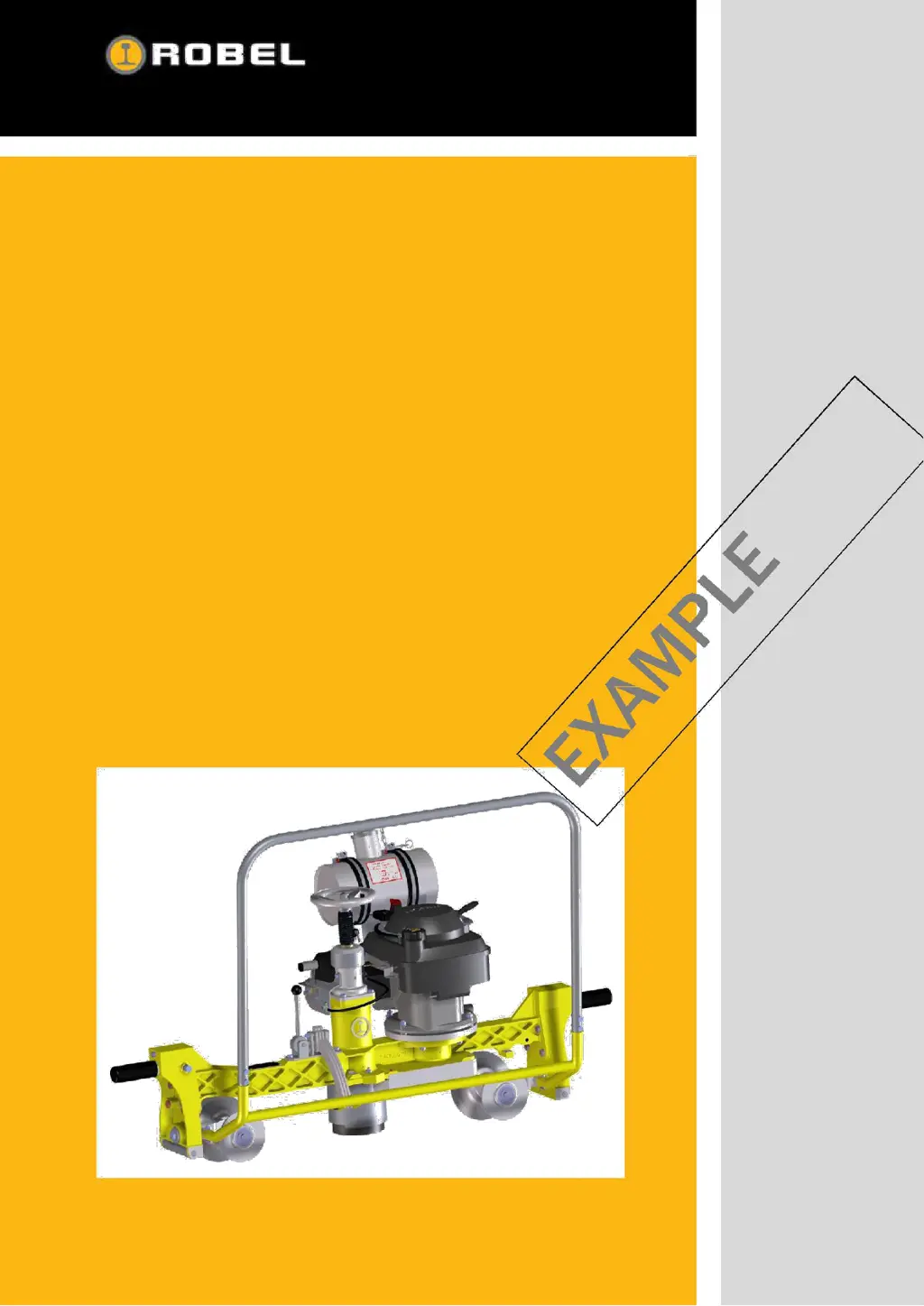
Rail Head Grinding Machine

Table of Contents

Questions and Answers

  • E
    Eric GonzalesAug 12, 2025
    How to fix a ROBEL 13.45SKS Vers. 01 engine that won't start?
    • M
      Mariah SalasAug 12, 2025
      If the ROBEL Industrial Equipment engine doesn't start, several factors could be at play. First, ensure the fuel tank is adequately filled. Next, check that the engine switch is set to the “ON” position and that the fuel tap is open. If the engine is cold, make sure to move the choke lever to the “CLOSE” position. Other potential causes include dirty carburetor jets (clean the carburetor), a problematic spark plug (maintain the spark plug as described in Ch. 7.2.4), lack of ignition spark (check cables, connections, and the ignition coil, replacing if necessary), a choked fuel filter (clean it), or a flooded engine (close the fuel tap, set the throttle lever to full throttle, start the engine; if necessary, remove, clean, and dry the spark plug).
  • A
    Andrew WellsAug 15, 2025
    What to do if ROBEL 13.45SKS Vers. 01 Industrial Equipment engine does not develop peak power?
    • D
      Donald FloydAug 16, 2025
      If your ROBEL Industrial Equipment engine isn't developing peak power, start by removing and cleaning the exhaust to eliminate any carbon deposits. Ensure you are using the correct fuel type, and if not, drain the current fuel and refuel according to the manufacturer’s specifications. Other potential issues could be a blocked fuel filter, a malfunctioning carburetor, ignition problems, or a blocked valve operation. In such cases, arrange for repair or replacement of the affected component.
  • P
    patriciaperezAug 19, 2025
    What causes a ROBEL Industrial Equipment engine to run unevenly with poor performance?
    • S
      Susan WilsonAug 19, 2025
      If the ROBEL Industrial Equipment engine runs unevenly with poor performance, the air filter may be clogged. To address this, clean the air filter as described in Ch. 7.2.3.
  • G
    Gina McdonaldAug 23, 2025
    What to do if ROBEL 13.45SKS Vers. 01 engine dies when idling?
    • R
      Robert LyonsAug 23, 2025
      If the ROBEL Industrial Equipment engine dies when idling, the idling speed may be too low. Adjust the idling speed to resolve this.
  • B
    Bradley DavisAug 27, 2025
    How to troubleshoot ROBEL 13.45SKS Vers. 01 engine not running at 3,800 rpm minimum?
    • K
      kellysharonAug 27, 2025
      If the ROBEL Industrial Equipment engine does not run at 3,800 rpm minimum, ensure the throttle lever is set to “Full throttle”. Refer to the engine manufacturer’s operating instructions for other possible causes.
  • J
    jonathanhillAug 31, 2025
    What to do if ROBEL Industrial Equipment engine turns but abrasive does not?
    • T
      Tammy GonzalezAug 31, 2025
      If the ROBEL Industrial Equipment engine turns but the abrasive component does not, the V-belt may be torn. Replace the V-belt as described in Ch. 7.4.
  • M
    Morgan RamirezSep 3, 2025
    Why is little material abraded despite high engine speed in ROBEL 13.45SKS Vers. 01?
    • C
      christypriceSep 3, 2025
      If little material is being abraded despite high engine speed on your ROBEL Industrial Equipment, the V-belt might be slipping. Re-tension the V-belt as shown in Ch. 7.5.
  • L
    Leah MillerSep 7, 2025
    What causes V-belt tension to be unadjustable on ROBEL Industrial Equipment?
    • D
      Daniel DaughertySep 7, 2025
      If the V-belt tension cannot be adjusted on your ROBEL Industrial Equipment (no more distance discs between the conical discs), it is likely that the V-belt is worn. Replace the V-belt as described in Ch. 7.4.

Summary

Safety

Designated Use of Machine

Defines the specific purpose and intended application of the rail head grinding machine.

Protective Devices

Emphasizes the danger of manipulating safety devices and the operator's obligation to use them.

Personal Protective Equipment (PPE)

Lists essential PPE required for operating and maintaining the product, and factors determining its selection.

Dangers from Rotating Parts and Combustion Engines

Details risks from rotating components, hot parts, exhaust gases, and fuel handling.

Dangers from Electrical Voltage and Noise

Highlights risks of electric shock and hearing damage, with precautions for safe operation.

Dangers from Heat, Fire, Vibration, and Environment

Covers risks of burns, fire hazards, vibration effects, environmental pollution, and unauthorized start-up.

Accident Prevention Measures

Outlines general prevention regulations, risk assessment, and training for accident avoidance.

Technical Data

Noise Emissions

Presents sound pressure levels and advises on necessary ear protection during operation.

Description of Machine

Machine Structure and Features

Highlights key design features like drive motor, adjustable handle, and modular design.

Machine Overview and Components

Identifies key components of the Rail Head Grinding Machine via a labeled diagram.

Control Elements Identification

Identifies and labels all control elements on the machine for user operation.

Commissioning

Checking Abrasive and Grinding Spindle

Covers checks for abrasive tightness, cracks, safety devices, and V-belt condition.

Fuel Handling and Refuelling

Details safety warnings and procedures for refuelling the machine, avoiding contamination.

Starting the Engine: Initial Setup

Covers initial setup for starting, including throttle lever and safety warnings.

Starting the Engine: Cold Start Procedure

Details the steps for starting the engine from cold, including choke usage.

Starting the Engine: Warm Start Procedure

Provides instructions for starting the engine when it is already warm.

Performing a Test Run

Outlines guidelines for conducting a test run to ensure proper abrasive and machine operation.

Switching Off the Engine

Details the correct procedure for shutting down the engine to prevent damage.

Maintenance

General Maintenance Precautions

Highlights warnings about engine starting during maintenance and using original spare parts.

Maintenance Schedule and Intervals

Details service intervals for engine oil, air filter, spark plug, and V-belt based on operating hours.

Engine Maintenance: Checking Oil Level

Provides step-by-step instructions for checking the engine oil level.

Engine Maintenance: Changing Engine Oil

Details the procedure for draining and refilling engine oil, including safety and disposal advice.

Engine Maintenance: Air Filter

Explains the importance of cleaning the air filter and risks associated with improper cleaning methods.

Engine Maintenance: Spark Plug

Guides on maintaining the spark plug, including recommended type and gap settings.

Changing the Abrasive

Provides instructions and tool requirements for safely removing and installing abrasive discs.

Troubleshooting

Troubleshooting Engine Start Issues

Lists common causes and remedies for the engine not starting.

Troubleshooting Engine Performance Issues

Addresses issues like engine dying, poor performance, and uneven running with causes and solutions.

Troubleshooting Abrasive;V-belt Issues

Covers problems with material abrasion, V-belt slipping, and tension adjustment.

ROBEL 13.45SKS Vers. 01 Specifications

General IconGeneral
Model13.45SKS Vers. 01
CategoryIndustrial Equipment
TypeTamping Machine
Tamping Frequency35 Hz
Ballast ProfilingYes
Sleeper End TampingYes
Power SourceDiesel
Track Gauge1, 435 mm
Maximum Speed80 km/h
Width3.0 m
Sleeper Spacing600 mm - 750 mm
Control SystemPLC controlled
Operator CabEnclosed, air-conditioned
Noise Level85 dB

Related product manuals