EasyManua.ls Logo

ROBEL ROGRIND E3 13.49HSK - User Manual

ROBEL ROGRIND E3 13.49HSK
105 pages
Print Icon
To Next Page IconTo Next Page
Loading...
Content
13.49 Vers. 3 1
OPERATING MANUAL
ROGRIND E
3
13.49HSK Model 3
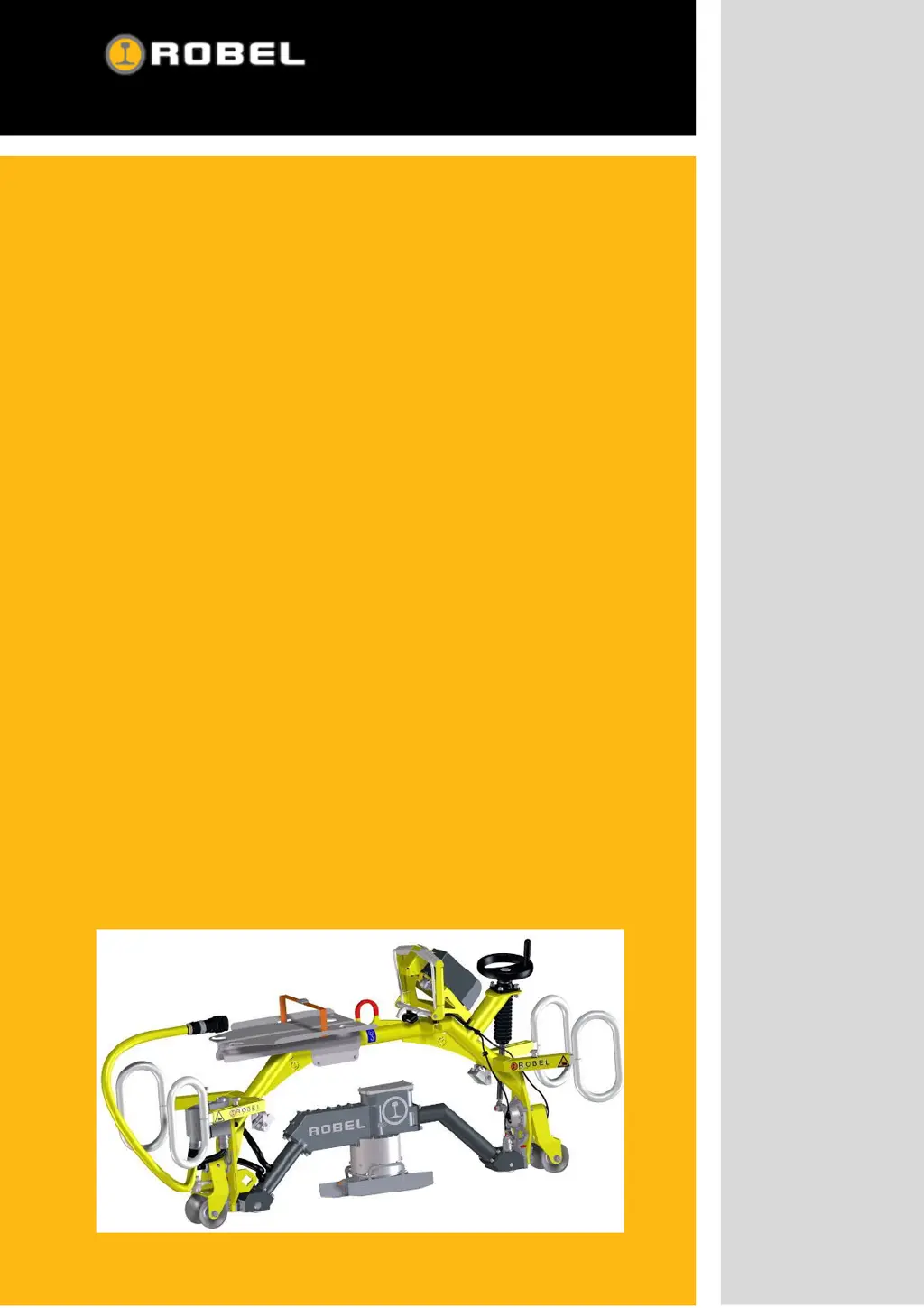
Hybrid Rail Head Profile Grinding Machine

Table of Contents

Questions and Answers

  • J
    Jonathan JohnsonAug 18, 2025
    What to do if ROBEL Industrial Equipment displays 'Maintenance necessary'?
    • A
      amanda75Aug 18, 2025
      If your ROBEL Industrial Equipment displays a 'Maintenance necessary' message, it means maintenance is due or the maintenance interval has not been reset. Perform the required maintenance or reset the maintenance interval.
  • L
    Lauren MartinezAug 21, 2025
    Why does the ROBEL Industrial Equipment motor get hot?
    • A
      andrea60Aug 21, 2025
      The motor of your ROBEL Industrial Equipment may get hot if it is covered or very dirty. Ensure the motor is not covered and clean it if necessary.
  • K
    Kathleen MeyerAug 23, 2025
    Why is the grinding on my ROBEL Industrial Equipment poor?
    • A
      andrea02Aug 23, 2025
      Poor grinding performance on your ROBEL Industrial Equipment may be due to a worn abrasive. Change the abrasive.
  • M
    murphyjayAug 26, 2025
    What to do if the dead man’s brake is not working on ROBEL Industrial Equipment?
    • M
      Mitchell BarkerAug 26, 2025
      If the dead man’s brake on your ROBEL Industrial Equipment is not working, it could be due to: * Bowden cables not smooth-running: Oil the Bowden cables to ensure smooth action. * Brake pads worn, brittle, or hardened: Replace the rubber brake pads.
  • R
    randy93Aug 28, 2025
    What causes the infeed drive to lose its reference on ROBEL Industrial Equipment?
    • G
      Gerald HarrisAug 28, 2025
      The infeed drive on your ROBEL Industrial Equipment may lose its reference if there is heavy infeed while grinding the sides of the rails, regardless of whether the abrasive is turning or not, or if you are leaning on the machine while actuating the infeed button. Use a smaller amount of infeed at a time and do not actuate the infeed button if the abrasive is not turning. Also, do not put additional force on the machine while actuating the infeed button.
  • L
    Lori DunnAug 30, 2025
    What does the 'Rotating grinding stone' error mean on ROBEL Industrial Equipment?
    • B
      beth93Aug 30, 2025
      The 'Rotating grinding stone' error message on your ROBEL Industrial Equipment indicates that the actual rpm of the spindle is less than 80% of the nominal value. Reduce the load on the spindle.
  • J
    Joanna SmithSep 1, 2025
    What to do if the depth infeed on ROBEL Industrial Equipment is not working and making a rattling noise?
    • G
      grantjonathanSep 1, 2025
      If the depth infeed on your ROBEL Industrial Equipment is not working and making a rattling noise, the infeed drive may be blocked in the end position. Unblock it.
  • C
    Colin KellySep 4, 2025
    What does 'Rotation Honda low' mean on ROBEL Industrial Equipment?
    • M
      mitchell51Sep 4, 2025
      The 'Rotation Honda low' warning message on your ROBEL Industrial Equipment indicates that the actual rpm of the Hybrid Drive Unit is too low. Apply full throttle on the Hybrid Drive Unit.
  • A
    Amber DouglasSep 6, 2025
    What does the error 'Volt < 50.0V' mean on ROBEL Industrial Equipment?
    • C
      Christine HernandezSep 6, 2025
      The 'Volt < 50.0V' error message on your ROBEL Industrial Equipment means that the voltage of the super capacitors is lower than 50.0V. Reduce the load on the spindle.
  • L
    Lori CampbellSep 8, 2025
    What does the 'Grindingstone change position' error mean on ROBEL Industrial Equipment?
    • D
      Daniel LeeSep 8, 2025
      The 'Grindingstone change position' error message on your ROBEL Industrial Equipment indicates that the abrasive is fully retracted. Move the abrasive down.

Summary

General Information and Regulations

About These Instructions

Details symbols and elements used in the operating procedures and lists for clarity and consistency.

General Regulations and Responsibilities

Covers legal requirements, accident prevention, and operator responsibilities for safe machine use.

General Information and Manual Validity

Intended Audience for Operating Manual

Specifies that the manual is for technically qualified personnel and outlines their requirements.

Liability Exclusions for Product Use

Defines manufacturer's limitations of liability for improper or unintended product usage.

Copyright, Acceptance, and Validity

Copyright and Intellectual Property

Outlines copyright ownership and restrictions on reproduction or exploitation of manual content.

Acceptance and Operating Licence

Details buyer responsibilities for checking machine condition, fittings, and obtaining necessary accreditations.

Validity of Operating Instructions

States the validity of the manual for a specific machine model and its EDV number.

Safety Guidelines and Precautions

Designated Use of the Grinding Machine

Defines the machine's intended purpose for precise rail head profile grinding.

Foreseeable Misuse of the Machine

Lists prohibited uses, such as transportation or direct mains connection.

Conventions of Layout and Warning Symbols

Explains warning phrases (DANGER, WARNING, CAUTION, NOTICE) and symbols used for safety.

Design Changes and Original Parts

Addresses liability for unauthorized modifications and the importance of using original parts.

Protective Devices and Their Use

Emphasizes not tampering with safety devices and ensuring they are correctly installed.

Safety Regulations and Staff Qualifications

Details required safety regulations and qualifications for machine operators.

Personal Protective Equipment (PPE)

Specifies required PPE such as gloves, safety shoes, helmet, hearing protection, and eye protection.

Hazard Instructions for Specific Risks

Provides guidance on hazards related to manual handling, unergonomic operation, and rotating parts.

Accident Prevention Measures

Outlines essential accident prevention steps, including pre-operation checks and immediate defect rectification.

First Aid and Fire Safety

Covers essential first aid preparedness and general fire safety measures for the machine.

Technical Specifications and Data

Drive System Details

Provides specifications for the electric motor, including voltage, current, and rated power.

Energy Supply Options

Lists available energy sources for operating the machine, such as drive units and batteries.

Grinding Spindle Specifications

Details the grinding spindle's maximum speed, abrasive mounting, and fastening thread.

Machine Dimensions and Weight

Provides dimensions for the machine with and without extendable handles, and its weight.

Abrasive Specifications

Details specifications for abrasive discs, including diameter, speed, and weight.

Plunging Depth Control

Explains the stepless control of plunging depth via a servomotor.

Noise Emissions and Vibration Levels

Presents sound pressure and power levels, and vibration total values for operator safety.

Operating and Transport Conditions

Specifies temperature ranges for operation, transport, and storage.

Brake Test Results

Provides results of brake tests conducted on the machine at different slope angles.

Machine Description and Components

Machine Overview and Features

Highlights key features like powerful drive, PLC operation, and ergonomic design.

Control Elements and Interface

Details the dead man's brake, PLC control system, and associated buttons and displays.

Machine Tilt and Depth Adjustment

Explains the tilt adjustment handwheel and the grinding depth infeed controls.

Track Width and Motor Stop Controls

Describes track width adjustment and the location and function of the motor stop button.

Battery;Converter Holder and Safety Devices

Covers holders for power sources and the function of safety guard plates.

Machine Labels and Signage

Illustrates and identifies various safety and instructional labels affixed to the machine.

Machine Position and Work Area

Details the position of labels on the machine and the recommended work place setup.

Structure Gauge Compliance

Explains the structural gauge requirements and potential violations during operation.

Operating Conditions and Storage

Machine Operating Conditions

Specifies operating temperature range and warnings related to sunlight exposure.

Machine Storage Requirements

Details the temperature range and environmental conditions for machine storage.

Abrasive Storage and Handling

Provides notices and warnings regarding the storage and usability of abrasive discs.

Machine Transport Guidelines

Outlines warnings and procedures for safely transporting the heavy grinding machine.

Putting the Machine Into Operation

Re-railing and Machine Preparation

Details steps for preparing the machine, including connecting to the energy source and retracting the abrasive.

Machine Checking Procedures

Covers checks for the grinding spindle, abrasive, electric motor, and dead man's brake.

Starting and Operating the PLC

Guides on starting the PLC, main menu navigation, and button functions.

PLC Settings and Configuration

Explains various PLC settings like stepper control, service, brightness, and date/time.

Motor Starting and Test Run

Details procedures for starting the motor, performing a test run, and ensuring safe operation.

Working with the Machine and Grinding Process

Provides information on the grinding process, rail grinding, and evaluating grinding patterns.

Switching Off and Unrailing the Machine

Covers procedures for safely switching off the engine and unrailing the machine.

Connecting the Electric Motor

Machine Maintenance Schedule and Procedures

Maintenance Schedule Overview

Presents a schedule for routine maintenance tasks based on operating hours and seasons.

Changing the Abrasive Disc

Details the steps for preparing the machine and changing the abrasive disc safely.

Servicing and Lubrication Points

Covers servicing the dead man's brake and lubrication of pivot bearings and gear wheels.

Cleaning and Care Instructions

Provides guidelines on cleaning the machine safely, avoiding damage from solvents or high-pressure water.

Troubleshooting Machine Issues

Error Messages and Troubleshooting

Lists common errors, their reasons, and remedies for the PLC control system.

Display Remains Dark

Provides steps to diagnose and resolve issues when the machine's display remains dark.

Unblocking the Infeed Drive

Guides on how to unblock the infeed drive, including checking chain tension and performing reference runs.

Environmental Protection and Disposal

Environmental Protection Compliance

Emphasizes adherence to legal regulations for waste prevention, recycling, and preventing pollution.

Product Disposal Procedures

Outlines safe and proper disposal methods for the product and its components, following local regulations.

Appendix: EC Declaration of Conformity

ROBEL ROGRIND E3 13.49HSK Specifications

General IconGeneral
BrandROBEL
ModelROGRIND E3 13.49HSK
CategoryIndustrial Equipment
LanguageEnglish

Related product manuals