This document is an instruction manual for a RocwooD High Pressure Petrol Washer, a robust cleaning device designed for various applications, from light home cleaning to tough industrial jobs. The manual emphasizes safety, proper setup, and maintenance to ensure efficient and long-lasting operation.
Function Description
The RocwooD High Pressure Petrol Washer is a powerful cleaning tool that uses a high-pressure water stream, often combined with detergents, to remove dirt, grime, and other foreign matter from surfaces. It is powered by a petrol engine, making it suitable for use in locations without immediate access to electrical power. The device is designed for specific applications and should not be modified or used for purposes other than those for which it was designed.
Important Technical Specifications
- Horsepower: 7hp
- Flow Rate: 10 liters per minute (lpm)
- Rated Pressure: 180 Bar (2500 psi)
- Max Pressure: 240 Bar (3481 psi)
- Displacement: 196cc
- Pump Type: Copper Axial
- Engine Type: 4 stroke
- Engine Speed: 3600 rpm
- Ambient Operating Temperature: 0°C - 60°C
- Engine Oil Capacity: 0.6 liters (10w30 required)
- Fuel Tank Capacity: 4.7 liters
- Fuel Type: Petrol (unleaded fuel with a minimum of 85 octane)
- Gross Weight: 34kg
- Water Supply Requirement: Minimum of 4 gpm at 20 PSI to prevent pump damage.
- Sound Level: 97db during normal operation.
Usage Features
The pressure washer incorporates several features to enhance usability and safety:
- Nozzle Set: Comes with a 5-nozzle set, each designed for different applications:
- 0° High Pressure (RED): Very aggressive stream for tough spots, requires extreme caution.
- 15° High Pressure (YELLOW): Wide, narrow, powerful stream for most cleaning.
- 25° High Pressure (GREEN): Medium coverage with a powerful stream.
- 40° High Pressure (WHITE): Wide coverage for larger areas.
- 84° Low Pressure (BLACK): Lower pressure, wider coverage, primarily for detergent injection.
- Detergent Injection System: Allows for the application of liquid car wash detergents specifically developed for pressure washers. The system uses an injection tube assembly and a black injection nozzle to mix detergent with water automatically.
- Safety Lock-Off Latch: A safety latch on the trigger prevents accidental discharge of high-pressure water when the pressure washer is not in use.
- Thermal Relief Valve: Protects the pump from overheating if the spray gun is closed for an extended period or if the nozzle is blocked. It acts as a backup system, and users are advised to turn off the washer if not used for more than five minutes to prevent overheating and extend pump life.
- Low Oil Shutdown: Some engines are equipped with this feature, which automatically shuts off the pressure washer if the engine oil level drops below the required amount, protecting the engine from operating without proper lubrication.
- Hose and Gun Assembly: Threaded connections must be carefully aligned and tightened to prevent leaks. The high-pressure hose connects to the pressure washer outlet via a quick connect coupling and to the trigger gun.
- Water Connection: A garden hose (not supplied) connects to the pressure washer water inlet. It's recommended to flush the garden hose before connecting to remove foreign matter.
- Starting Procedure: Involves checking oil and petrol, ensuring the on/off switch is "on," connecting the hose, turning on water, squeezing the trigger to release air, setting the petrol lever to "open," choke and throttle to "fast," keeping the trigger depressed, and pulling the recoil cord slowly until resistance is felt, then rapidly.
Maintenance Features
Regular maintenance is crucial for the longevity and performance of the pressure washer:
- Engine Oil: The engine crankcase must be filled with 4-stroke engine oil before the first use. Operating without oil will damage the engine. The pump is maintenance-free and shipped with oil.
- Fuel: Use clean, fresh unleaded fuel with a minimum of 85 octane.
- Nozzle Cleaning: Blocked nozzles can cause pressure to rise. Nozzles should be kept clean by separating the lance from the gun, clearing with a rigid wire (like a paper clip), flushing backward with water, and then reattaching.
- Water Inlet Screen: The pressure washer is equipped with a water inlet screen to protect the pump from foreign particles. This screen must be kept clean; a clogged screen restricts water flow and can damage the pump. It should be removed and backflushed to remove impurities and replaced immediately.
- Hose Connections: All hose connections must be properly sealed, and knots or kinks in the high-pressure hose should be removed.
- Detergent Injection System Cleaning: After using the detergent injection system, the tube should be removed from the detergent container, and clean water should be run through the tube and injection system until thoroughly cleaned.
- Winter Storage (Pump): If storing in temperatures below 0°C, the pump should be protected by depressing the trigger to relieve pressure, disconnecting the garden hose, tipping the unit to point the inlet connection upwards, pouring approximately 60ml of antifreeze into the inlet, disconnecting the spark plug wire, and pulling the recoil several times to circulate the antifreeze.
- Winter Storage (Engine): For storage longer than one month, replenish engine oil to the upper level, drain the fuel tank, fuel line, fuel valve, and carburetor. Pour about one teaspoon of engine oil through the spark plug hole, pull the recoil starter slowly until increased pressure is felt (indicating the piston is on its compression stroke) to close intake and exhaust valves, preventing cylinder rusting. Cover the washer and store in a clean, dry, well-ventilated area away from flames or sparks.
- Prestart Preparation: Before each use, check for loose or missing parts and any damage from shipment.
- Carburetor Icing (Winter): In rare winter atmospheric conditions, icing may occur in the carburetor, causing the engine to run rough, lose power, or stall. This can be overcome by deflecting hot air from the engine over the carburetor area.
- Safety Goggles: Always wear safety goggles while operating.
- Clothing: Do not wear loose clothing, jewelry, or anything that may be caught in the engine.
- Muffler: Do not touch the hot muffler.
- Fuel System Inspection: Periodically check the fuel system for leaks or signs of deterioration such as chafed, spongy hose, loose/missing clamps, or damaged tank/cap. Correct all defects before use.
- Detergent Use: Only use recommended detergents.
- Operation Time: Do not run the pressure washer for more than five minutes without depressing the trigger, as this may damage the pump.
- Work Surface: Avoid working on hot surfaces or in direct sunlight when applying detergent to prevent damage to painted surfaces.
- Wax Application: If applying wax, do so sparingly and evenly, from bottom up on wet surfaces. Remove the suction tube from the wax bottle and rinse off surplus wax to avoid a hazy finish. Wipe dry to reduce water spotting.

 Need help?
 General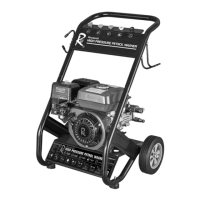

 To Next Page