Seat belts
38
WEARING SEAT BELTS CORRECTLY
Fastening the inertia reel belts
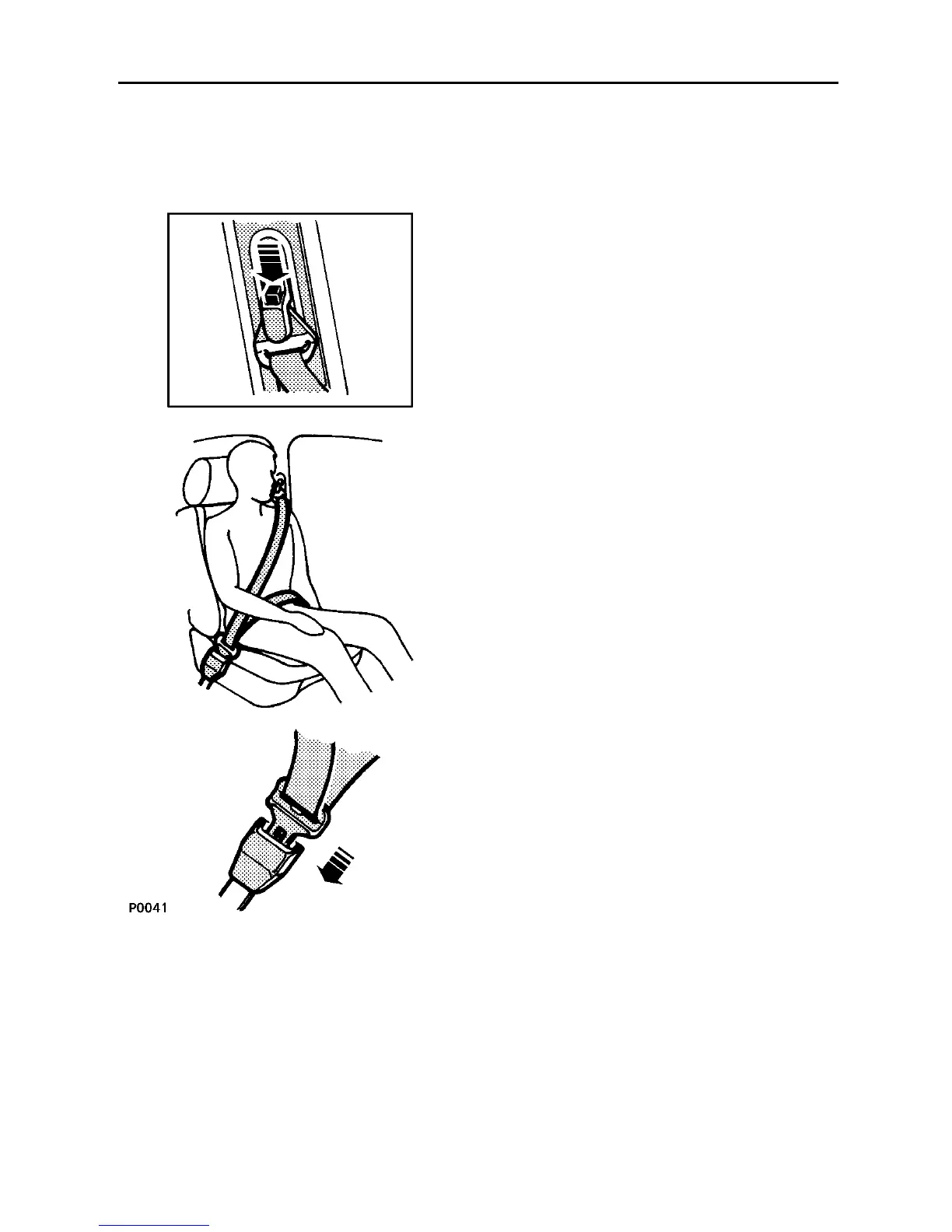
Draw the belt over the shoulder and across
the chest, and then insert the metal tongue
plate into the lock nearest the wearer - a
’CLICK’ indicates that the belt is securely
locked.
In some circumstances, perhaps due to the
vehicle being parked on a slope, the inertia
mechanism may engage, preventing the initial
extension of a belt. This is not a fault - ease
the belt free and use it.
Adjust the seat belt to eliminate any slack in
the webbing. DO NOT slacken the webbing by
holding the belt away from the body - to be
fully effective, the seat belt must remain in full
contact with the body at all times. Also,
ensure that the lap belt fits as low on the hips
as possible and that the shoulder belt passes
across the shoulder without slipping off or
pressing on the neck (see also ’Seating
positions’ in the ’Airbag SRS’ section of this
handbook).
Upper anchorage adjustment
The height of the seat belt upper anchorage
can be adjusted for comfort AND safety. Press
and hold the button (arrowed in upper
illustration) to raise or lower the anchorage.
For safety, the seat belt should always be
worn with the webbing crossing the shoulder
midway between the neck and the edge of the
shoulder.
Ensure that the anchorage is correctly located
in one of the height positions before driving.
For children and young adults where the seat
belt cannot be properly positioned, the use of
a booster seat appropriate to the age of the
child is recommended.



 To Next Page