8
the microphone’s polar response.
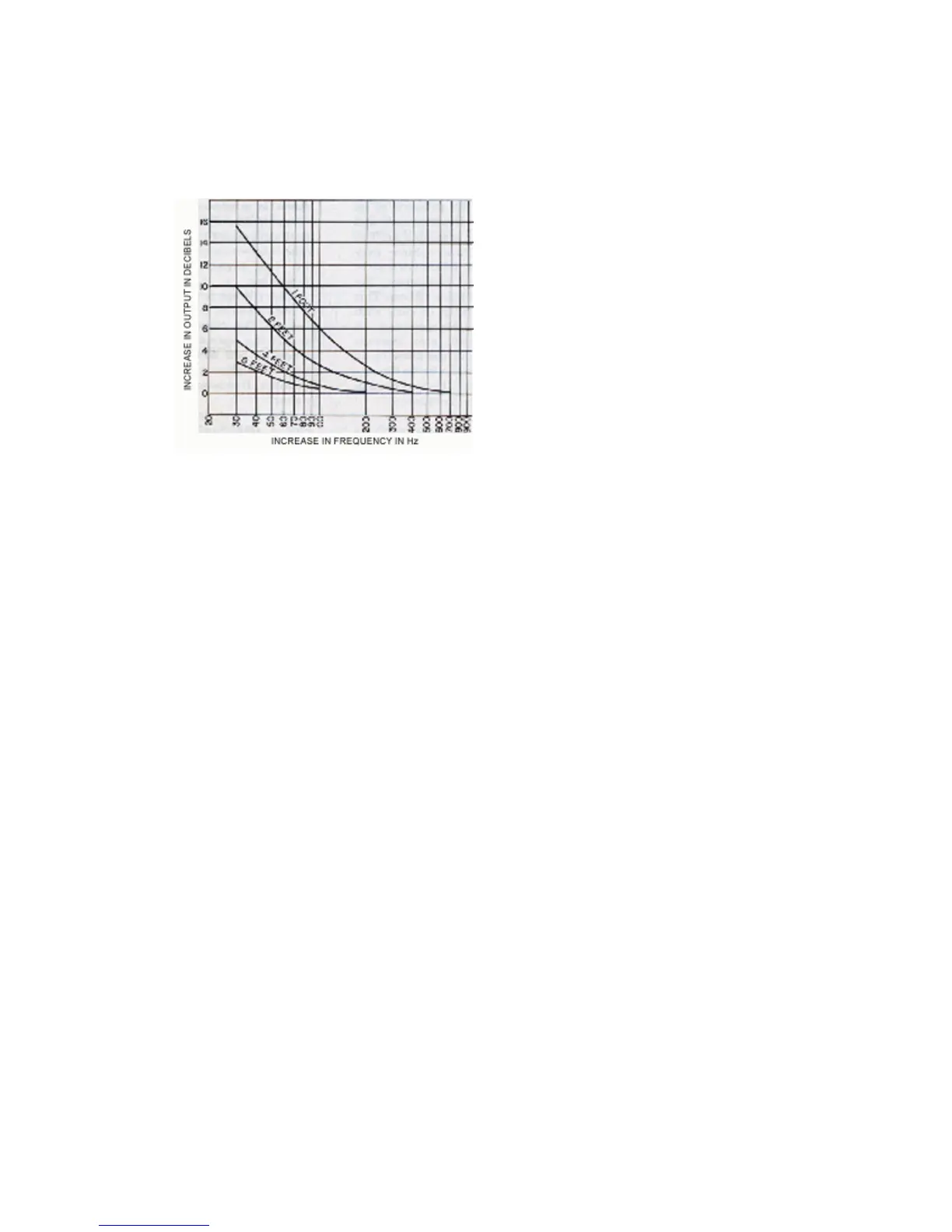
Typical relationship of microphone distance to
frequency response for ribbon-velocity bi-
directional microphone.
Another area where proximity effect can
be turned to an advantage is to make things
sound more “real than real”. For example,
many voices and certain musical
instruments produce fundamental frequencies within the bass range (below 150Hz or so)
but the fundamentals are weak. If a microphone, which has no proximity effect and a
rising high frequency response, is used on an upright piano, or on a person with a thin,
weak voice, the recorded sound is likely to sound even thinner than it was in real life. In
contrast, using a microphone with strong proximity effect on such sound sources could
result in a “better than real” sound since the boosted bass response will compensate for
the weak fundamentals in the sound source. Since the fundamentals are present, but
weakened, boosting them by several dB will sound “natural”, even though the sound has
been “sweetened”.
Radio and television announcers have long relied on proximity effect to produce a full,
rich, “authoritative” quality to their voices. By knowing how to work with the proximity
effect, the engineer can get several useful effects without resorting to a “box”.
MM
MM
ii
ii
cc
cc
rr
rr
oo
oo
pp
pp
hh
hh
oo
oo
nn
nn
ee
ee
TT
TT
ee
ee
cc
cc
hh
hh
nn
nn
ii
ii
qq
qq
uu
uu
ee
ee
General Tips for Using Ribbon Microphones
BB
BB
rr
rr
aa
aa
ss
ss
ss
ss
II
II
nn
nn
ss
ss
tt
tt
rr
rr
uu
uu
mm
mm
ee
ee
nn
nn
tt
tt
ss
ss
and ribbon microphones go together very well. Mic the instrument
from a distance of a couple of feet, and increase the working distance a little if several
instruments are being used.
RR
RR
ee
ee
ee
ee
dd
dd
II
II
nn
nn
ss
ss
tt
tt
rr
rr
uu
uu
mm
mm
ee
ee
nn
nn
tt
tt
ss
ss
sound full and never edgy when captured with a ribbon microphone.
Normal working distances are about a foot or two from the instrument.
SS
SS
tt
tt
rr
rr
ii
ii
nn
nn
gg
gg
ss
ss
sound very sweet and clean with ribbon microphones. Place the microphone
several feet from the instrument. For larger string sections, placing the microphone
slightly above the instrumentalists and angled down; a distance of three or four feet will
do the trick nicely.
PP
PP
ii
ii
aa
aa
nn
nn
oo
oo
ss
ss
sound excellent with ribbon microphones and are free of phase-related comb
filtering. The bass is full and rich while the top remains clean with no clatter. Mic the


 To Next Page