EasyManua.ls Logo

Rural King RK37 Hydrostatic - User Manual

Default Icon
180 pages
Print Icon
To Next Page IconTo Next Page
Loading...
OPERATOR'S MANUAL
RK37
Hydrostatic
RK37
Hydrostatic
Rural King Supply
4216 Dewitt Ave.
Mattoon IL 61938
RK37
RK37
Hydrostatic
OPERATOR'S MANUAL
OPERATOR'S MANUAL
RK37
Hydrostatic
RK37
Hydrostatic
Rural King Supply
4216 Dewitt Ave.
Mattoon IL 61938
RK37
RK37
Hydrostatic
OPERATOR'S MANUAL
OPERATOR'S MANUAL
RK37
Hydrostatic
RK37
Hydrostatic
Rural King Supply
4216 Dewitt Ave.
Mattoon IL 61938
RK37
RK37
Hydrostatic
OPERATOR'S MANUAL

Table of Contents

Questions and Answers

Summary

1. TRACTOR IDENTIFICATION

2. ABOUT THIS MANUAL

3. INTRODUCTION & DESCRIPTION

General construction

Describes the main structural assembly of the tractor.

Front Axle & Wheels

Details the front axle and wheel drive mechanism.

Engine

Specifies the type and manufacturer of the engine.

Transmission with HST (Hydrostatic Transmission)

Explains the hydrostatic transmission system and its controls.

Rear Axle & Wheels

Describes the rear axle mounting and wheel attachment.

Hydraulic System & Linkages

Details the tractor's hydraulic system and linkage capabilities.

Steering

Explains the hydrostatic power steering system.

4. OWNER ASSISTANCE

5. ROPS (Roll Over Protective Structures)

Damage of the ROPS

How to identify and address damage to the ROPS structure.

Seat Sliding

How to adjust the tractor seat for comfort and safety.

6. SAFETY INSTRUCTIONS

Recognize Safety Information

Understanding safety symbols and signal words in the manual.

Signal Words

Explains the meaning of DANGER, WARNING, and CAUTION labels.

Read Safety Instruction

Emphasizes reading all safety instructions for proper operation.

Protection Children

Guidelines for keeping children safe around the tractor.

Use of ROPS and Seat Belt

Importance of using ROPS and seat belts for operator safety.

SAFE OPERATION OF YOUR TRACTOR

SAFETY TIPS DURING MAINTENANCE

MOUNTING AND DEMOUNTING IMPLEMENTS

7. DO’S AND DON’T’S

DOS-For Better performance

Recommended practices for optimal tractor performance.

DONTS-For Safe Operation

Practices to avoid for safe tractor operation.

GENERAL INFORMATION

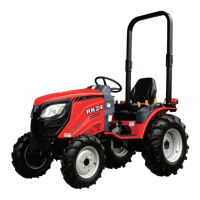
1. EXTRRIOR VIEW (non cab model)

Identifies external components of the non-cab tractor model.

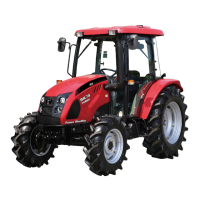
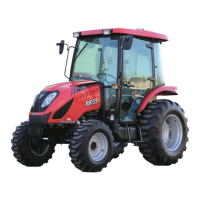
2. EXTRRIOR VIEW (cabin model)

Identifies external components of the cabin tractor model.

3. SAFETY SIGNS

Information on safety decals and their maintenance.

DESCRIPTION OF TRACTOR CONTROLS

1. INSTRUMENT AND SWITCHES(NON CAB TYPE)

Details instruments and switches for non-cab models.

2. INSTRUMENT AND SWITCHES(CABIN TYPE)

Details instruments and switches for cabin models.

3. OPERATION THE CONTROLS

Explains the operation of various tractor controls.

4. OPERATING THE 3 POINT LINKAGE (TPL)(NON CAB MODEL)

Guide for operating the 3-point linkage on non-cab models.

5. OPERATING THE 3 POINT LINKAGE (CABIN MODEL)

Guide for operating the 3-point linkage on cabin models.

OPERATION

1. ENGINE STARTING

Step-by-step instructions for starting the tractor engine.

2. ENGINE STOPPING

Procedures for safely stopping the tractor engine.

3. ENGINE IDLING

Guidelines for idling the engine, especially in cold conditions.

4. RUNNING-IN PERIOD

Instructions for the initial 50-hour break-in period.

5. STARTING OFF, SHIFTING AND DRIVING

How to start, shift gears, and drive the tractor.

6. TURNING IN FIELD

Safe techniques for turning the tractor in a field.

7. STOPPING AND PARKING

Procedures for safely stopping and parking the tractor.

8. DRIVING ON SLOPE

Safety tips and procedures for driving on slopes.

9. CAUTIONS FOR DRIVING INTO; OUT OF FIELD

Precautions for entering and exiting fields.

10. LOADING TO; UNLOADING FROM TRUCK

Instructions for loading and unloading the tractor onto a truck.

11. CAUTIONS FOR DRIVING ON ROAD

Safety precautions for driving the tractor on public roads.

12. OPERATION CHECK DURING DRIVING

Monitoring tractor systems while driving.

WORK PROCEDURE

1. PRECAUTIONS FOR HANDLING IMPLEMENT

Safety measures when attaching/detaching implements.

2. GENERAL IMPLEMENT

General information and safety for using implements like the rotavator.

MAINTENANCE

1. OPENING COVERS

How to open the tractor's hood and access components.

2. INSPECTION ITEMS

Daily inspection checklist for tractor components.

3. INSPECTING AND CHANGING COOLANT

Procedures for checking and changing the engine coolant.

4. CHECKING AND CHANGING OIL

Steps for checking and changing engine oil and filter.

5. REPLACING FILTER AND CARTRIDGE

How to replace the HST oil filter and clean the strainer.

6. FUEL SYSTEM

Maintenance of the fuel tank and bleeding the fuel system.

7. CHECKING AND CLEANING AIR CLEANER

Procedures for inspecting, cleaning, and replacing the air cleaner.

8. ADJUSTING TREAD

How to adjust front and rear wheel tread for stability.

9. GREASING

Points and procedures for greasing the tractor.

10. CHECKING HOSES

Inspection and replacement of fuel and radiator hoses.

11. CHECKING ELECTRIC SYSTEM

Checking the battery, charging system, and wiring.

12. CHECK AND ADJUST EACH PART

Adjusting brake pedal play and other parts.

13. ROUTINE MAINTENANCE SCHEDULE

Schedule for regular maintenance based on operating hours.

CABIN SYSTEM

1. MAJOR FEATURES

Overview of the cabin's features and compliance standards.

2. INSTRUMENT AND RELATED PARTS

Details on cabin doors, rear window, and working lamps.

3. HOW TO CONTROLS CABIN

Operation of interior devices like ventilation, heater, and controls.

STORAGE AND DISPOSAL

1. TRACTOR STORAGE

Guidelines for daily and long-term storage of the tractor.

2. USAGE AND DISPOSAL

Instructions for using the tractor after storage and its proper disposal.

TROUBLESHOOTING

1. ENGINE SYSTEM

Common engine problems, their causes, and solutions.

2. BRAKE SYSTEM

Troubleshooting for brake system issues.

3. STEERING SYSTEM

Common steering system problems and their remedies.

4. HYDRAULIC SYSTEM

Diagnosing and resolving hydraulic system issues.

5. ELECTRIC SYSTEM

Troubleshooting for electrical system faults.

SAFETY STANDARD FOR FARM WORK

1. INSTRUCTION BEFORE USE

Operator requirements and pre-use checks for safe farming.

2. CHECKUP LIST BEFORE OPERATION

A checklist for pre-operation inspection and safety.

3. CAUTIONS DURING THE WORK

General safety precautions to follow while working.

4. CAUTIONS WHEN DRIVING ON THE FARM ROAD

Safety measures for driving on farm roads and slopes.

5. INSTRUCTION AFTER USE

Post-work procedures for cleaning and inspection.

6. CAUTIONS FOR INSPECTION AND MAINTENANCE

Safety precautions during inspection and maintenance tasks.

7. TRACTOR

Specific safety advice related to the tractor itself and its components.

APPENDIX

1. MAJOR SPECIFICATIONS

Technical specifications of the tractor model.

2. MAJOR CONSUMABLES

List of common replacement parts and filters.

WARRANTY

1. ENGINE WARRANTIES

Details of the limited warranty for the tractor's engine.

2. EMISSION SYSTEM WARRANTY

Warranty coverage for the emission control system.

3. RK WARRANTY

General warranty terms and conditions from RK.

4. PDI CHECKLIST

Rural King RK37 Hydrostatic Specifications

General IconGeneral
Engine HP (Gross)37 HP
Drive Type4WD
Transmission TypeHydrostatic
Rear PTO Speed540 RPM
3-Point HitchCategory 1
Fuel TypeDiesel
Number of Gears3 range
Tire Size - Front8-16

Related product manuals