16
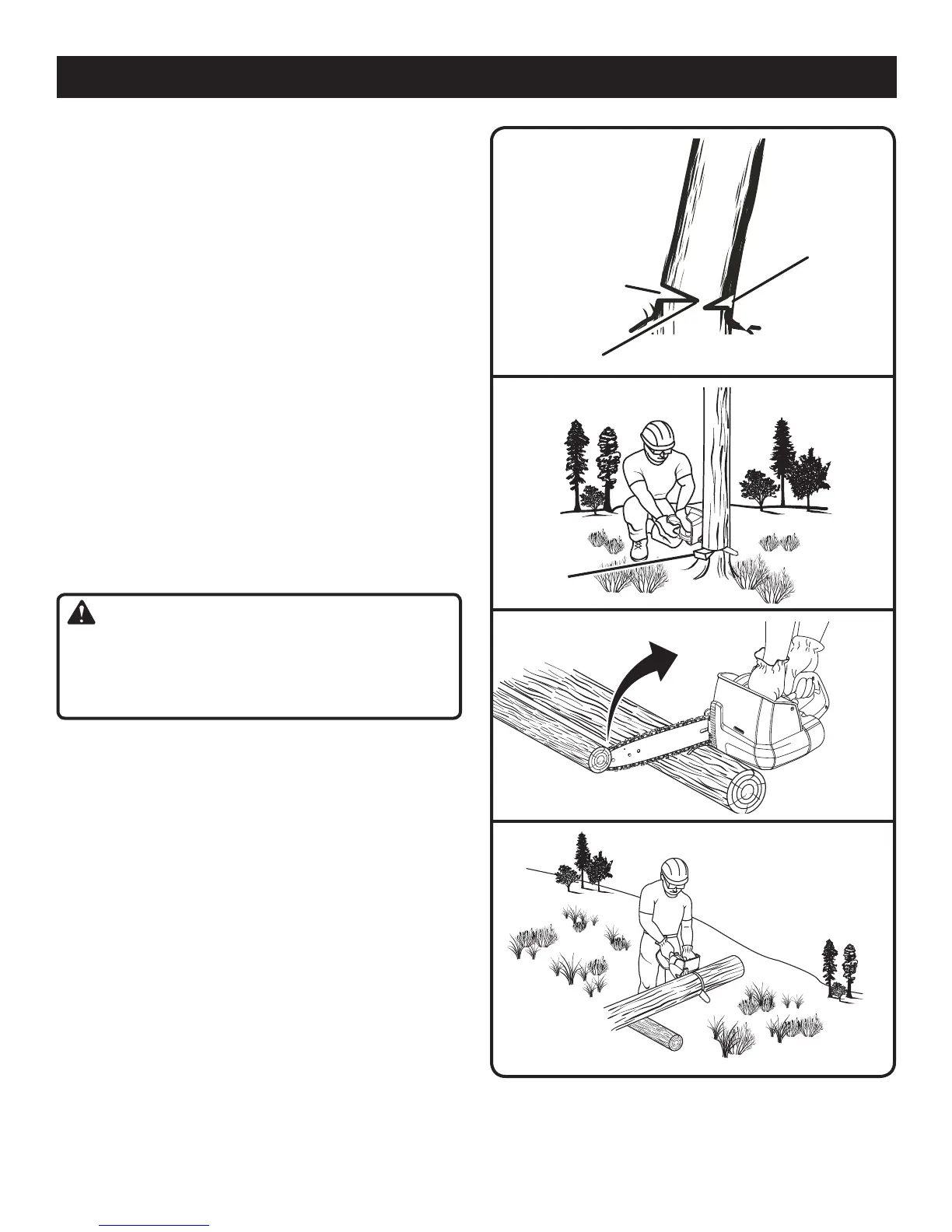
Felling Backcut. The backcut is always made
level and horizontal, and at a minimum of 2 in.
above the horizontal cut of the notch. See Figures
13 - 14.
Never cut through to the notch. Always leave a
band of wood between the notch and backcut
(approximately 2 in. or 1/10 the diameter of the
tree). This is called “hinge” or “hingewood.” It
controls the fall of the tree and prevents slipping
or twisting or shoot-back of the tree off the
stump. See Figures 13 - 14.
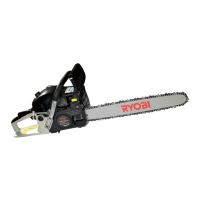
On large diameter trees, stop the back cut before
it is deep enough for the tree to either fall or settle
back on the stump. Then insert soft wooden or
plastic wedges into the cut so they do not touch
the chain. The wedges can be driven in, little by
little, to help jack the tree over. See Figure 15.
As tree starts to fall, stop the chain saw and put
it down immediately. Retreat along the cleared
path, but watch the action in case something falls
your way. Be alert for overhead limbs or branches
that may fall and watch your footing.
WARNING:
Never cut through to the notch when making a
backcut. The hinge controls the fall of the tree,
this is the section of wood between the notch
and backcut.
BUCKING
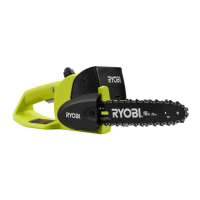
See Figures 16 - 19.
Bucking is the term used for cutting a fallen tree to
the desired log length.
Always make sure your footing is secure and
your weight is distributed evenly on both feet.
Cut only one log at a time.
Support small logs on a saw horse or another
log while bucking.
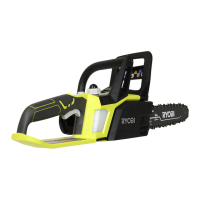
Keep a clear cutting area. Make sure that no
objects can contact the guide bar nose and chain
during cutting, this can cause kickback. Refer to
Precautions Against Kickback earlier in this
manual.
When bucking on a slope, always stand on
the uphill side of the log. To maintain complete
control of the chain saw when cutting through
the log, release the cutting pressure near the
end of the cut without relaxing your grip on the
chain saw handles. Do not let the chain contact
NOTCH
BACK CUT
Fig. 15
Fig. 14
KICKBACK
Fig. 16
HINGE
WEDGE
Fig. 17
OPERATION


 To Next Page