27
English (Original instructions)
ELECTRICAL
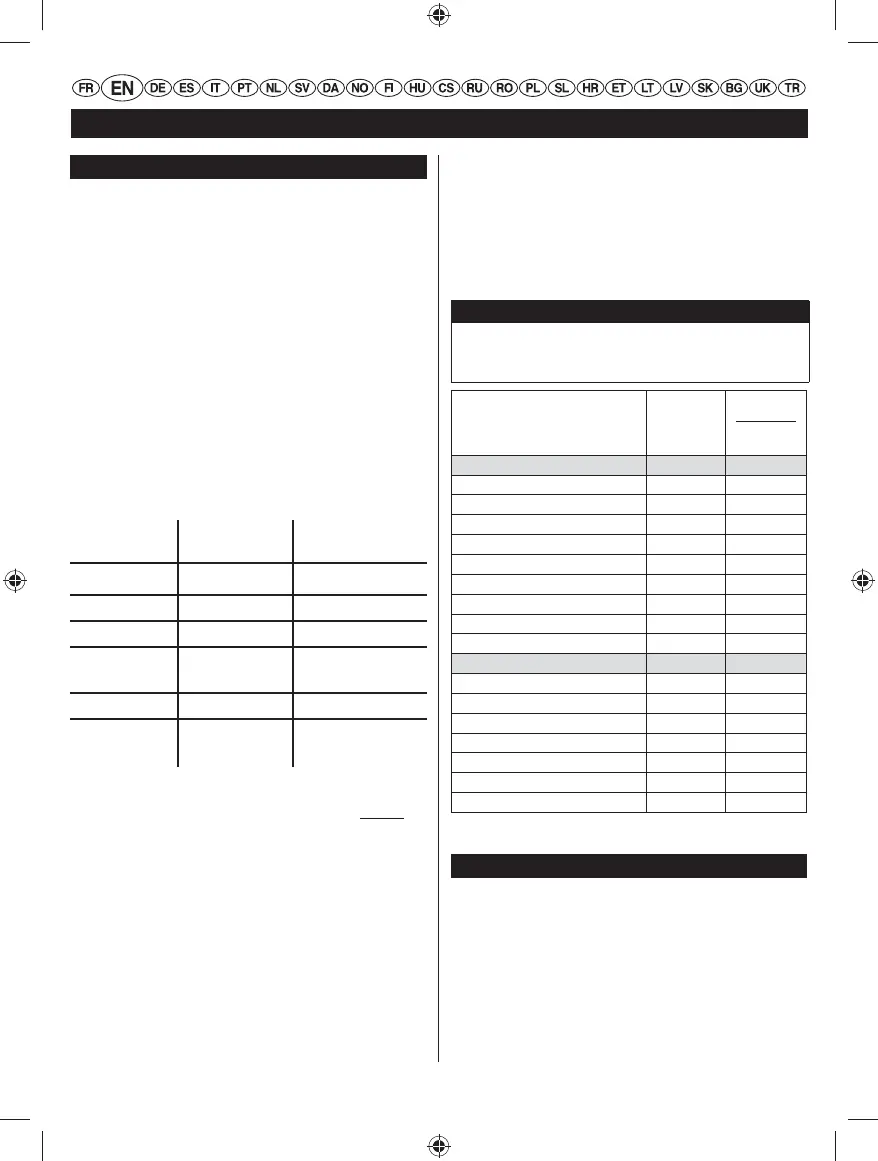
GENERATOR CAPACITY
Make sure the generator can supply enough continuous
(running) and surge (starting) watts for the items you will
power at the same time. Follow these simple steps.
1. Select the items you will power at the same time.
2. Total the continuous (running) watts of these items.
This is the amount of power the generator must
produce to keep the items running. See the wattage
reference chart at right.
3. Estimate how many surge (starting) watts you will
need. Surge wattage is the short burst of power needed
to start electric motor-driven tools or appliances such
as a circular saw or refrigerator. Because not all
motors start at the same time, total surge watts can be
estimated by adding only the item(s) with the highest
additional surge watts to the total rated watts from step
2.
Example:
Tool or
Appliance
Running Watts* Additional Starting
Watts*
Refrigerator 700 1350
Portable fan 40 120
Laptop 250 250
46" flat panel
television
190 190
Light (75 Watts) 75 75
1255 total
Running watts
1350 highest
starting watts
Total Continuous (Running) Watts 1255
Plus Highest Additional Surge Watts +1350
Equals Total Generator Output Required 2605
POWER MANAGEMENT
To prolong the life of the generator and attached devices,
it is important to take care when adding electrical loads
to the generator. There should be nothing connected
to the generator outlets before starting its engine. The
correct and safe way to manage generator power is to
sequentially add loads as follows:
1. With nothing connected to the generator, start the
engine as described later in this manual.
2. Plug in and turn on the first load, preferably the largest
load (highest wattage) you have.
3. Permit the generator output to stabilise (engine runs
smoothly and attached device operates properly).
4. Plug in and turn on the next load.
5. Again, permit the generator to stabilise.
6. Repeat steps 4 and 5 for each additional load.
7. Never add more loads than the generator capacity.
Take special care to consider surge loads in generator
capacity as previously described.
CAUTION
Do not overload the generator’s capacity. Exceeding the
generator’s wattage/amperage capacity can damage
the generator and/or electrical devices connected to it.
Application/Equipment
Estimated
Starting
Watts*
Estimated*
Additional
Starting
Watts
Emergency / Home Standby
Lights (qty. 4 x 75 W) 300 300
Refrigerator 700 1350
46" flat panel television 190 190
Satellite receiver 250 250
Portable fan 40 120
Heater 1300 1300
Laptop 250 250
Slow cooker 270 270
Radio 50 50
DIY/Job Site
Electric drill − 10 mm (3/8") 600 1000
Quartz halogen work light 1000 1000
Reciprocating saw 960 1920
Circular saw − 184 mm (7-1/4") 1400 2300
Mitre saw − 254 mm (10") 1800 1800
Air compressor − 1/4 HP 970 1600
Airless sprayer − 1/3 HP 600 1200
*Wattages listed are approximate. Check tool or appliance for actual wattage.
FEATURES
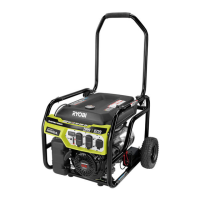
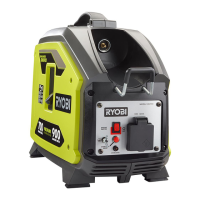
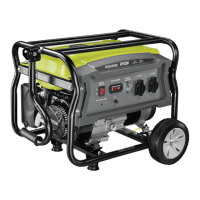
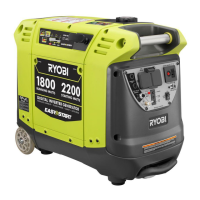
KNOW YOUR GENERATOR
See Figure 1.
The safe use of the product requires an understanding
of the information on the product and in this operator’s
manual as well as a knowledge of the project you are
attempting. Before use, familiarise yourself with all
operating features and safety rules.


 To Next Page
 Loading...