Need help?
Do you have a question about the SAFE-T-ALERT 35-741 and is the answer not in the manual?
Explains the dual sensor technology for detecting CO and propane gas.
Highlights the importance of CO and gas alarms for RV safety and vulnerable individuals.
Details the risks of CO and its symptoms, emphasizing the alarm's function.
Outlines critical limitations of the CO and gas alarms, including power dependency.
Provides essential safety precautions and operational advice for RV occupants.
Provides guidance on recommended installation locations for gas leak sources.
Specifies locations where the alarm should not be installed to ensure proper function.
Details step-by-step instructions for installing the alarm unit.
Explains the importance and method for weekly testing of the CO and gas alarm functions.
Describes the initial warm-up period and normal operation indicators of the alarm unit.
Details the visual (LED lights) and audible (beeps) signals for different alarm conditions.
Explains the specific signals and actions required for a Carbon Monoxide (CO) alarm.
Details the signals and immediate actions required for a propane gas leak detection.
Describes the signals indicating a malfunction or the need for service.
Provides a guide to identify and resolve common problems with the alarm unit.
Offers essential maintenance tips to keep the alarm in good working order.
Outlines immediate actions to take in the event of a detected gas leak.
Provides specific emergency response steps for CO alarms in the USA.
Details emergency response steps for CO alarms specifically for Canada.
The SAFE-T-ALERT™ 35 Series combination CO / Gas Alarm is a powerful, compact device designed to protect occupants in recreational vehicles (RVs) from both Carbon Monoxide (CO) and explosive Propane (LPG) gas. This alarm utilizes advanced microprocessor technology and two independent electronic self-cleaning sensors, enabling it to detect both CO and explosive gases simultaneously. It is UL Listed as a CO and Propane gas detector specifically for RV use. While not tested by UL, it also detects other explosive gases such as Acetone, Alcohol, Butane, and Gasoline, which may be present in an RV. To prevent false alarms from brief gas "puffs," the detector incorporates a recheck cycle before alarming. If high gas levels persist during this recheck, the alarm will activate. The electronic CO sensor is highly sensitive to CO gas but will not react to safe levels of most other gases.
Carbon monoxide is a colorless, odorless, tasteless, and highly poisonous gas that can endanger lives even at low concentrations. The CO alarm is designed to alert users to potentially dangerous situations. Symptoms of CO poisoning can range from mild (headaches, runny nose, sore or watery eyes, often described as "flu-like") to medium (dizziness, drowsiness, vomiting) and extreme (unconsciousness, brain damage, and death). It's important to note that victims of CO poisoning may be disoriented and unable to save themselves. Small children and pets may be affected first. This alarm helps protect household members and guests from CO produced when any type of fuel is incompletely burned in or around the RV. Potential CO sources include gas or diesel engine exhaust, portable space heaters, gas stoves and ovens, furnaces, defective engine exhaust systems, portable grills, other nearby RVs, portable generators, generator exhaust, and other propane-powered appliances. Extended operation of unvented fuel-burning appliances, an idling vehicle in an open or closed garage, temperature inversions trapping exhaust, and CO buildup from reverse/negative venting of fuel-burning appliances (e.g., clogged stacks or chimneys, wind direction/velocity, simultaneous operation of multiple fuel-burning appliances, and exhaust fans) can also contribute to high CO levels.
Propane gas, on the other hand, poses a risk of explosions. While LP gas is usually identifiable by an unpleasant odor, certain conditions like advanced age, colds, allergies, or the use of tobacco, alcohol, or drugs can diminish one's sense of smell, making detection difficult.
The alarm will not function without power, which could be due to a blown or missing fuse, broken wire, faulty wire connection, circuit breaker issues, a discharged battery, cut lead wires, or improper supply connections. It will only indicate the presence of gas at the sensor location; CO or explosive gases may be present in other areas. It is recommended to install CO alarms in all sleeping areas and ensure the alarm is not blocked or covered by any object that could prevent gas or carbon monoxide from reaching the sensor. This alarm is intended for use in the inside locations of an RV and is not designed to measure compliance with commercial and industrial standards. While the alarm's loudness meets regulatory standards, it may not be heard if located in remote areas or behind closed doors. Individuals who are hard-of-hearing, or under the influence of alcohol, prescription, non-prescription, or illegal drugs, may also not hear the alarm. This device is designed to detect carbon monoxide and propane gas, but it is not designed to detect smoke or fire. It may not alarm at low CO levels and is not intended to measure compliance with OSHA commercial and industrial standards. Individuals with medical problems may consider using warning devices that provide audible and visual signals for CO concentrations under 30 ppm. This alarm is not a replacement for insurance; users should always ensure their RV is fully insured.
To protect your family, it is crucial to install the alarm properly by carefully reading and following all instructions in the manual. The unit should be tested weekly, as a non-functioning alarm will not alert to hazardous levels of CO or explosive gas. Regular visual inspections of all fuel-burning equipment, including gas water heaters, kitchen gas stoves, space heaters, gas dryers, and pilot lights, are recommended. The pilot flame color should be blue. Visual inspections of the engine and generator exhaust systems are also important, as cracked exhaust systems can allow CO to enter the living area. Professional maintenance of the engine and generator is advised, as poorly tuned engines and generators produce greater amounts of CO. If unusual odors suggest a gas leak, immediately contact a local propane gas supplier or fire department.
For installation, the 35 series should be placed in the kitchen area near potential gas leak sources such as a furnace, refrigerator, stove, or oven. If potential gas leak sources are in separate areas, installing a gas alarm in each area is recommended. The Consumer Product Safety Commission recommends installing a CO alarm outside sleeping areas, and the 35 series combination CO and gas alarm complies with this recommendation. The alarm should be installed at least 4 inches but not more than 20 inches off the floor. It should not be installed behind furniture, drapes, in closets, or areas that would block gas flow to the alarm. Avoid installing it within 12 inches (30cm) of opening windows, exterior doors, heating or return vents, or other drafty areas, or on an outside wall. It should also not be installed on a wall switch-controlled power line, ground fault circuit, or circuit breaker. Older RVs may have less insulation and be draftier, so mounting locations should be carefully considered.
The alarm requires a 12 VDC power supply, with a recommended wire size of 14 GA to 18 GA. It should be connected to a properly fused circuit with a maximum over-protection device rating of 15 amps. When replacing CCI Controls LP Gas Leak Detectors, which may have two power leads, the Safe-T-Alert units have one power lead. The Safe-T-Alert power lead (Red) should be connected to the coach/house power supply, and the second power lead should be capped or removed. Connecting both power leads to the Safe-T-Alert alarm will result in a dead chassis battery. The alarm should be connected to wiring or a circuit that cannot be turned off by a switch or ground fault protector, using UL or recognized permanent wire connectors. It is acceptable to connect the 35 Series CO / LP gas alarm to the main disconnect, in which case the alarm will be off along with all other 12-volt equipment when the main disconnect is turned off. The RV must not be occupied when the main disconnect is in the off position.
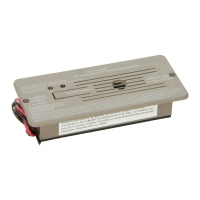
For installation, after selecting a wall location at least 4 inches but not more than 20 inches off the floor, disconnect the power supply. For Model 35-741, a 1/2-inch hole needs to be drilled for mounting. For Model 35-742, a 1-inch clearance is required to recess the case, so a 5 3/8-inch W x 2-inch H hole should be cut. Connect the RED (+) power lead to the fused circuit and the BLACK lead to Ground (-). Fasten the unit to the wall using the two screw holes on the ends of the case. Reconnect the power supply, wait 10 minutes for warm-up, and then test the alarm. All connections must comply with the National Electrical Code in the United States and the Canadian Electric Code in Canada.
To reduce the risk of carbon monoxide poisoning or propane gas explosion, the alarm's operation should be tested after the RV has been in storage, before each trip, and at least once per week during use. The TEST button only tests the alarm circuit, not the sensors. Propane or butane gas can be used to test the gas sensor, which may take up to 10 seconds to sound the alarm. To test the CO sensor, a can of SAFE-T-ALERT CO TEST GAS should be used to test the 400 PPM calibration point. Users should not attempt to generate CO to test the alarm. The TEST/RESET button checks all electrical functions of the alarm but not sensor operation. The alarm can be tested at any time by pressing and holding the TEST/Mute button on the front for 1 second. If the GREEN indicator light changes to RED and the horn beeps 4 times, and the Gas LED blinks Red, the alarm is working properly. If the alarm does not test properly, it should be returned immediately for repair or replacement.
Each time the unit is powered up, the CO sensor requires a 10-minute initial warm-up period to clean the sensor element and achieve stabilization. During this warm-up, the GREEN LED indicator will flash on and off, and the unit cannot go into a CO alarm. After the warm-up, the GREEN power ON indicator should glow continuously. If it does not, refer to the Trouble-Shooting Guide.
For the gas alarm, there is a warm-up period of approximately 1 minute after power-up, during which the unit cannot go into a gas alarm. After 1 minute, it can detect explosive gas. In cases of simultaneous CO and Gas Alarms, the gas alarm takes higher priority due to the more serious danger of a propane gas explosion. If both gas and CO alarms are triggered, the gas LED will flash red, and the beeper will sound. The CO LED will be a solid Red until the CO is ventilated out of the RV, then return to Green. The unit also features brownout protection, tolerating short power interruptions and brownouts where circuit voltage drops as low as 1VDC. If the brownout lasts too long, the unit will reset. This alarm operates normally down to 7 VDC and should not be operated below 7 VDC.
The SAFE-T-ALERT™ CO / Propane Gas Alarm is designed for ease of operation, with two indicator lights displaying specific colors for each monitored condition and matching sound patterns for alarm conditions. For a CO alarm, the Red CO LED will flash, and the alarm will sound 4 "BEEPS" followed by 5 seconds of silence. These signals indicate CO levels over 35 ppm, requiring immediate action. This cycle continues until the TEST/Mute button is pressed. Ventilate the RV. The RED light will remain ON until CO has cleared, or the alarm will reactivate in approximately 6 minutes if CO is still present. Do not re-enter the RV until it is properly ventilated. For a propane gas alarm, the Red LED will flash, and the alarm will sound a steady tone when a dangerous level of propane gas is detected, also requiring immediate action. The detector will continue to alarm until the Test/Mute switch is pressed. Ventilate the RV. The RED Gas LED will continue to flash until the gas has cleared, or the gas alarm will reactivate in approximately 5 minutes if gas is still present. Do not re-enter the RV until it is properly ventilated.
In case of a malfunction/service signal, if any malfunction is detected, the Gas LED will remain off, and the Operational/CO LED will alternate Red/Green, with the alarm sounding once every 15 seconds. Pressing the Test/Mute button. If it does not clear the signals, check the battery voltage. If the battery voltage is not low and the unit does not return to normal operation, immediately remove the alarm and return it for service or warranty replacement.
To care for the alarm, it is designed to be as maintenance-free as possible. Users should test the alarm weekly. The alarm cover should be vacuumed at least once a year (more frequently in dusty locations) using a soft brush attachment. If dirty, the alarm cover can be washed by hand with a cloth dampened in clean water and dried with a soft cloth. Do not spray cleaning agents or waxes directly onto the front panel, as this may damage the sensor, cause an alarm, or cause an alarm malfunction. Users should frequently observe the color of the indicator light, especially during weekly tests.
In the event of a gas alarm, immediately turn off all gas appliances (stove, heater, furnace, refrigerator, etc.), extinguish all flames and smoking material. Press the Test/Mute switch, but do not disconnect power. Evacuate the RV, ensuring everyone is accounted for, and leave the door and windows open. Turn off the propane tank valve. Determine and repair the source of the leak, seeking professional help if necessary. Do not re-enter until the problem is corrected.
In the event of a CO alarm in the USA, actuation indicates the presence of carbon monoxide or propane gases, which can be fatal. If the signal sounds (4 beeps and flashing or solid red light): 1) Operate the Test/Mute button; 2) Call your emergency local service (fire department or 911); 3) Immediately move to fresh air – outdoors or by an open door/window. Ensure all persons are accounted for. Do not re-enter the premises or move away from the open door/window until emergency responders have arrived, the premises have been aired out, and your alarm returns to normal operation. 4) If the alarm reactivates within 24 hours after following steps 1-3, repeat steps 1-3 and call a qualified appliance technician to investigate for CO sources from fuel-burning equipment and appliances, and inspect for proper operation. If problems are identified, have the equipment serviced immediately. Consult manufacturers' instructions for any combustion equipment not inspected by the technician. Ensure motor vehicles are not, and have not been, operating in an attached garage or adjacent to the residence.
For a CO alarm in Canada, actuation indicates the presence of carbon monoxide or propane gases, which can be fatal. If the signal sounds (4 beeps and flashing or solid red light): 1) Operate the Test/Mute. Immediately move to fresh air – outdoors or by an open door/window. Ensure all persons are accounted for. Do not re-enter the premises or move away from the open door/window until emergency responders have arrived, the premises have been aired out, and your alarm returns to normal condition; 2) call your emergency local service (fire department or 911). Two self-adhesive labels are included with this Alarm to add emergency service provider and qualified technician phone numbers. One label should be placed near the alarm and one near a fresh air source where occupants plan to gather if the alarm sounds.
 General
| Sensor Type | Electrochemical |
|---|---|
| Alarm Volume | 85 dB |
| Alarm Type | Audible and Visual |
| Humidity Range | 10% to 95% (non-condensing) |
| Dimensions | 1.5 inches |
| Mounting | Wall |
| Weight | 0.5 lbs |
| Certifications | UL |
| Temperature Range | 40°F to 100°F |


 To Next Page